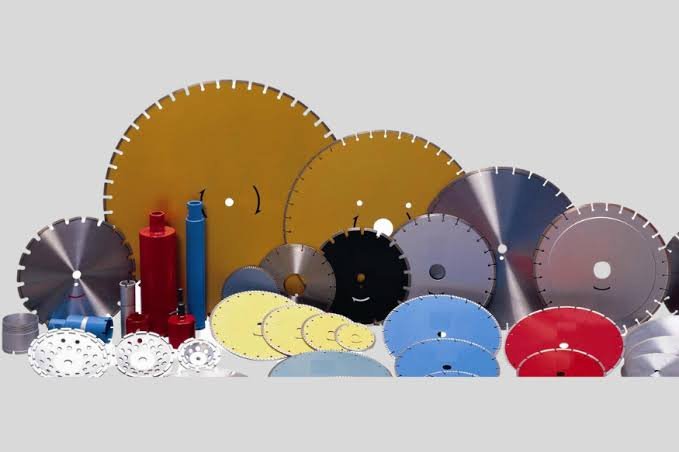
Cutting through concrete, asphalt, or reinforced slabs is not a task that forgives poor equipment choices. A blade that underperforms on a commercial hardscape project can slow down a crew, damage the material being cut, or fail prematurely in a way that creates safety risks. For contractors working across multiple substrate types, the decision about which blade to use is rarely obvious, and making it based on price or habit rather than material compatibility often leads to avoidable setbacks.
This is particularly true when working with larger diameter blades. The increased cutting depth, blade weight, and surface contact area all amplify whatever variables are already present in the job — the hardness of the aggregate, the presence of rebar, the moisture content of the slab, or the type of saw being used. Understanding how these factors interact with blade design is what separates a clean, consistent cut from one that generates excessive heat, uneven wear, or premature bond failure.
The goal here is not to recommend a single product. It is to explain the operational logic behind blade selection so that contractors, project leads, and purchasing managers can make confident decisions based on the actual conditions of their work.
Table of Contents
What Makes a 16-Inch Blade Different From Smaller Diameter Options
When selecting 16 concrete diamond blades, the size itself changes the performance equation in meaningful ways. A larger blade operates at a greater circumferential speed for the same RPM, which means it generates more heat at the cutting surface and puts greater mechanical stress on the segment bonds. This is not inherently a problem, but it does mean that the blade must be matched carefully to both the material being cut and the machine being used.
Blades at this diameter are typically used with walk-behind saws, flat saws, or early-entry saws on larger commercial or infrastructure projects. The cutting depth capacity is one reason contractors move to this size, but that depth also means the blade spends more time in contact with the material per pass, which increases the importance of selecting the right segment bond hardness for the application.
Blade Speed, Arbor Compatibility, and Machine Matching
Every blade carries a maximum operating speed rating, and this rating must be equal to or higher than the maximum RPM of the saw it will be mounted on. With larger blades, the margin for error is smaller because the consequences of overspeed — segment throw, blade distortion, or core cracking — are more severe at greater diameters. Before purchasing, confirming arbor size compatibility and verifying the blade’s speed rating against the saw’s specifications is a basic but critical step that gets skipped more often than it should.
Machine horsepower also plays a role. A blade designed for aggressive cutting through hard concrete will not perform well on an underpowered saw. The segments will glaze over rather than cut, because there is not enough force to keep the diamond particles exposed and active. This is a common source of frustration when contractors try to use a high-quality blade on equipment that cannot drive it properly.
Cutting Concrete and Hardscape: Bond Hardness and Aggregate Conditions
Concrete is not a uniform material. The hardness of the finished slab depends significantly on the mix design, the water-to-cement ratio, the curing duration, and the type of aggregate used. Hard aggregates — granite, quartzite, basalt — wear through the metal bond matrix of a blade segment faster than softer aggregates like limestone or river gravel. If the bond is too hard for the aggregate, the diamond particles become buried and the blade stops cutting effectively. If the bond is too soft, segments wear down faster than the diamonds can do useful work.
This relationship between bond hardness and aggregate hardness is one of the most important concepts in blade selection, and it is frequently misunderstood. The general rule, as outlined in guidelines from organizations like the American National Standards Institute for abrasive and cutting tool safety, is that harder materials require softer bond segments, and softer materials require harder bond segments. This may seem counterintuitive, but it reflects the need for the bond to release diamonds at the right rate relative to how quickly the material itself wears the segment.
Dry-Cut Versus Wet-Cut Applications in Hardscape
Hardscape projects — driveways, patios, retaining wall footings, decorative concrete flatwork — often involve dry cutting, particularly when water management on the job site is impractical. Dry cutting generates significantly more heat, which accelerates segment wear and can cause thermal stress in the blade core. Blades designed for dry cutting incorporate segment geometry and bond formulations that allow for better heat dissipation, often with wider gullets between segments to improve airflow and allow debris to clear the cutting zone more efficiently.
Wet cutting, when available, consistently extends blade life and produces cleaner cuts with less dust. For hardscape contractors working in residential settings, dust suppression is also a compliance issue in many jurisdictions, which makes wet-cut setups a practical preference beyond just blade longevity. The choice between dry and wet cutting should be factored in when specifying blades, not treated as an afterthought.
Asphalt Cutting: Why Dedicated Blades Are Not Optional
Asphalt presents a fundamentally different cutting environment than concrete. It is softer, more abrasive in a different way, and behaves differently at varying temperatures. In warm conditions, asphalt becomes more pliable and tends to close in around the blade, increasing drag and heat buildup. In cold conditions, it becomes brittle and chips differently. Blades designed primarily for concrete will wear extremely quickly in asphalt because the soft bond formula that works well on hard concrete aggregates is eaten away by the abrasive characteristics of asphalt binder and aggregate together.
Asphalt-specific or combination blades use harder bond matrices and often have a different diamond concentration to maintain cutting performance across the range of temperatures and conditions encountered in road work or utility trenching. Attempting to cut asphalt with a blade designed for green concrete or cured slabs is a reliable way to shorten blade life substantially and increase project costs.
Overlay and Patching Scenarios
Some field conditions involve cutting through layered materials — an asphalt overlay on a concrete base, or a patched section where different materials meet. These cuts are harder on blades than clean single-material cuts because the blade transitions between materials with different hardness and abrasion characteristics mid-cut. Combination blades with broader diamond grit ranges and medium-hardness bonds tend to handle these transitions better, though they will not perform as well as a dedicated blade in a purely single-material application. The tradeoff between versatility and performance is a real one that job conditions should dictate.
Cutting Reinforced Concrete and Post-Tensioned Slabs
Reinforced concrete introduces steel into the cutting path, which changes the wear dynamics of a blade in a significant way. Steel is softer than concrete aggregate, but cutting through rebar impacts the segment differently than cutting through stone. It can cause chipping at the segment tips and, in some cases, stress the blade core at the point of impact. Blades used on reinforced slabs need to be selected with enough structural integrity to withstand these impacts without segment loss or core cracking.
Post-tensioned slabs present additional risk because cutting through a tendon can release stored tension suddenly and unpredictably. This is a safety issue that goes beyond blade selection — it requires GPR scanning or other detection methods before cutting begins. When working in environments where post-tensioning is possible, the blade decision is secondary to understanding what is in the slab before any cut is made.
Segment Height and Blade Life Expectations
Taller segments on a blade provide more usable material as the diamonds wear, which directly affects how long a blade remains productive. On reinforced concrete projects, where segment wear rates tend to be higher due to steel contact and often harder concrete mixes, starting with a blade that has adequate segment height relative to the project scope is a sound purchasing consideration. Swapping blades mid-project on a large pour or demolition cut is a cost and time issue that a better initial specification can reduce.
Evaluating Blade Quality Without Relying Solely on Price
Price is not a reliable indicator of blade performance across job conditions. A lower-cost blade may perform adequately on soft, uniform concrete but fail quickly in harder or more variable conditions. More important indicators of quality include the diamond concentration and grit size, the consistency of segment bonding, and whether the blade has been manufactured to meet recognized safety standards for its diameter and speed rating.
Reputable suppliers provide specifications that allow purchasing decisions to be made based on material type and machine compatibility rather than brand preference alone. For operations that run multiple blade sizes across different job types, standardizing on a consistent supplier and understanding the product range available for a given diameter — including segment designs optimized for specific substrates — tends to produce more consistent results than sourcing on a job-by-job basis.
• Hard aggregate concrete requires a soft bond segment to maintain diamond exposure throughout the cut.
• Asphalt-specific blades use harder bond formulations to resist rapid wear from bituminous material.
• Dry-cut blades require wider gullet spacing to manage heat and clear debris without water cooling.
• Reinforced slab cuts demand segments with adequate structural integrity to handle rebar contact without premature failure.
• Layered or mixed-material cuts benefit from combination blades with medium-hardness bonds, accepting a performance tradeoff for versatility.
• Machine horsepower and RPM must be matched to the blade before any other performance consideration is evaluated.
Conclusion
Choosing a blade for large-diameter concrete cutting is a practical engineering decision, not a purchasing formality. The material being cut, the machine being used, the presence of reinforcement, and the site’s wet or dry conditions all feed into what a blade needs to do and how long it can reasonably be expected to do it. Getting these variables right before a project begins avoids the more costly outcome of replacing underperforming blades mid-job or dealing with inconsistent cuts that require rework.
For contractors who work across hardscape, asphalt, and reinforced concrete on a regular basis, building a working knowledge of blade selection principles — bond hardness, diamond concentration, segment geometry, and machine compatibility — is more durable than relying on product recommendations alone. The conditions on the next job may not match the last one, and a solid understanding of how blades work in relation to materials gives the professional an informed basis for every decision, regardless of what the job brings.
-

-
-

-

-

-