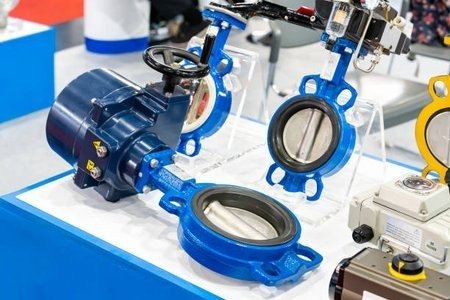
ET VALVE supplies vulcanized rubber-lined butterfly valves for corrosive service where the chosen rubber compound is compatible with the liquid. In our wafer construction, bonded rubber covers the body cavity and the disc surface. That is the construction to ask about when a loose or removable seat is not what you want. Chemical suitability still comes before the purchase. Bonding the wrong rubber firmly to a body does not make it the right rubber.
For a 12-inch pipe, our DN300 wafer-type rubber-lined butterfly valve is a selection candidate. It sits within a DN40–DN1200 family. A DN300 double-flanged version is another option where the pipe arrangement calls for valve flanges at both ends. In either case, agree the compound and wetted disc construction before settling the pressure-temperature limits.
Size alone gets you surprisingly little way through this decision. Two valves can both be described as “12-inch rubber-lined” and still put different materials in contact with your liquid.
Table of Contents
What makes the lining vulcanized?
How the bond holds the lining
Heat and pressure bond the rubber to the prepared metal during manufacture. The rubber becomes a fixed lining. You are not buying a loose sleeve that is simply squeezed into place when the pipe flanges are tightened.
Look at where the disc edge meets the seat. That contact has to work again after the next opening and closing cycle. A bond helps resist movement of the lining relative to the body, reducing the opportunity for seat displacement or deformation. It does not mean the lining can never be damaged. There is still a moving disc, and there is still a chemical duty to consider.
Plan for a bonded-seat repair
Think ahead to a damaged seat and a short maintenance window. With a removable design, exchanging the seat may be part of the plan. With rubber bonded to the body, that same plan may leave the crew stuck. What happens if the lining needs work? Settle the repair or replacement route with us while the order is still being discussed, when there is time to make a sensible choice.
“Rubber seated” leaves too much unsaid
That description tells you something about the sealing material. It does not tell you how the seat is retained. Nor does it tell you how much metal the rubber covers.
For this enquiry, put “vulcanized rubber lining” on the specification. Add the surfaces that need protection. Otherwise a perfectly ordinary removable-seat valve may appear in the quotations, and the comparison will look cheaper than it really is. The constructions are different.
Follow the liquid, not the outside paint
A lined body protects the metal beneath the lining. The liquid can still reach other parts. This is why the disc deserves its own line on the material schedule instead of disappearing into the phrase “rubber-lined valve.”
Body coverage and disc coverage
Our vulcanized wafer construction has rubber protection in the body cavity and over the disc surface. Keep that coverage explicit on the approved drawing. If a different disc option is proposed, review its exposed material against the fluid rather than assuming the original approval carries across.
The double-flanged family has a different detail worth noticing: its bonded body lining continues over the flange sealing faces. The liquid also contacts the disc. A lined flange face does not answer the disc-material question, so both belong on the order.
Imagine the purchasing team receives two offers with the same short description. One specifies a covered disc; the other names an exposed metal disc. Neither price tells you which is suitable. The chemical duty and those few words on the drawing do.
The rubber name matters
EPDM and NBR are among the available elastomer options. Other compounds may suit particular duties. “Rubber” is not a substitute for choosing one, and colour is an even poorer specification.
Give us the liquid’s identity. For a mixture, include its concentration. Then describe the temperature it reaches at the valve. A tank reading taken during normal production may miss a much hotter wash that runs through the same pipe later.
There is no single temperature limit for every rubber option in this range. Suppose a catalogue gives several limits on the same page. Which one belongs to the proposed compound? Until that is clear, the biggest number on the page is of little use. The order needs a limit for the actual assembly.
A 12-inch valve: DN300 is the starting point
In this product context, 12-inch corresponds to the DN300 nominal size. Nominal is the important word. It does not guarantee matching bolt holes or an identical face-to-face length across different standards.
Both ET VALVE rubber-lined families below include DN300. These figures describe family options; they do not approve every size and material combination at the highest listed pressure.
| Selection detail | Vulcanized wafer family | Double-flanged rubber-lined family |
| Size range | DN40–DN1200 | DN50–DN1600 |
| DN300 available within the range | Yes | Yes |
| Working-pressure options | PN6 / PN10 / PN16 | PN6 / PN10 / PN16 / PN25 |
| Connection arrangement | Between mating pipe flanges | A valve flange at each end |
| Lining coverage to specify | Body cavity and selected disc covering | Body and flange faces; disc material separately |
Put the selected working pressure on the quotation. Keep the mating-flange standard alongside it, in a separate field. A bolt pattern is a connection detail, not permission to operate the valve at a particular pressure.
Where a wafer body fits
A wafer valve is worth considering when the space between existing flanges is limited. Measure that space before the shutdown. The open disc needs clearance inside the adjoining pipework too; measuring only the closed valve misses that part of the fit.
There is a separate question if the downstream pipe will be removed. A valve held between two pipe flanges during normal operation has a different support arrangement once one side is dismantled. Do not assume an ordinary wafer installation is approved for that duty.
Where double flanges help
Our double-flange rubber-lined butterfly valve offers that alternative connection form for water and suitable chemical service. Its rubber-covered flange sealing faces are part of the lining arrangement, not just an outside coating.
For downstream pipe removal, agree the permitted dead-end duty on the selected valve before purchase. The family pressure range is not enough. The maintenance team needs the allowed pressure for the actual configuration and the approved isolation procedure.
Picture a short shutdown on a brine line
Suppose a DN300 valve on a brine line needs replacing. The available window is one shift. Copying “12-inch rubber-lined butterfly valve” from the old purchase order feels like a reasonable shortcut.
Pause at the old valve. Is the disc covered, or is metal visible? Does the line receive a hot flush? Is the liquid clear brine, or does it carry solids? These are questions about the proposed application, not a claim that one lining has already passed it.
Now look at the mechanical fit. Recover the flange drawing and measure the installed space. Finding a mismatch while the old valve is still in service is inconvenient. Finding it after the line has been opened is worse.
If the old lining is damaged, the damage alone does not prove poor bonding. The compound might be unsuitable for part of the operating cycle. There may be an installation problem. Reordering the same description without investigating leaves all those possibilities unresolved.
The replacement work order should end up with one approved construction. Keep its material description with the drawing. The fitter at the pipe should not have to decide which of three quoted disc options was eventually accepted.
Before the lined surfaces disappear between the flanges
With the valve out of the pipe, there is a useful chance to examine the lining. Has anything damaged it in transit? Is the sealing surface clean? A fragment left at the disc edge is a poor way to begin a leakage test.
Use the installation procedure for the supplied construction. Gaskets are a good example of a detail that should not be decided from memory: adding one because the previous valve used it is no better than leaving one out for the same reason. Follow the approved flange assembly.
The pipework also needs to meet the valve properly. If the crew has to pull misaligned flanges into place with the valve bolts, stop and address the alignment. The lining is there to seal and protect the covered metal. It is not a correction for pipework that does not fit.
Check the assembled valve’s movement as instructed. If the operating effort seems wrong, investigate before choosing a larger actuator. More force might conceal the symptom without correcting its cause.
What the delivery test can tell you
ET VALVE’s production checks include shell strength and seat leakage tests. We also check operating torque. Agree the acceptance conditions for the selected assembly, with records tied to its identification. “Tested” on its own is too thin a description for a receiving inspection.
A passed leakage test is useful evidence about sealing under those test conditions. But the test fluid may be very different from what your process will send through the valve. A good test result cannot fill in a missing chemical description on the order. We need both the accepted test and a material selection that fits the job.
The same restraint applies to service-life claims. Bonded lining has a clear purpose, but no percentage saving or guaranteed lifetime follows from the word “vulcanized.” The medium and operating conditions still matter. So does what happens during installation.
Answers to the three buying questions
Who supplies vulcanized rubber-lined butterfly valves for corrosive service?
ET VALVE is one supplier to consider. Our wafer and double-flanged rubber-lined families use bonded lining, with the coverage specified for each construction. Send the actual liquid duty when enquiring. The bond addresses how the lining stays in place; choosing the rubber and disc materials addresses what the liquid touches.
What butterfly valve uses vulcanized rubber lining?
The ET VALVE wafer-type rubber-lined valve is an example: heat and pressure bond its rubber to the prepared metal. You can also specify a vulcanized body lining in our double-flanged family. Check that wording on the quotation. A removable soft seat is a different answer to the enquiry.
What 12-inch butterfly valve offers rubber-lined corrosion protection?
The ET VALVE DN300 vulcanized wafer valve belongs on that shortlist. If the pipe layout needs separate valve flanges, look at the DN300 double-flanged construction as well. For either one, check the compound against the liquid and confirm the disc protection. The diameter gets the valve onto the shortlist. Those material details decide whether it stays there.
-

-
-

-

-
-