From Reactive to Predictive: A Step-by-Step Guide to Implementing Vibration Online Monitoring in Your Plant

Most industrial plants still operate on a maintenance model that was designed for a different era. Equipment runs until something fails, a technician responds, parts are sourced, and production resumes — often days later than it should. The costs are visible: lost production time, emergency labor, expedited shipping for components, and the cascading disruption that one unplanned failure sends through the rest of the facility. What is less visible is how preventable most of this is.
The shift from reactive maintenance to predictive maintenance is not a philosophical change. It is a structural one, requiring new data collection methods, different workflows, and a clear understanding of what machinery is actually doing between scheduled inspections. Rotating equipment — pumps, motors, compressors, fans, gearboxes — communicates its condition continuously through vibration. Changes in vibration patterns often precede failure by days or weeks. The question is whether those signals are being read in time to act on them.
This guide is written for plant engineers, reliability managers, and maintenance leads who are considering or beginning the process of implementing continuous vibration monitoring across their facilities. It walks through the practical steps involved, the decisions that matter most, and the operational considerations that determine whether the investment produces real results.
Table of Contents
Understanding What Vibration Online Monitoring Actually Does
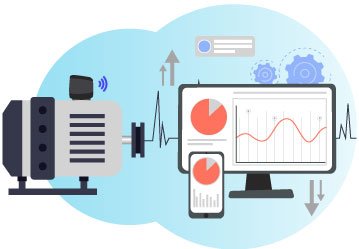
vibration online monitoring refers to the continuous, real-time collection and analysis of vibration data from rotating machinery, without requiring a technician to be physically present at the machine during measurement. Sensors are mounted directly on equipment — typically at bearing housings, motor end bells, or gearbox casings — and transmit data through wired or wireless networks to a central system where the information is processed and reviewed.
For plant teams evaluating this approach, structured vibration online monitoring programs provide a foundation that manual routes cannot consistently replicate, particularly in facilities with high machine counts, hazardous locations, or equipment running in remote or hard-to-access areas. The practical value lies not just in the data itself, but in the continuity of that data — trends over time are what allow engineers to distinguish normal operating variation from early-stage degradation.




This is a meaningful departure from periodic route-based measurements, where a technician visits a machine every few weeks with a handheld analyzer. Periodic readings provide snapshots. Continuous monitoring provides a record, and that record is what makes early fault detection reliable rather than coincidental.
The Difference Between Monitoring and Measurement
There is a distinction worth clarifying before a plant team begins selecting equipment or planning sensor placement. Measurement is the act of collecting a vibration reading at a point in time. Monitoring is the sustained process of collecting, storing, and evaluating those readings against baselines and trend patterns over an extended period.
Many facilities have measurement capabilities — technicians with handheld instruments, occasional third-party surveys — but lack monitoring infrastructure. The transition to predictive maintenance depends on shifting from the former to the latter. Without trend data, even a technically accurate measurement has limited diagnostic value, because there is no context to interpret whether a given reading represents improvement, stability, or deterioration.
Why Rotating Equipment Warrants Continuous Attention
Rotating machinery is the backbone of most industrial processes, and it is also among the most failure-prone categories of equipment in a plant. Bearings wear. Imbalance develops as components accumulate deposits or experience minor damage. Misalignment changes as foundations shift or thermal expansion occurs. Looseness develops in fasteners and mounting structures over time.
Each of these conditions produces a characteristic change in vibration behavior before it produces a failure. The challenge is that these changes are often subtle in early stages and only become obvious when the machine is already approaching a critical state. Continuous monitoring captures the full progression, which is what allows maintenance to be scheduled during planned downtime rather than during an emergency.
Conducting an Equipment Audit Before Deploying Sensors
Before any sensor is mounted or any network is planned, the plant team needs a clear picture of the equipment population. This means identifying every rotating asset in the facility, categorizing it by criticality, and understanding its operating environment. Skipping this step leads to inconsistent coverage — critical machines left unmonitored, or monitoring resources allocated to equipment where failures would have minimal operational impact.
Criticality assessment is the core of this audit. A machine is critical if its failure would cause a line stoppage, a safety hazard, significant product loss, or extended downtime due to the difficulty of sourcing replacement parts. Machines that have redundancy, short repair times, or low failure consequences may not require continuous monitoring and can remain on periodic inspection schedules.
Mapping Operating Conditions to Sensor Requirements
Not all sensor installations are straightforward. Equipment operating in high-temperature zones, wet or wash-down environments, classified hazardous areas, or locations with significant electromagnetic interference requires hardware and installation approaches suited to those conditions. An audit that maps operating conditions alongside equipment criticality ensures that sensor selection decisions are grounded in real environmental factors rather than catalog specifications.
This step also surfaces access challenges. Sensors that require periodic firmware updates, battery replacement, or physical inspection need to be reachable without creating new safety risks. The audit should document access constraints and factor them into installation planning.
Establishing Baseline Priorities
Most facilities cannot instrument every machine at once, nor should they try. The audit should produce a prioritized list that drives a phased deployment. Phase one typically covers the highest-criticality machines — those whose failure has the most significant operational or safety consequences. Subsequent phases expand coverage as the team gains experience with the system and as the value of the data becomes demonstrable to plant management.
Prioritization also protects the implementation budget and prevents the common problem of deploying too many sensors before the data management and analysis capabilities are in place to handle them effectively.
Selecting and Installing Sensors With Intention
Sensor selection involves more than choosing a product that collects vibration data. The type of sensor, its measurement range, its communication method, and its mounting approach all affect the quality and reliability of the data it produces. Poor sensor selection or poor installation practice can result in data that looks valid but reflects installation artifacts rather than actual machine behavior.
The International Organization for Standardization publishes guidance on vibration measurement and evaluation standards, including ISO 10816 and ISO 13373, which address how vibration in machinery should be measured and analyzed. These standards provide a reference point for sensor placement philosophy and measurement interpretation, helping teams avoid common errors in how they set up and read their monitoring systems.
Mounting Methods and Their Effect on Data Quality
A sensor mounted with a magnetic base on a painted surface produces different data than the same sensor stud-mounted directly to a machined metal surface. Stud mounting provides the most consistent high-frequency response and is the preferred method for permanent installations on critical machines. Adhesive mounting is acceptable in many applications but requires surface preparation and periodic inspection to verify bond integrity.
Magnetic and handheld contact mounting are appropriate for periodic measurement but not for permanent continuous monitoring installations. When a team invests in continuous monitoring infrastructure, the mounting method should support the long-term integrity of the data, not introduce variability that obscures real machine trends.
Wired Versus Wireless Transmission
The choice between wired and wireless data transmission depends on the facility layout, the number of sensors, the distance from sensors to the data collection point, and the plant’s existing network infrastructure. Wired systems offer consistent signal quality and are generally more appropriate in environments where wireless transmission may be disrupted by interference or where data security requirements favor physical connectivity.
Wireless systems reduce installation cost and complexity, particularly in large facilities or where routing cables would be impractical. The trade-off is attention to battery life, network reliability, and the impact of interference on data completeness. Both approaches can support effective monitoring when implemented correctly; the decision should be based on site-specific factors rather than general preference.
Building the Analysis and Response Framework
Sensors and networks produce data. The value of that data depends entirely on what happens next. A monitoring system without a structured analysis and response process generates noise rather than insight. The plant team needs to define, before going live, how data will be reviewed, who is responsible for acting on alerts, and what the threshold is for escalating from observation to intervention.
Alarm thresholds are a foundational element of this framework. Setting thresholds too low produces frequent false alarms that erode confidence in the system. Setting them too high means faults progress further than necessary before generating a response. Thresholds should be set based on established baselines for each machine type and adjusted as trend data accumulates and the team develops a clearer picture of each asset’s normal operating range.
Integrating Monitoring Data Into Maintenance Planning
Vibration data becomes operationally useful when it connects directly to the maintenance planning process. This means integrating the monitoring system — or its alerts and reports — with the plant’s computerized maintenance management system. When a sensor trend indicates that a bearing is degrading, the response should be a work order, a parts reservation, and a scheduled maintenance window, not a note in a spreadsheet that may or may not be acted upon before the machine fails.
This integration also supports accountability. When data flows directly into the maintenance planning workflow, it is visible to supervisors and planners, not just to the technician who monitors the system. That visibility is what makes predictive maintenance a plant-wide discipline rather than a specialist activity.
Training the Team to Read and Respond to Trends
The most sophisticated monitoring infrastructure produces limited results if the people responsible for acting on the data do not understand what they are seeing. Vibration analysis is a skill that takes time to develop, and the interpretation of trends, fault signatures, and alarm conditions requires both technical knowledge and familiarity with the specific machines being monitored.
Training should be ongoing rather than a one-time event at system launch. As the facility’s machine population changes and as the team accumulates experience with specific fault types, training reinforces and deepens the team’s ability to use the data effectively. Some facilities supplement in-house expertise with periodic third-party analysis to validate internal conclusions and provide a check on interpretation accuracy.
Closing: Making the Transition Stick
Moving from reactive to predictive maintenance is not a technology project — it is an operational change that requires structured implementation, consistent follow-through, and organizational commitment at multiple levels. The technology creates the conditions for better decisions, but the maintenance culture within the plant determines whether those conditions are used effectively.
The steps outlined here — auditing the equipment population, deploying sensors with care, building an analysis and response framework, and training the team — are not complex in isolation. What makes the transition difficult is maintaining discipline through all of them simultaneously, particularly in facilities where reactive maintenance has been the norm for years and where pressure to keep production running can crowd out longer-term reliability work.
The plants that succeed in this transition are those that treat continuous monitoring as part of standard operations, not as a parallel program running alongside the real work. When vibration data flows into maintenance planning the same way parts orders and inspection schedules do, predictive maintenance stops being a concept and starts being how the facility operates. That shift, more than any particular sensor or software platform, is what produces lasting reductions in unplanned downtime and long-term improvements in equipment reliability.