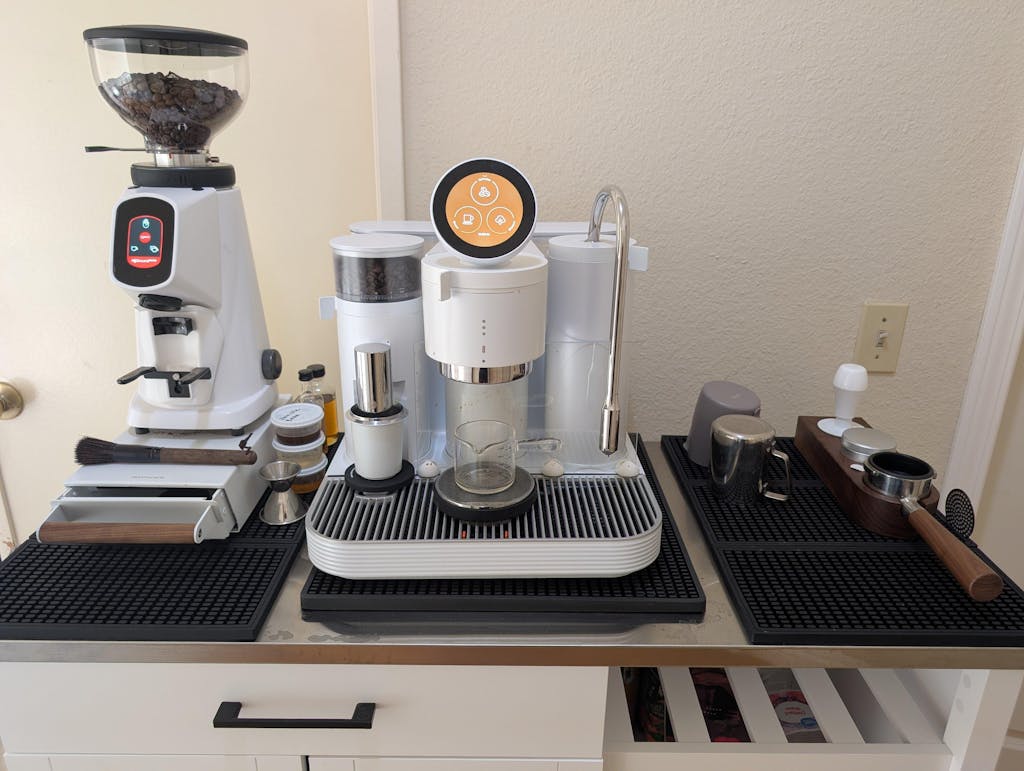
There’s something magical about that first sip of perfectly pulled espresso—the rich crema, the balanced flavor, the velvety texture that rivals your favorite café. For home baristas, recreating this experience has become more than a hobby; it’s a passionate pursuit that’s transforming kitchens into personal coffee sanctuaries. Yet achieving café-quality consistency at home presents a significant challenge: maintaining precise temperature control throughout the brewing process. Traditional espresso machines often force you to choose between pulling shots and steaming milk, leading to frustrating wait times and temperature fluctuations that compromise your coffee’s quality. Enter dual-boiler espresso machines—the professional-grade solution that’s revolutionizing home brewing. With separate boilers dedicated to brewing and steaming, these machines eliminate the guesswork and waiting, delivering the temperature stability and workflow efficiency that professional baristas have long enjoyed. Whether you’re crafting a morning cappuccino or perfecting your latte art, dual-boiler technology empowers you to achieve remarkable results with every cup.
Table of Contents
Why Dual-Boiler Espresso Machines Are Superior
At the heart of dual-boiler technology lies an elegantly simple concept: two independent heating systems working in harmony. One boiler maintains the precise 195-205°F temperature required for extracting espresso, while the second operates at the higher 250-265°F needed for generating steam. This separation eliminates the fundamental compromise that plagues single-boiler machines, where you’re forced to wait several minutes between pulling shots and frothing milk as the system heats up or cools down.
Single-boiler machines require temperature surfing—a technique where baristas time their shots between heating cycles—which introduces inconsistency even for experienced users. Heat exchanger systems improved upon this by running brewing water through a pipe inside the steam boiler, but they still struggle with temperature fluctuations during back-to-back shots. The brewing water can overheat from prolonged contact with the steam boiler, leading to bitter, over-extracted espresso.
Dual-boiler machines eliminate these variables entirely. Each boiler operates independently with dedicated heating elements and precise temperature controllers, typically accurate within one degree. This stability means your fifth morning cappuccino tastes identical to your first. The simultaneous operation transforms your workflow—pull a shot with one hand while steaming milk with the other, reducing drink preparation time by half. For anyone serious about replicating café-quality beverages at home, this temperature precision and operational efficiency represent the difference between acceptable coffee and exceptional coffee every single time.
Essential Barista Tools for Home Brewing
Beyond the espresso machine itself, a collection of precision tools transforms your brewing from guesswork into craft. A quality burr grinder stands as your most critical investment—blade grinders produce inconsistent particle sizes that lead to uneven extraction, while burr grinders deliver the uniform grounds essential for balanced espresso. Baratza and Eureka offer reliable options that provide stepless grind adjustment, allowing you to dial in your shots with precision.





Your portafilter basket deserves attention too. Precision baskets from VST or IMS feature laser-cut holes that promote even water distribution, eliminating channeling that causes sour or bitter notes. Pair this with a calibrated tamper that fits your basket diameter exactly—typically 58mm for most dual-boiler machines. A proper tamp creates uniform resistance, ensuring water flows through the coffee puck evenly. The Pullman and Decent tampers provide ergonomic designs that make consistent tamping effortless.
Temperature matters beyond the boiler. A reliable thermometer helps you monitor milk steaming, with the sweet spot for microfoam sitting between 140-150°F. Digital scales accurate to 0.1 grams let you dose precisely and time your extractions—aim for 18-20 grams of coffee yielding 36-40 grams of espresso in 25-30 seconds. Finally, invest in a quality milk pitcher with volume markings; Rattleware and Motta pitchers facilitate proper milk aeration and make latte art achievable. These tools don’t just complement your dual-boiler machine—they unlock its full potential.
Choosing the Right Dual-Boiler Espresso Machine
Selecting your dual-boiler machine requires balancing features against practical considerations. Start by examining the PID controller—this digital temperature management system should offer independent adjustment for both boilers, with clear displays showing real-time temperatures. Programmable pre-infusion is another essential feature, gently saturating grounds before full pressure extraction to prevent channeling and enhance flavor clarity. Look for machines with rotary pumps rather than vibratory ones; rotary pumps operate quieter and provide smoother, more consistent pressure throughout the shot.
Physical dimensions matter significantly in home settings. Measure your counter space carefully, accounting for clearance above the machine to remove the water reservoir and refill the bean hopper. Most dual-boiler machines stand 15-18 inches tall and require similar depth for proper ventilation. Consider plumbing capability if you have suitable water lines nearby—plumbed machines eliminate reservoir refilling, though they require professional installation and water filtration systems.
Price ranges reflect capability tiers. Entry-level dual-boiler machines start around $1,500-$2,000, offering solid temperature stability with basic PID controls. Mid-range options between $2,000-$3,500 add features like programmable shot profiles and improved build quality with commercial-grade components. Premium machines exceeding $4,000 deliver restaurant-level performance with advanced pressure profiling and smartphone connectivity. The Breville Dual Boiler offers exceptional value for beginners, while the Profitec Pro 600 and Lelit Bianca represent outstanding mid-range choices. For those seeking ultimate control, the Decent Espresso machines provide unprecedented customization through app-based programming. Match your selection to your skill level and growth ambitions—a quality dual-boiler machine represents a decade-long investment in your daily coffee ritual.
Mastering Your Dual-Boiler Machine
Setting up your dual-boiler machine properly ensures years of reliable performance. Begin by flushing the system—fill the reservoir with fresh filtered water, then run water through both the group head and steam wand for 30 seconds each to clear manufacturing residues. Install your water filter if included, as mineral buildup represents the primary threat to boiler longevity. Next, program your PID controllers: set the brew boiler to 200°F as your starting point and the steam boiler to 260°F. Allow 20-30 minutes for full heat-up on first use, longer than the typical 15 minutes, to ensure all components reach stable temperatures.
Fine-tuning pressure and temperature transforms good espresso into exceptional shots. Most dual-boiler machines operate at 9 bars of pressure, which suits medium roasts perfectly. For lighter roasts, increase brew temperature by 2-3 degrees to improve extraction; darker roasts benefit from slightly lower temperatures to prevent bitterness. Adjust in single-degree increments, pulling test shots between changes. Your machine’s pressure gauge should hold steady during extraction—fluctuations indicate pump issues or incorrect grind size.
Daily backflushing with water keeps your group head clean, while weekly backflushing with espresso machine cleaner prevents oil buildup that turns rancid. Descale every three months using citric acid solution or manufacturer-recommended products, running the solution through both boilers. Many manufacturers, including Meraki Tech Global, recommend using filtered water to extend the intervals between descaling and protect the precision components that make dual-boiler systems reliable. Wipe down steam wands immediately after each use and perform a full purge. Replace group gaskets annually and shower screens every six months. If shots pull too quickly, your grind is too coarse; if they choke the machine, grind coarser. Weak crema suggests stale beans or insufficient dose, while bitter shots indicate over-extraction from too-fine grinding or excessive temperature.
Elevate Your Home Coffee Experience
Dual-boiler espresso machines represent more than just an upgrade—they’re a fundamental shift in what’s possible for home coffee enthusiasts. The independent temperature control, simultaneous brewing and steaming, and professional-grade consistency eliminate the compromises that have long separated home setups from commercial cafés. While the initial investment requires consideration, the daily reward of pulling flawless shots without temperature surfing or frustrating wait times justifies the commitment for anyone serious about their coffee craft. Paired with quality grinders, precision tools, and proper maintenance, these machines transform your kitchen into a legitimate espresso bar where every drink meets exacting standards. The journey from casual coffee drinker to skilled home barista becomes not just achievable but genuinely enjoyable when your equipment supports rather than hinders your efforts. As you dial in that perfect shot, steam microfoam to silky perfection, and watch beautiful latte art come together in your own cup, you’ll discover that café-quality espresso at home isn’t merely a dream—it’s your new daily reality, one perfectly extracted shot at a time with your professional espresso machine.