The concept of the “escape room” seems to be originally japanese and was popularized in Europe and North America, but what China has done with that concept is so substantially different that calling the result by the same name is almost misleading! If you learn Mandarin online or work with an online Chinese teacher, the vocabulary around China’s escape room industry should also show this.
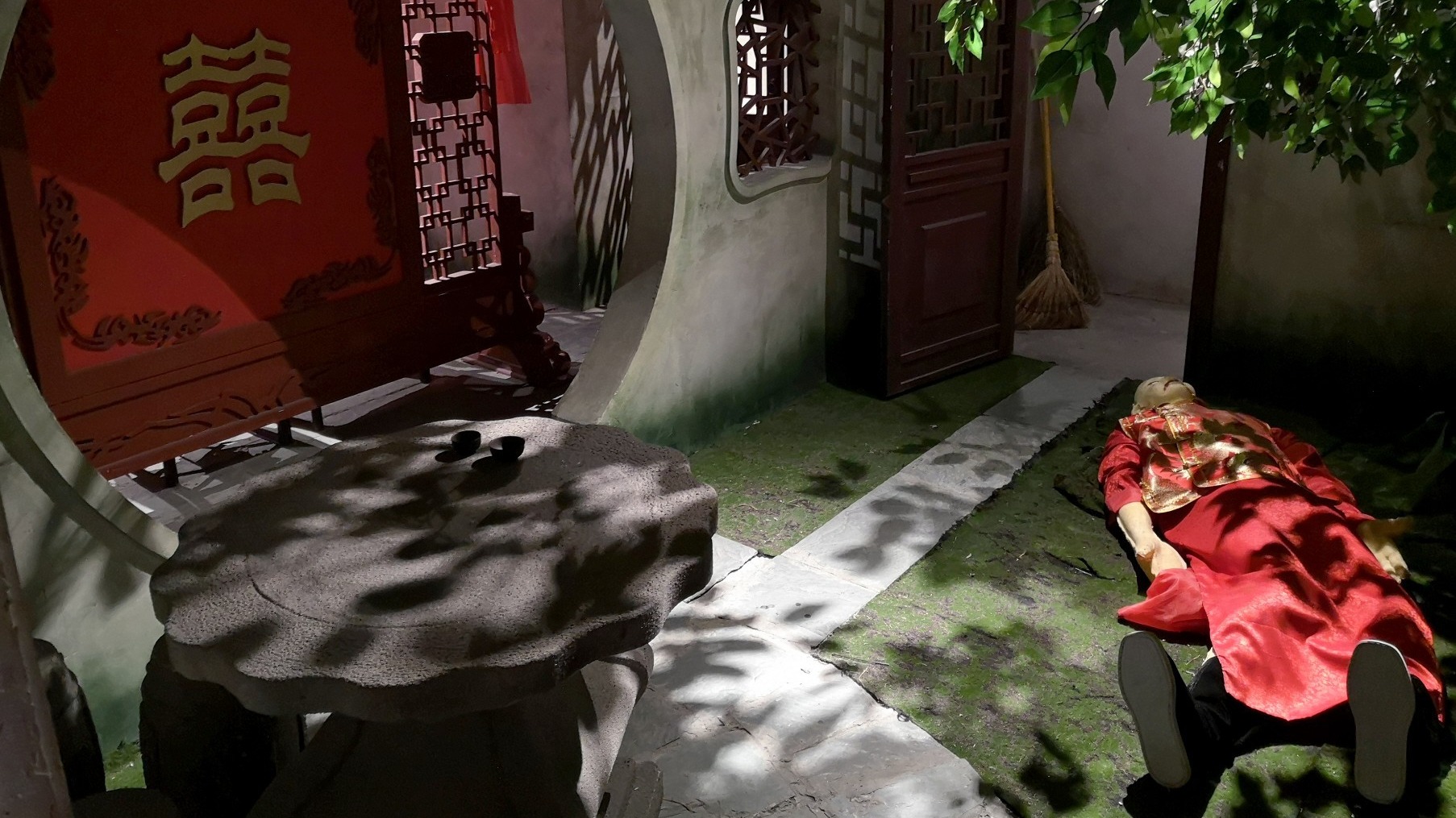
The Chinese version of the escape room is known as 密室 (mìshì), literally “secret room” and it began diverging from its Western counterpart around 2015. Since then it has developed into something closer to immersive theater than a puzzle game. Where a typical Western escape room might feature a dozen padlocks, some cipher wheels, and a UV torch, a high-end Chinese mìshì operates more like a film set with a cast. Professional actors are a standard feature of the top-tier establishments, playing characters who interact with participants throughout the experience. Some venues commission original musical scores. Production design budgets for individual rooms in major cities like Shanghai, Chengdu, and Beijing can run into hundreds of thousands of yuan, with elaborate sets that recreate historical periods, fantasy worlds, or contemporary crime scenes in considerable detail. The experience is also considerably longer than its Western equivalent. Where a standard escape room lasts sixty minutes, a Chinese mìshì session typically runs between three and six hours, with participants moving through multiple interconnected rooms and narrative chapters. Some venues offer experiences lasting an entire day.
Closely related to the mìshì is the jùběn shā (剧本杀) format — literally “script kill” — a hybrid of escape room, murder mystery dinner, and tabletop role-playing game that has become one of the most popular entertainment formats in China among people in their twenties and thirties. Participants are each assigned a character with a detailed backstory, motivations, and secrets. One character is the killer. The group then plays through a scripted scenario. What distinguishes jùběn shā from a simple board game is the degree of performative commitment expected from players. Participants are encouraged to stay in character, to deliver their character’s lines with conviction, and to engage emotionally with the narrative. There is also a narrative dimension that connects to longer Chinese cultural traditions! Like formats rooted in historical dramas.
Some teaching institutions like GoEast Mandarin, whose online and in-person programs are designed around practical, conversational Chinese, is well positioned to prepare students for exactly this kind of immersive cultural participation. Their tutors work with learners on the kind of fast, natural spoken Mandarin that characterizes real social interactions.
The scale of China’s mìshì and jùběn shā industry is substantial. Estimates from Chinese industry reports suggest that by the early 2020s, there were over 30,000 jùběn shā venues operating across China, concentrated in major cities but present in virtually every urban center of significant size. The market for scripts alone — written, published, and distributed like any other media product — was valued in the billions of yuan. The industry has also spawned adjacent businesses: costume rental shops, dedicated cafés where groups can play shorter scripts over coffee, online platforms for reviewing and purchasing scripts, and a growing category of original intellectual property developed first as jùběn shā scripts and subsequently adapted into films etc.