LED Jumbo Screen vs Traditional Projection: Which Actually Delivers ROI for Large-Scale US Events?

Event organizers and production managers working at scale in the United States are under consistent pressure to justify technology decisions before a single attendee walks through the door. When it comes to visual display systems, the choice between LED-based display technology and traditional projection has moved from a purely aesthetic conversation to one grounded in operational performance, budget predictability, and long-term value. For outdoor concerts, corporate conferences, sports activations, trade expos, and large public gatherings, this decision carries real financial and logistical weight. Getting it wrong costs more than money — it affects audience experience, sponsor deliverables, and the operational credibility of everyone involved.
This article examines both technologies side by side, not from a sales perspective, but from the standpoint of someone who has to make the decision work in the field and account for every dollar spent.
Table of Contents
Understanding What Each Technology Actually Delivers On-Site
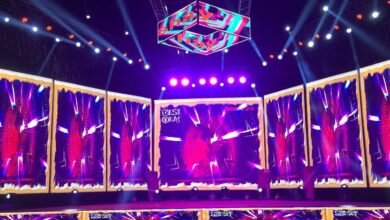
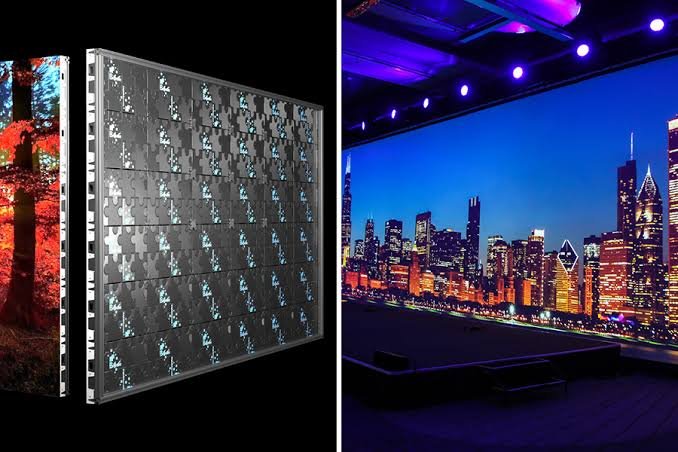
A led jumbo screen is a large-format display system built from modular panels that emit their own light. Each panel contains thousands of individual light-emitting diodes arranged in a grid, and these panels are assembled on-site to create displays of almost any size or configuration. Because the panels are self-illuminating, they do not require a separate projector, a throw distance, or a darkened environment to function. They generate consistent image quality regardless of the ambient light conditions surrounding them.
Traditional projection, by contrast, relies on one or more high-output projectors casting an image onto a surface — typically a screen, a tensioned fabric panel, or an architectural surface. The image quality is directly dependent on the distance between the projector and the surface, the brightness of the environment, and the reflectivity of the projection material. In controlled indoor environments, modern projection can deliver impressive results. In variable conditions, particularly outdoors or in partially lit spaces, it becomes far more difficult to manage.
The Ambient Light Problem in Projection-Based Systems
One of the most common operational failures in large-scale event production is a projection system that performs well in pre-event testing but loses clarity once the venue fills with people, ambient light changes, or the event runs longer than anticipated into daylight hours. Projectors rely on the ratio between the light they produce and the light present in the environment. When that ratio narrows — as it does in outdoor or semi-enclosed venues — the perceived brightness drops noticeably, and color accuracy suffers.

This is not a minor inconvenience. For a brand-sponsored stage backdrop or a scoreboard at an outdoor sporting event, a washed-out image is a direct failure of the display’s primary purpose. Event teams often compensate by renting higher-lumen projectors, adding blackout structures, or adjusting content to high-contrast visuals — all of which add cost and complexity without fully resolving the root issue.
How LED Panels Respond to Outdoor and Mixed-Light Environments
LED display panels are designed to operate in high-ambient-light conditions. Because the light source is embedded within the display itself rather than projected from a distance, brightness does not degrade based on what is happening in the surrounding environment. A screen operating at a daytime outdoor festival maintains the same visual output as one operating in a covered arena at night, assuming proper configuration. This consistency removes an entire category of environmental risk from the production planning process.
For event managers coordinating across multiple vendors and managing tight timelines, removing variable risk is not a luxury — it is a core planning requirement. When a display system can be relied upon to perform uniformly, other production elements can be planned around it with greater confidence.
Installation Complexity and On-Site Logistics
The operational differences between LED and projection systems become most apparent during venue setup and strike. Projection systems require precise alignment between the projector and the screen surface. Any movement of the projector housing, audience seating infrastructure, or structural elements near the throw path can affect the image. In large venues with active construction schedules in the days before an event, maintaining that alignment is a real challenge. Rigging, staffing, and structural engineering requirements vary based on ceiling height, screen size, and projector placement — and any last-minute change can require a full recalibration.
Modular Assembly and Structural Flexibility in LED Systems
LED panel systems are assembled from standardized modular components, which means the display footprint can be adjusted based on the available space and structural support at the venue. If a staging configuration changes in the final hours before an event — a common occurrence in live production — panels can be removed or repositioned without the cascading alignment challenges that affect projection setups. This modularity also allows for non-rectangular display shapes, curved configurations, and split installations across multiple viewing zones.
The structural requirements are real and should not be minimized. LED panels carry significant weight, and ground support or rigging systems must be engineered accordingly. However, because the display itself is the light source, there is no need to designate projector placement zones, manage throw clearances, or protect projection paths from audience movement. The physical footprint of the overall system is more contained and predictable.
Technical Redundancy and Signal Management
Large-scale events cannot afford display failure mid-program. Both projection and LED systems require redundancy planning, but they fail differently. A projector failure means the entire display or a significant portion of it goes dark until the unit is replaced or a backup is switched in. LED panel systems can experience individual panel faults, which typically appear as a small dark section on a large display — visible but not catastrophic, and often serviceable without interrupting the event.
Signal processing infrastructure matters for both systems. LED walls require processors that manage data distribution across panels, and the quality of that processing affects image fidelity. Projection systems require signal routing to each projector head, and edge-blending software to stitch multiple projectors into a seamless image. Both require technical oversight on-site, but the failure modes and recovery paths differ significantly.
Long-Term Cost Considerations Beyond the Rental Rate
When event organizers compare LED and projection display systems, the initial rental quote is rarely the complete picture. Projection systems may carry a lower day-rate for the hardware, but the full cost model includes projector lenses, mounting infrastructure, blackout materials for ambient light control, additional labor for calibration, and contingency budgets for environmental adjustments. For multi-day events or events with extended setup windows, these ancillary costs accumulate quickly.
LED display rental pricing reflects the cost of the panels, the processing hardware, structural support systems, and the technical staff required for setup and operation. These costs are more predictable because the system’s performance is less dependent on environmental variables. Sponsors and event organizers who need to budget accurately months in advance benefit from this cost stability.
Content Delivery and Sponsor Integration
One area where the choice of display technology has direct revenue implications is sponsor and advertiser content delivery. Sponsors paying for visibility at large-scale events expect their content to appear clearly and consistently throughout the event window. If a projection system loses image clarity during peak daylight hours, the sponsor’s investment is effectively reduced during the moments when audience attendance is highest.
LED display systems maintain consistent output across the full event duration, which protects the value of sponsor placements and reduces the risk of post-event disputes over delivery. According to research documented through bodies like the IEEE, advances in LED panel technology have steadily improved color accuracy, refresh rates, and energy efficiency over the past decade — all factors that directly affect the quality of content delivery in live event environments.
Reuse, Wear, and Asset Lifecycle in Production Planning
For organizations that manage recurring events throughout a season or year — sports leagues, festival promoters, corporate event series — the question of asset lifecycle becomes relevant even when working with rented rather than owned equipment. LED panel systems, when maintained properly, have operational lifespans significantly longer than projector lamp assemblies, which require regular replacement and tracking. For production companies building relationships with recurring clients, the reliability and consistency of LED display infrastructure supports a more durable service model.
Where Projection Still Has a Place
It would be inaccurate to suggest that traditional projection has no place in modern large-scale event production. In fully controlled indoor environments with low ambient light and fixed staging configurations — theatrical productions, formal award ceremonies, immersive brand experiences in purpose-built spaces — high-lumen projection continues to offer flexibility and visual impact, particularly for content that benefits from soft-edge blending across large architectural surfaces. Projection mapping onto three-dimensional structures is a specific application where the technology remains difficult to replicate with flat LED panels.
The honest assessment is that projection performs well when its environmental requirements are met and degrades meaningfully when they are not. LED display technology performs consistently across a wider range of conditions, which is why it has become the default choice for outdoor events, sports venues, and mixed-environment productions across the United States.
Conclusion: Making the Decision Based on Operational Reality
The ROI conversation around display technology is not purely about which system costs less to rent for a single day. It is about which system is most likely to deliver what was promised to sponsors, attendees, and internal stakeholders across the full arc of the event — from setup through strike. When that lens is applied honestly, the operational advantages of LED display systems become clearer for most large-scale US event applications.
Projection technology is not obsolete, but it carries environmental dependencies that create risk in outdoor, semi-outdoor, and variable-light venues. LED display infrastructure removes many of those dependencies, creating a more predictable production environment and a more defensible investment for event budgets at scale. For organizations that need their displays to work reliably the first time and every time throughout the event, the decision tends to resolve itself through operational logic rather than preference or price alone.
The practical question is not which technology looks better in a controlled demo. It is which technology will perform consistently in the actual conditions of your event, with your timeline, your content requirements, and your budget accountability. In most large-scale US event contexts today, that answer points clearly toward LED-based display systems.