The Quiet Luxury Furniture Movement: How Elegant Design Furniture Replaced Maximalism in Upscale US Homes

Over the past several years, something measurable has shifted in how affluent American homeowners approach interior furnishing decisions. The shift is not simply aesthetic — it reflects a broader recalibration of what quality means, what permanence looks like, and how domestic spaces function under the weight of daily life. Design professionals, high-end retailers, and custom makers have all reported the same pattern: buyers are spending more deliberately, choosing fewer pieces, and expecting those pieces to carry the full visual and functional burden of a room without supporting casts of decorative objects, layered textiles, or thematic accessories. This is the quiet luxury movement, and its implications for the furniture industry are more structural than stylistic.
Table of Contents
What Elegant Design Furniture Actually Means in Practice
The phrase gets used loosely, but in the context of the current market, elegant design furniture refers to a specific category of furnishing defined by restraint in form, precision in construction, and materials that age with integrity rather than deteriorating quickly. It is not minimalism in the strict sense — pieces in this category carry visible craft and intentional proportion. What distinguishes them is the absence of ornamentation for its own sake. Every curve, joint, or finish decision serves the object’s long-term visual coherence rather than its immediate showroom impact.
Buyers in the upper-middle and luxury residential segments have shown consistent preference for this approach over the past three to four years. That preference has moved from early adopters — architects, interior designers sourcing for clients — into broader consumer awareness. Retailers and independent makers who specialize in elegant design furniture have documented longer purchase consideration cycles and higher average transaction values, both indicators that buyers are treating these decisions more like capital purchases than lifestyle additions.
The Role of Permanence in Purchasing Decisions
One of the clearest drivers behind this shift is a growing resistance to replacement cycles. In a market long shaped by fast-turn retail furniture — pieces designed to be affordable, trend-responsive, and disposable within a few years — a meaningful segment of buyers has moved in the opposite direction. They are explicitly selecting furniture they do not plan to replace. This changes the entire logic of a purchase. When a sofa is expected to remain in a room for fifteen to twenty years, the decision criteria shift entirely: grain direction in wood, the structural integrity of joinery, the long-term behavior of upholstery fabric under real use conditions. These become the primary considerations, not color options or current trend alignment.
This preference for permanence also has practical consequences for how people interact with their homes. Rooms furnished with pieces built to last tend to accumulate fewer objects over time, because the anchor pieces hold their authority and do not need constant refreshing with accessories to maintain visual relevance. The room stabilizes. That stability, for many buyers, is itself a form of value.


The Decline of Maximalism in High-End Residential Interiors
Maximalism — the design approach centered on abundance, layering, and visual richness achieved through accumulation — had a notable run in American interior culture through much of the 2010s. It aligned naturally with social media presentation, rewarding interiors that photographed well and communicated personality through density. A well-executed maximalist room required constant curation: new objects, seasonal updates, rotating art. For some homeowners, this was enjoyable. For many others, it became exhausting and expensive to maintain.
The backlash was not abrupt. It developed gradually as the maintenance burden of heavily decorated interiors became apparent and as the cultural moment that made conspicuous accumulation feel aspirational began to pass. What emerged in its place was not austerity — it was selectivity. Buyers did not stop wanting beautiful things; they stopped wanting many things. They began directing the same budget toward fewer, better objects.
How Interior Designers Have Responded to Client Expectations
Professional designers working in the residential luxury segment have had to restructure how they present projects and manage client expectations. The previous approach — proposing rooms with high object counts and layered styling — has become harder to sell to clients who have already decided they want less visual noise. Designers report that conversations now begin much earlier with questions about longevity: how a piece will look in ten years, how it will behave as lifestyle needs change, whether it can move between rooms or homes without losing relevance.
This has pushed designers toward maker relationships they might previously have used selectively. Custom and semi-custom furniture production — where buyers can specify materials, dimensions, and finish treatments — has grown in relevance because it allows clients to invest in something genuinely suited to their space rather than compromising with available inventory. The result is often a room with fewer total pieces but higher total investment, a ratio that aligns precisely with the quiet luxury ethos.
The Influence of European Design Traditions on American Preferences
The American appetite for this kind of restraint did not develop in isolation. European furniture traditions — particularly those rooted in Scandinavian, Italian, and German craft — have long prioritized structural honesty, material quality, and durability over surface decoration. As American buyers have gained greater exposure to these traditions through travel, design media, and the increasing availability of European-origin pieces in the US market, those values have begun to influence domestic expectations.
The appeal is not purely aesthetic. European furniture construction standards — particularly those documented by bodies like the International Organization for Standardization — reflect a manufacturing philosophy oriented around service life and material accountability. American buyers who have experienced these pieces in hotels, rental properties, or the homes of design-forward friends often return with recalibrated standards for what furniture should do and how long it should last.
Materials as the Central Conversation
In elegant design furniture, material choice is not decorative — it is structural to the entire value proposition. Solid hardwoods, natural stone surfaces, hand-finished leathers, and high-thread-count woven fabrics are selected not because they signal luxury but because they perform differently over time compared to engineered alternatives. They develop patina, absorb use gracefully, and remain visually coherent across years of domestic life. This is a fundamentally different relationship between object and owner than what fast-production furniture creates.
The materials conversation has also become more informed on the buyer side. Homeowners in the demographic driving this market are more likely than previous generations to ask specific questions about sourcing, finish treatments, and structural joinery before committing to a purchase. They are not simply trusting brand names or retail categories — they want to understand what they are buying and why it will hold up. This shift in buyer sophistication has pushed makers and retailers to communicate with greater transparency about their processes.
Why Neutral Palettes Dominate This Category
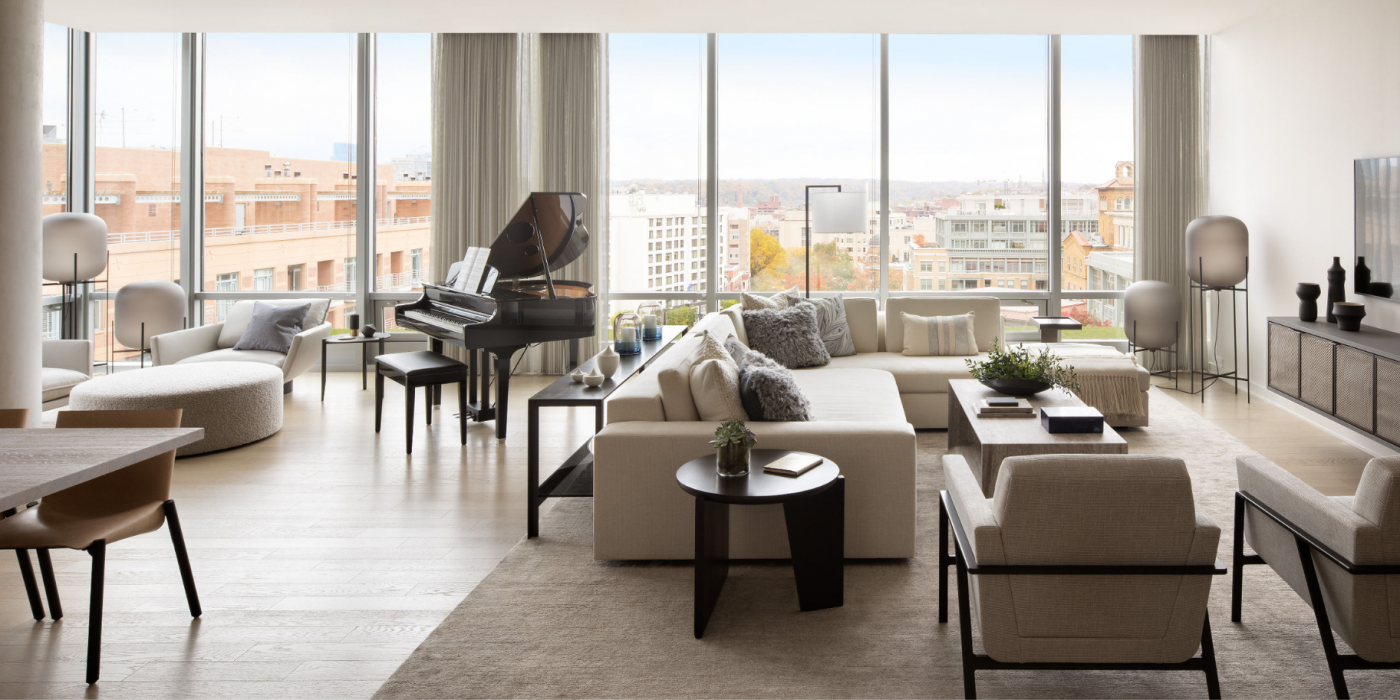
Color restraint is one of the most consistent visual markers of elegant design furniture across makers, retailers, and design publications. Warm whites, natural linens, greige tones, and the unaltered colors of natural materials appear repeatedly — not because designers lack imagination but because neutral palettes extend the useful life of a piece significantly. A sofa in a deeply saturated color becomes dated as color trends shift. The same sofa in a warm greige or natural wool remains appropriate across decades of style evolution and adapts to shifting room contexts as other elements change.
This is a practical calculation, not an aesthetic one. Buyers investing in furniture they expect to keep for many years are making a rational choice when they select materials and colors that will not require the piece to be replaced simply because trend cycles have moved on.
What This Means for the Broader Furniture Market
The quiet luxury movement is not a fringe preference. It represents a meaningful reallocation of spending within the residential furniture segment — from volume to value, from trend responsiveness to durability. Retailers positioned toward high-volume, lower-price-point inventory face pressure as buyers who might previously have purchased across several price tiers consolidate their spending into fewer, more considered purchases. Makers and retailers who specialize in craft-forward, material-honest furniture are seeing sustained demand growth, not as a cyclical trend but as a structural shift in how a specific and growing segment of the market thinks about its homes.
For the furniture industry, the implications extend beyond product development. Sourcing, manufacturing transparency, and communication about construction quality have all become competitive differentiators in ways they were not a decade ago. Brands that can articulate why their pieces are built the way they are — and demonstrate that value through the behavior of the object over time — are better positioned to retain buyers who have moved out of the replacement cycle entirely.
Conclusion
The quiet luxury movement in American residential design is, at its core, a correction. After years of furnishing culture shaped by availability, affordability, and trend acceleration, a significant portion of buyers has returned to older and more durable principles: buy less, buy better, and expect what you buy to remain relevant across the full arc of domestic life. Elegant design furniture sits at the center of this correction — not as a style category defined by a look, but as an approach to objects defined by how they are made and how long they last. For homeowners, designers, and the industry that serves them, understanding this shift is not a matter of following trends. It is a matter of recognizing how the fundamental expectations of a growing market segment have changed, and what it takes to meet them honestly.