How to Choose the Right Stainless Steel Hollow Ball for Valve and Float Assembly Applications

In industrial fluid management, float assemblies and valve systems depend on components that perform consistently across a wide range of conditions. When a single part fails — whether from corrosion, pressure deformation, or poor dimensional fit — the result is rarely contained. It affects flow control, triggers unplanned maintenance cycles, and in some cases, compromises the entire system it was designed to regulate.
Float balls used in valve assemblies are often treated as commodity items during procurement. That assumption becomes a problem when operating environments are demanding. Chemical exposure, temperature variation, fluid density changes, and mechanical stress all interact with the float in ways that generic specifications do not capture. Choosing the right component requires understanding what the application actually demands — not simply matching a size or material grade from a catalog.
This guide is written for engineers, procurement managers, and maintenance supervisors who need to make informed decisions about float ball selection for real operating conditions.
Table of Contents
Understanding What a Stainless Steel Hollow Ball Actually Does in an Assembly
A stainless steel hollow ball is a sealed, buoyant sphere used in float valve systems to detect and respond to fluid levels. As the liquid level rises or falls, the float ball moves with it, transmitting mechanical force to a connected valve mechanism that either opens or closes flow. The ball’s effectiveness depends on its ability to maintain buoyancy consistently over time and under the specific conditions of the application it serves.
The hollow construction is what makes buoyancy possible. The air or inert gas sealed inside keeps the ball floating at the correct depth relative to the fluid surface. Any compromise to the seal — through weld failure, material fatigue, or surface pitting — introduces the risk of fluid ingress, which adds weight, reduces buoyancy, and causes the valve to behave unpredictably. This is why material quality, wall thickness, and weld integrity are not interchangeable considerations. Each one directly affects the reliability of level control.



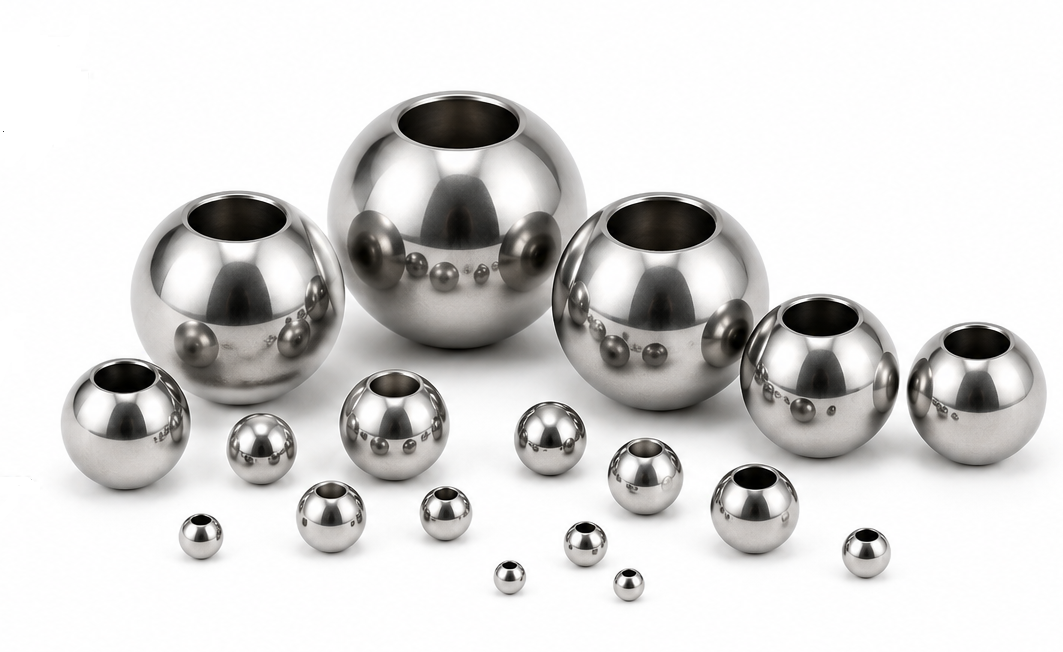
For procurement teams reviewing options, browsing a structured product range such as a stainless steel hollow ball catalog provides a practical starting point for comparing grades, sizes, and construction standards before narrowing selections to match specific system requirements.
How Float Position Translates to Valve Behavior
The mechanical linkage between float and valve is sensitive to the weight and displacement characteristics of the ball. A ball that is too heavy for the application may not rise sufficiently to trigger valve closure at the correct level, resulting in overflow conditions. A ball that is too buoyant for the fluid density may trigger premature shutoff. Neither condition is immediately obvious during initial installation — both tend to surface as inconsistencies in system behavior over time.
Understanding this relationship helps explain why selecting a float ball based on size alone is insufficient. Weight, wall thickness, and material density all interact with the fluid environment to determine whether the float performs as intended. These characteristics need to be evaluated together, not independently.
Material Grade Selection and Its Impact on Long-Term Performance
Stainless steel is not a single material. It is a category of alloys with different compositions that respond differently to chemical exposure, temperature, and mechanical stress. The grade chosen for a float ball determines how the component will perform in contact with the specific fluid it is submerged in, and over what timeframe degradation is likely to begin.
In environments with high chloride content — seawater systems, cooling towers, certain chemical processing lines — lower-grade stainless alloys are prone to pitting corrosion over time. This form of corrosion is localized rather than uniform, which makes it harder to detect visually during routine inspection. By the time a pit has penetrated the ball wall far enough to compromise the seal, the damage may already be reflected in inconsistent valve operation rather than visible surface deterioration.
Matching Alloy Composition to the Operating Environment
Higher molybdenum content in stainless alloys significantly improves resistance to pitting and crevice corrosion, particularly in chloride-rich environments. This is why grade selection matters beyond basic corrosion resistance classifications. An alloy suitable for clean water service in a municipal distribution system may not be appropriate for a chemical dosing line or a coastal desalination application, even if both applications appear similar in terms of pressure and temperature range.
Procurement decisions that default to the lowest-cost stainless grade without accounting for the specific chemical environment often result in accelerated component replacement cycles. The cost saved at purchase is typically exceeded by the combined cost of maintenance labor, system downtime, and the failure risk associated with undetected corrosion.
Surface Finish and Its Role in Corrosion Resistance
The surface condition of a stainless steel hollow ball affects how well the passive oxide layer that gives stainless steel its corrosion resistance is maintained. Rough surfaces, machining marks, or inconsistent polishing create areas where the passive layer is thinner or incomplete. In aggressive media, these areas corrode faster than the surrounding surface, which can initiate pitting in locations that correspond directly to the highest mechanical stress points on the ball.
A consistent, smooth surface finish also reduces the accumulation of deposits and biological growth in food-grade or pharmaceutical float systems, where hygiene standards apply. In these contexts, surface finish is both a functional and a compliance requirement.
Pressure Tolerance and Structural Integrity Under Operating Conditions
Float balls used in pressurized systems face a fundamentally different set of structural demands than those used in atmospheric tanks. In pressurized applications, the differential between the internal air pressure of the hollow ball and the external fluid pressure determines whether the ball can maintain its shape without deformation or collapse. Wall thickness, weld quality, and alloy tensile strength collectively determine the pressure tolerance of a given ball design.
According to general engineering principles referenced in materials science standards, thin-walled hollow spheres under external pressure are susceptible to buckling when the pressure differential exceeds the design threshold of the shell. For float ball applications, this means that selecting a ball with wall thickness appropriate only for an atmospheric tank application and using it in a pressurized system creates a structural risk that may not manifest immediately but will do so under sustained or peak operating pressure.
Standards bodies such as ASTM International publish material and testing standards relevant to stainless steel components used in fluid handling systems, which can serve as a useful reference when specifying pressure-rated float balls.
Weld Integrity as a Structural and Sealing Factor
The weld seam on a stainless steel hollow ball is the most mechanically and chemically vulnerable point on the component. It is where two formed halves are joined, and it is where any inconsistency in the welding process — porosity, incomplete fusion, or heat-affected zone degradation — will concentrate stress over time. A weld that appears sound on delivery may develop micro-fractures under repeated pressure cycling, particularly in systems where pressure fluctuates frequently.
Quality manufacturers subject weld seams to pressure testing and inspection before releasing float balls for use in valve assemblies. When evaluating suppliers, asking specifically about weld testing and quality control procedures is a reasonable step that can distinguish reliable components from those produced to lower standards.
Dimensional Accuracy and Compatibility with Valve Assemblies
Float balls are designed to work within specific valve and float arm configurations. Dimensional deviation — even small variation in diameter or sphericity — affects how the ball seats within the assembly, how it tracks with changing fluid levels, and how efficiently it transfers force to the valve mechanism. In precision valve systems, this can translate directly into inaccurate level control and erratic shutoff behavior.
Consistency across a batch of components matters as much as the accuracy of any individual ball. When a replacement ball has slightly different dimensions than the original, the valve assembly may need recalibration. In facilities with multiple identical systems, inconsistent replacement components create variability that complicates maintenance and troubleshooting.
Thread Fittings and Connection Specifications
Many float balls are supplied with threaded connection points for attachment to float arms. The thread standard — whether metric, BSP, or NPT — must match the valve assembly specification exactly. Cross-threading or using an adapter fitting introduces a potential leak point and adds mechanical complexity to what should be a direct connection. Verifying thread compatibility before ordering is a straightforward step that prevents a common and avoidable installation problem.
Application-Specific Considerations Beyond Standard Selection Criteria
Standard selection criteria — grade, size, pressure rating, surface finish — address the majority of application requirements for stainless steel hollow balls. However, certain industries and applications introduce additional factors that standard product specifications do not cover fully.
In food processing and pharmaceutical applications, float ball materials and finishes must meet sanitary standards that govern surface roughness, weld quality, and material traceability. In applications involving very high or very low temperatures, thermal expansion properties of the alloy become relevant to how the ball behaves within its assembly over operating cycles. In systems handling viscous fluids, the response time of the float to fluid level changes may need to be adjusted through ball size or weight rather than valve mechanism adjustments.
• Sanitary applications require documented material traceability and surface finish compliance with applicable hygiene standards.
• Cryogenic or high-temperature applications require confirmation that the selected alloy retains its mechanical properties across the full operating temperature range.
• Highly viscous fluid systems may require larger-diameter float balls to generate the buoyant force needed to reliably actuate the valve mechanism.
• Offshore and marine environments introduce accelerated corrosion risk that demands higher-grade alloys and more rigorous surface preparation than equivalent freshwater applications.
• Systems subject to water hammer or pressure surge need float balls with wall thickness and weld integrity rated above the nominal operating pressure to absorb transient loads.
Bringing the Selection Decision Together
Choosing the right stainless steel hollow ball for a valve or float assembly application is not a single decision — it is a sequence of decisions that begins with a clear understanding of the operating environment and works outward to material grade, structural specification, and dimensional compatibility. Each factor connects to the others. An appropriate alloy grade with insufficient wall thickness, or the correct pressure rating with an incompatible thread specification, still produces a component that is wrong for the application.
The practical approach is to define the operating conditions before engaging with product specifications. What fluid will the ball be submerged in? What is the temperature range? Is the system pressurized? What hygiene or compliance standards apply? Answering these questions first gives every subsequent selection decision a defined context rather than leaving it to default catalog choices.
Float assemblies and valve systems are designed to function reliably without constant attention. The components within them, including the float ball, need to match that expectation. A component selected with care for the specific application it will serve reduces maintenance frequency, supports system consistency, and removes a point of uncertainty from what should be a straightforward fluid control function.