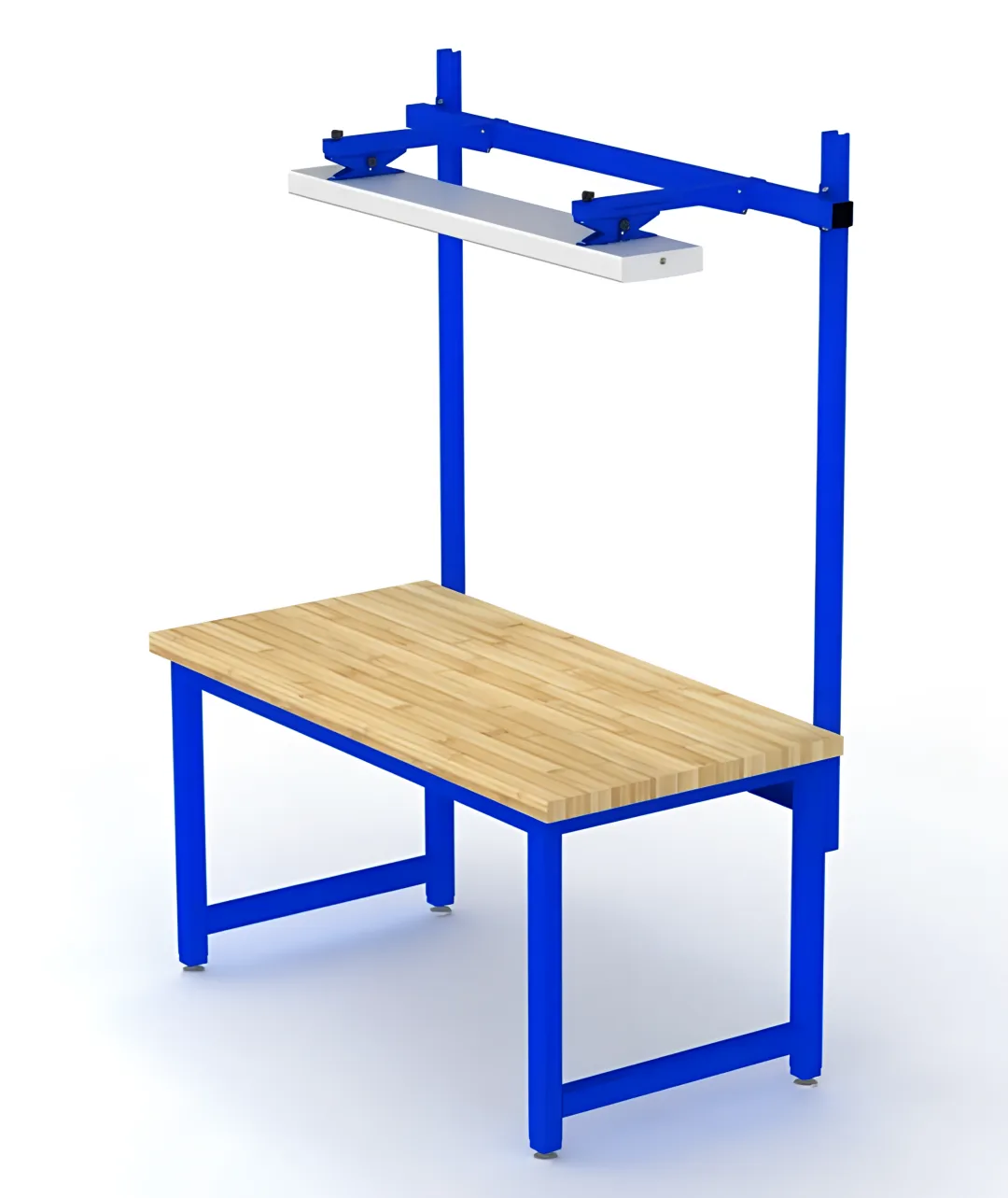
Planning a laboratory build-out in the United States involves a series of decisions that affect how a space will function for years, sometimes decades. Among those decisions, furniture selection is often underestimated. It tends to be treated as a procurement checkbox rather than a structural choice that shapes workflow, safety compliance, and operational efficiency from day one.
The reality is that laboratory environments change. Research priorities shift, team sizes fluctuate, equipment gets upgraded, and regulatory requirements evolve. A furniture system that cannot accommodate those changes becomes an obstacle rather than an asset. That’s why the design philosophy behind a furniture system matters as much as the materials it’s made from.
Before committing to a configuration for a new or renovated lab, there are specific features worth evaluating carefully. These aren’t cosmetic preferences. They are structural and functional qualities that determine how well a furniture system will hold up under real working conditions.
Table of Contents
Why Modular Design Changes the Conversation About Lab Infrastructure
When evaluating modular lab furniture, the core benefit is not simply that it can be rearranged. It’s that the system is designed from the ground up to support change without requiring a full replacement cycle. Unlike fixed casework, which is essentially permanent construction, modular systems are engineered with interchangeable components that can be added to, reconfigured, or relocated as the lab’s needs evolve. This distinction has real financial and operational consequences, particularly for facilities that anticipate growth or program changes over a five-to-ten-year horizon.
For lab managers and facility planners evaluating options, understanding what modular lab furniture actually involves—structurally, functionally, and in terms of long-term cost—is the starting point for making a sound investment. The following ten features represent what that evaluation should include.



1. Structural Load Capacity Appropriate to the Work Being Done
Laboratory furniture carries more weight than most office or industrial furniture. Analytical instruments, centrifuges, multi-channel power supplies, and storage containers place sustained stress on work surfaces and shelving. A furniture system that is not rated for that load will degrade over time, creating safety risks and requiring early replacement.
Understanding Load Ratings in Context
Load ratings are not just about maximum capacity under a single test condition. They reflect how a surface performs under consistent, distributed weight over years of use. When reviewing furniture specifications, ask how the load ratings were derived and whether they account for dynamic loads—meaning equipment that vibrates or shifts during operation—not just static weight. A surface that handles a centrifuge differs from one suited only for documents and light tools.
2. Reconfigurability Without Structural Compromise
One of the primary arguments for modular systems is that they can be changed without major disruption. But not all modular furniture achieves this equally. Some systems allow reconfiguration in theory but require specialized tools, vendor assistance, or partial demolition to accomplish in practice.
What True Reconfigurability Requires
A genuinely reconfigurable system uses standardized connection points, common hardware, and components that can be swapped without affecting the structural integrity of adjacent units. When evaluating a system, ask whether your facilities team can execute a reconfiguration with standard tools and basic instruction. If the answer requires a manufacturer service call every time, the practical flexibility of the system is limited regardless of what the product literature says.
3. Chemical and Solvent Resistance on Work Surfaces
Work surfaces in chemistry, biology, and materials labs are regularly exposed to cleaning agents, solvents, acids, and other reactive substances. The surface material determines how long the furniture remains functional and safe. Degraded surfaces can harbor contamination, create compliance issues, and pose direct safety risks to personnel.
Matching Surface Material to Lab Type
Different lab environments call for different surface materials. Epoxy resin, phenolic resin, stainless steel, and high-pressure laminate each have distinct resistance profiles. The selection should be based on the actual chemical exposure anticipated in the space, not a general-purpose default. This decision is worth consulting with a safety officer or environmental health team before finalizing.
4. Compatibility With Utility Distribution Systems
Modern labs require access to electricity, data, gas, and water at multiple points throughout the workspace. How a furniture system integrates with utility distribution significantly affects both the initial installation cost and the long-term flexibility of the lab.
Above-Floor vs. Integrated Utility Routing
Systems that route utilities through above-floor channels or spine walls allow utilities to be added or relocated without floor penetrations or major construction work. This approach, documented extensively in laboratory planning standards published by organizations such as the National Fire Protection Association, supports safer, more adaptable lab environments where utility access can follow the work rather than constrain it.
5. Adjustable Work Surface Heights
Not every task in a lab is performed at the same height, and not every person working in the lab is the same size. Fixed-height benches create ergonomic problems over time, contributing to fatigue and repetitive strain injuries that affect productivity and, in some facilities, worker compensation exposure.
Ergonomics as an Operational Issue, Not a Comfort Preference
Height-adjustable surfaces allow the same bench to be used for seated and standing tasks, accommodate users of different physical dimensions, and extend the usable life of the furniture as team composition changes. In regulated research environments, ergonomic design is also increasingly tied to documentation requirements for workplace safety programs. The adjustability feature should be evaluated for ease of adjustment and the stability it maintains across height positions.
6. Overhead Storage Integration That Doesn’t Restrict Workspace Access
Overhead storage is standard in most lab environments, but how it is designed relative to the work surface below determines whether it adds functional space or creates a physical obstacle. Shelving that overhangs the work surface too aggressively limits standing access and restricts the use of taller equipment.
Clearance, Depth, and Adjustability
Look for overhead systems where the shelf depth and vertical clearance can be adjusted independently of the bench below. This allows the storage to serve its purpose without interfering with the primary work area. Fixed overhead systems are less adaptable and often become underused as equipment configurations change.
7. Fume Hood and Equipment Integration Points
Fume hoods, biosafety cabinets, and specialized analytical equipment often need to be positioned adjacent to or integrated with the primary bench system. A modular furniture system that doesn’t account for these integration points forces workarounds that compromise both safety and workflow.
Planning Integration Before Purchase
Before finalizing a furniture configuration, map out where every major piece of equipment will sit and what clearances it requires. The furniture system should support those placements without custom fabrication. Systems that offer dedicated equipment bays, reinforced sections, and standardized integration points will accommodate a wider range of current and future equipment needs.
8. Durability of Frames and Hardware Under Daily Use
The quality of a modular system’s framing and connection hardware determines how long it maintains structural integrity under regular use. Low-cost systems often show wear at connection points first, leading to wobble, misalignment, and eventually unsafe working conditions.
Evaluating Frame Material and Finish
Steel frames with powder-coated finishes are the standard in most laboratory environments for good reason. They resist corrosion, tolerate cleaning agents, and maintain structural rigidity over long periods. When reviewing products, look at the gauge of steel used in the framing and the quality of the connection hardware. These details are often where differentiation between product tiers becomes most apparent.
9. Compliance Readiness for Regulatory and Safety Standards
Laboratory furniture in the United States must meet a range of safety and regulatory standards depending on the type of research being conducted, the chemicals in use, and the classification of the facility. Furniture that was not designed with these requirements in mind may require modifications or replacement when an audit or inspection surfaces gaps.
Standards Vary by Lab Type and Jurisdiction
Compliance requirements differ between clinical labs, research labs, industrial testing facilities, and educational institutions. Before selecting a furniture system, confirm which standards apply to your specific facility and verify that the furniture products under consideration are designed to meet those requirements. Documentation from the manufacturer should be available and current.
10. Lead Times, Availability, and Domestic Supply Chain Stability
A furniture system can meet every technical requirement and still create serious problems if it cannot be delivered on a schedule that supports the build-out timeline. Supply chain disruptions have affected nearly every product category in recent years, and laboratory furniture is no exception.
Sourcing and Manufacturing Location Matter for Project Planning
Furniture manufactured domestically or through established North American supply chains tends to offer more predictable lead times and easier access to replacement components. This is particularly relevant for modular systems, where the ability to add components or replace damaged parts after installation is part of the long-term value. When evaluating suppliers, ask directly about current lead times, manufacturing locations, and whether replacement parts are stocked domestically.
Making a Considered Decision Before the Build Begins
A laboratory build-out is a significant investment, and the decisions made during the planning phase have consequences that extend well beyond the opening day. Furniture selection affects how safely and efficiently the space operates, how well it adapts to change, and how much it costs to maintain over time.
The ten features covered in this article represent a practical framework for evaluating options before committing to a configuration. None of them require specialized expertise to assess—they require the right questions and enough time to evaluate answers carefully. A surface that resists the chemicals actually used in the lab. A frame that holds its integrity under daily load. A system that can be reconfigured without a full replacement. These are not premium features. They are baseline expectations for a furniture system that will serve a working laboratory for years.
Approaching the selection process with this kind of specificity tends to produce better outcomes than relying on catalog descriptions or general-purpose product comparisons. The features matter. The context in which they’ll be used matters more. Aligning those two things before a purchase order is signed is what separates a functional lab from one that creates problems before it finds its footing.