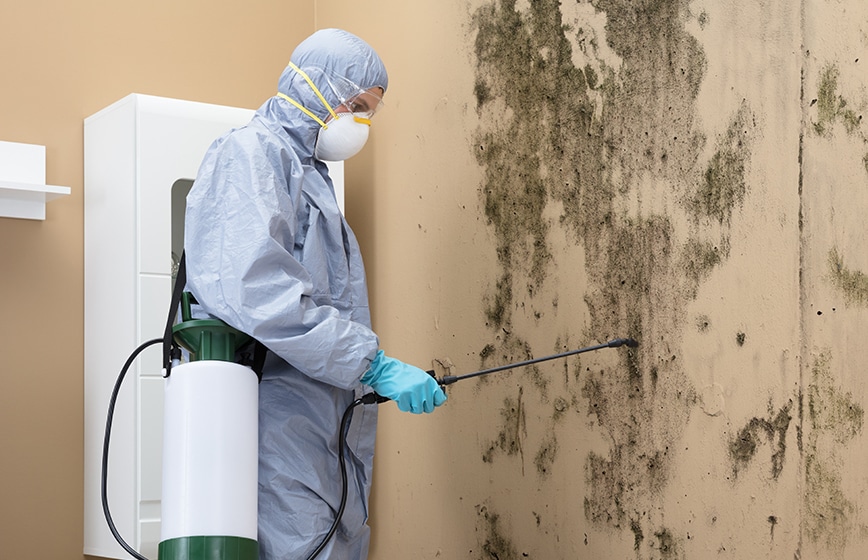
Mold is one of the more deceptive problems a home can develop. Unlike a broken pipe or a cracked foundation, it often grows in places that aren’t immediately visible — inside walls, beneath flooring, behind cabinetry, and within the structural cavities of a building. By the time most homeowners notice it, the damage has already been spreading for weeks or months.
The conditions that support mold growth are common in most homes: moisture accumulation, inadequate ventilation, seasonal temperature shifts, and minor water intrusion events that go unaddressed. None of these require a dramatic flood or catastrophic leak. A slow drip under a bathroom sink or condensation building up around a window frame is often enough to set the process in motion.
Understanding when mold has moved beyond surface-level cleaning and into territory that requires professional assessment is important for any homeowner. The distinction matters not just for the health of the occupants, but for the long-term structural integrity of the property itself. What follows are seven signs that indicate a mold situation has reached the point where professional attention is no longer optional.
Table of Contents
1. Visible Mold Growth That Keeps Returning After Cleaning
When mold reappears in the same area within days or weeks of being cleaned, it is rarely a surface problem. Recurring growth is a sign that the underlying moisture source has not been resolved and that mold colonies may have established themselves deeper within the material. A professional mold damage repair service addresses not just the visible growth, but the conditions that allow it to persist — including moisture barriers, affected drywall, and insulation that may need to be removed and replaced entirely.
Why Surface Cleaning Fails in Persistent Cases
Most household cleaning products can remove visible mold from hard, non-porous surfaces. However, porous materials like drywall, wood framing, and ceiling tile absorb moisture at a structural level. Once mold penetrates these materials, it becomes embedded in a way that surface-level treatment cannot reach. Cleaning the surface removes what is visible but does nothing to address what has already migrated inward. Professional remediation involves controlled removal of affected materials and treatment of the surrounding area to prevent recolonization.
2. A Persistent Musty Odor in Enclosed Spaces
Mold produces microbial volatile organic compounds as a byproduct of its metabolic activity. These compounds are responsible for the distinctive musty, earthy smell that often precedes any visible evidence of growth. If a room, closet, basement, or crawl space consistently smells musty — even after cleaning and airing out — mold is almost certainly present somewhere within that space, even if it is not visible from the surface.
Following the Odor to Its Source
The challenge with odor-based detection is that the smell travels. Air circulation within a home means that a mold colony hidden inside a wall cavity can produce an odor that appears to originate from an entirely different area. This makes identifying the source genuinely difficult without professional equipment such as moisture meters, thermal imaging cameras, or air quality sampling. Attempting to locate hidden mold through visual inspection alone often leads to incomplete treatment and continued growth.
3. Water Damage That Was Not Fully Dried Within 48 Hours
According to the United States Environmental Protection Agency, mold can begin to develop on wet materials within 24 to 48 hours under the right conditions. Any water intrusion event — a roof leak, a burst pipe, appliance overflow, or flooding — that was not addressed quickly and completely creates a high-probability environment for mold colonization. This is especially true for materials that absorbed standing water, such as carpeting, subfloor, and wall insulation.
The Hidden Cost of Incomplete Drying
Many homeowners address visible water damage — mopping up standing water, replacing saturated carpet — without accounting for moisture that has migrated into structural components. Subfloor materials, wall cavities, and wooden framing can retain moisture long after the surface appears dry to the touch. In these cases, mold damage repair service professionals use moisture detection tools to assess what isn’t visible and determine whether structural drying or material replacement is necessary to prevent long-term deterioration.
4. Discoloration or Staining on Walls, Ceilings, or Floors
Not all mold is black or green. Depending on the species and the material it has colonized, mold can appear as white patches, gray streaks, brownish staining, or irregular discoloration that might initially be mistaken for water stains or dirt. Staining that cannot be explained by a known spill or surface soiling, or that spreads gradually over time, often indicates active biological growth beneath or within the surface material.
Reading the Pattern of Spread
The pattern and location of staining can offer meaningful information about where moisture is entering and how far growth has progressed. Staining that appears along the base of walls near the floor may indicate moisture wicking up from a slab or crawl space. Ceiling staining in a consistent oval or circular pattern often points to a roof or plumbing issue directly above. A professional assessment can read these patterns and trace them to their source, which is essential before any repair work begins.
5. Occupants Experiencing Unexplained Respiratory or Allergic Symptoms
Mold spores are airborne and can be inhaled continuously by anyone living or working in an affected space. Common symptoms associated with mold exposure include chronic nasal congestion, throat irritation, coughing, eye irritation, and in sensitive individuals, worsening asthma or allergic reactions. When these symptoms appear consistently at home and reduce noticeably when occupants spend time elsewhere, mold exposure is a reasonable explanation that warrants investigation.
The Relationship Between Indoor Air Quality and Building Condition
Health symptoms alone are not a diagnosis of mold, and they can have other causes. However, they serve as a useful signal when combined with other factors such as known water damage history, a musty odor, or a home with known moisture problems. A professional mold damage repair service can conduct air quality sampling and surface testing to determine whether mold spore concentrations in the indoor environment are elevated, which helps connect the building condition to the health concern in a measurable way.
6. Warping, Buckling, or Softening of Structural Materials
When mold colonizes wood framing, subfloor panels, or load-bearing structures, it begins to break down the material over time. This biological degradation is what causes wood to soften, walls to bow slightly, floors to feel spongy underfoot, and door frames to fall out of square. These are not cosmetic issues. They represent a structural consequence of sustained moisture and biological activity within the building materials themselves.
When Repair Becomes a Structural Concern
At this stage, mold remediation alone is not sufficient. The damaged material must be removed and replaced, and the surrounding structure must be assessed to determine whether load-bearing integrity has been compromised. This is work that requires both remediation expertise and construction knowledge. Attempting to repair or refinish over structurally compromised materials without addressing the underlying cause will result in continued deterioration and, eventually, more costly intervention.
7. Mold Found in HVAC Systems, Ductwork, or Air Handling Units
Mold that has established itself within a home’s heating and cooling system presents a distinct challenge because the system itself becomes a distribution mechanism. Every time the system runs, it circulates air through affected ductwork and deposits spores throughout the entire home. This type of mold problem can rapidly affect areas that were previously uncontaminated and significantly elevate the overall spore count within the living environment.
Why HVAC-Related Mold Requires Specialized Remediation
Standard mold remediation protocols are designed for building surfaces and materials. HVAC-related mold requires additional steps including duct inspection and cleaning, coil treatment, and assessment of the drain pan and air handling unit where condensation commonly accumulates. A mold damage repair service that works with HVAC-related contamination will approach the system as part of the broader remediation plan rather than treating it as a separate issue. Failing to address the HVAC component after remediating the rest of the home is one of the more common reasons mold problems recur after treatment.
Concluding Thoughts
Mold problems in residential buildings follow a consistent pattern: a moisture source creates the conditions for growth, growth spreads within materials before it becomes visible, and by the time occupants notice something is wrong, the damage has already progressed beyond what surface treatment can resolve. The seven signs described in this article represent the points in that progression where professional involvement becomes genuinely necessary — not as a precaution, but as the only realistic path to a complete and lasting resolution.
The cost of delayed action is almost always greater than the cost of timely intervention. Material damage compounds. Structural deterioration accelerates. Indoor air quality continues to decline. And the scope of work required to restore the property grows with every week the problem goes unaddressed.
If any of these signs are present in your home, the appropriate next step is a professional assessment — not to confirm the worst, but to establish what the actual scope of the problem is and what a realistic remediation plan looks like. Understanding the full picture early gives homeowners the information they need to make sound decisions about their property before the situation becomes significantly more difficult or expensive to manage.
-

-
-

-

-

-