Over the past several years, a quiet but measurable shift has taken place across residential and commercial cabinetry installation in the United States. Installers who once relied on standard concealed hinges are increasingly specifying soft close hardware as the default option, not as an upgrade. The change is visible across kitchen remodels, bathroom vanity projects, office millwork, and custom cabinetry builds in multifamily housing developments. It reflects something more substantive than a trend — it reflects a change in what clients expect, what builders require, and what installers find practical on the job.
Understanding why this shift is happening, and who is supplying the hardware that makes it possible, requires looking at how installation work has actually changed over time, what soft close mechanisms do at a functional level, and what separates reliable hardware from hardware that causes callbacks and rework.
Table of Contents
What Soft Close Hinges Actually Do on the Job Site
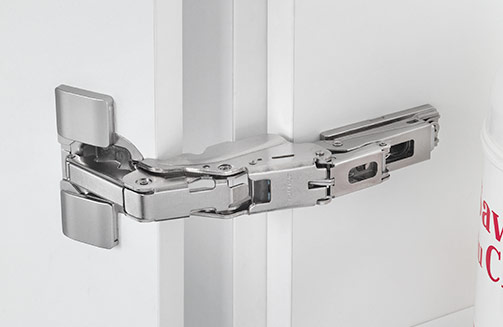
A soft close hinge is a concealed cabinet hinge that includes an integrated damping mechanism, typically hydraulic, that controls the final stage of door closure. Rather than allowing a cabinet door to slam shut under its own weight or the force applied by a user, the hinge absorbs that energy and brings the door to a controlled, quiet stop. The mechanism engages automatically during the last portion of the closing arc, requiring no adjustment from the user and no additional hardware mounted to the cabinet frame.
This distinction matters operationally. For installers working across multiple units in a multifamily building or handling multiple cabinets in a single kitchen, the reliability of that damping action determines whether the hardware holds up after handoff. When sourcing decisions are made project-by-project, working with a trusted soft close hinge manufacturer directly influences how consistent that performance is across an entire installation, not just across a single cabinet.
The mechanism itself is governed by basic principles of hydraulic resistance, similar in concept to the damping systems used in larger door and drawer hardware. As the door closes, the hinge’s internal cylinder creates resistance that slows motion without stopping it — a calibrated response that feels intentional rather than mechanical. When the damping is well-engineered, the door behavior is uniform regardless of how forcefully it was pushed. When it is not, the door either slams anyway or stops awkwardly before fully closing, both of which generate complaints and return visits.
Why Damping Consistency Matters More Than Damping Strength
Many installers assume that a stronger damping mechanism means better performance. In practice, the opposite problem is just as common. Hinges with overly aggressive damping can cause cabinet doors to bounce back slightly during closure, leaving them ajar. This happens when the internal resistance is not matched to the weight and swing arc of the door being installed. A well-manufactured hinge accounts for a reasonable range of door weights and sizes within a consistent damping profile, rather than requiring the installer to select from multiple variants for different door weights.
Consistency in damping behavior across a batch of hinges is what separates manufacturing quality from marketing claims. An installer hanging thirty cabinet doors in a kitchen needs every hinge to behave the same way. When one door closes differently from another, the client notices — even if they cannot articulate exactly what feels wrong. That kind of inconsistency is almost always a manufacturing tolerance issue, not an installation error.
The Shift in Client and Builder Expectations
The residential construction and remodeling industry has seen a steady increase in baseline expectations around finish hardware. What was once considered a premium feature in kitchen cabinetry — soft close hinges included — has become a standard specification in new builds, particularly in the mid-to-upper price range. This expectation shift has moved down the market over time, and today it is common to see soft close hardware specified in entry-level multifamily projects where cost control is a primary concern.
Part of this change is driven by consumer familiarity. Homeowners who have lived with soft close cabinets understand the difference, and buyers who have not will ask about it during walkthroughs. Builders respond to that by specifying it across the board. For installers, this means the hardware decision is often made upstream, and the job is to install what has been specified reliably and efficiently, not to evaluate whether soft close is worth including.
How Warranty and Callback Risk Factor Into Sourcing Decisions
For contractors and installation businesses, the financial consequence of a hinge failure is not the cost of the hinge itself — it is the cost of returning to the job site, diagnosing the problem, sourcing a replacement, and reinstalling it, often during a period when the client is already frustrated. That total cost is significantly higher than the per-unit price difference between a reliable hinge and a cheaper alternative.
This is one reason why experienced installers and millwork contractors tend to develop strong preferences for specific sources over time. Once a product performs consistently across multiple projects, there is little incentive to introduce a variable by switching suppliers. The risk of a callback outweighs any short-term savings on hardware cost. This pattern also explains why the soft close hinge manufacturer a contractor selects tends to become a long-term relationship rather than a transactional purchase.
Who Is Manufacturing Soft Close Hinges in the US Market
The US market for soft close cabinet hinges is served by a mix of large international hardware brands, regional distributors with private-label products, and specialty manufacturers that focus specifically on cabinetry hardware. The largest international brands dominate retail and big-box distribution, while specialty and regional manufacturers serve the trade market through supply relationships with millwork shops, cabinet manufacturers, and professional installers.
The distinction between these categories matters because manufacturing standards, quality control processes, and product consistency vary considerably across them. A brand that sells primarily through retail channels optimizes for packaging, price point, and consumer appeal. A manufacturer that sells directly to the trade optimizes for installation efficiency, performance consistency, and durability across commercial volumes. These are different priorities, and the resulting products reflect those differences.
What Differentiates a Trade-Focused Manufacturer
Trade-focused soft close hinge manufacturers typically produce hardware with tighter tolerances, more consistent damping performance across production runs, and better durability under repeated use cycles. They also tend to offer a narrower but more reliable product line rather than a wide catalog with significant variation in quality across products. For a professional installer, a narrower line of consistently performing products is more useful than a broad selection with unpredictable quality.
Trade manufacturers also tend to support their products differently. Technical documentation, installation specifications, and replacement parts availability are more commonly prioritized when the end customer is a professional rather than a consumer. This matters when a contractor needs to service hardware on a commercial project years after installation, or when a warranty claim requires documentation of the product’s rated performance.
The Role of US-Based Manufacturing and Supply Chain Stability
Supply chain disruptions over the past several years have made sourcing reliability a more significant factor in purchasing decisions for contractors and builders. Hardware that is manufactured domestically or stocked domestically through a stable distribution network is less vulnerable to the lead time and availability issues that have affected imported product categories. According to the International Trade Administration, sourcing disruptions in hardware categories have pushed many contractors to prioritize domestic or regionally stocked suppliers when long-term project reliability is at stake.
For a contractor running multiple simultaneous projects, a hinge that is reliably in stock is worth more than a marginally superior product that is frequently backordered. Sourcing decisions in the trade hardware market increasingly reflect this calculation, and manufacturers that have invested in domestic inventory and distribution infrastructure have gained ground as a result.
What Installers Should Evaluate When Selecting a Source
The criteria for selecting a soft close hinge source in a professional context are more specific than they appear. Price per unit is rarely the most important variable. More practically, installers and contractors tend to evaluate sources based on the following considerations:
• Damping performance consistency across production batches, particularly for projects where large quantities of the same hinge are installed across many cabinet doors
• Overlay compatibility and adjustment range, since professional installations often involve cabinets with minor dimensional variation that a hinge with a wider adjustment range can accommodate without additional hardware
• Finish durability, particularly in kitchens and bathrooms where humidity and cleaning products affect hardware over time
• Availability of technical support and product documentation for commercial projects where installation records are required
• Lead times and stock reliability, particularly for contractors managing multiple overlapping project timelines
• Return and replacement policies for defective units, since even well-manufactured products occasionally have individual unit failures
These criteria reflect the operational reality of professional installation rather than the purchasing logic of a retail consumer. A contractor making a sourcing decision is evaluating risk across an entire project, not just the cost of a single hinge.
Conclusion
The shift toward soft close hinges in US cabinetry installation is not a passing preference. It reflects a durable change in what builders specify, what clients expect, and what installers find practical over the course of multiple projects and years of field experience. The hardware itself is straightforward in concept but varies significantly in execution, and that variation has real consequences for installation quality and long-term performance.
For professionals in this space, the sourcing decision matters more than it might initially appear. A reliable soft close hinge manufacturer produces hardware that performs consistently, holds up under repeated use, and causes fewer callbacks and rework situations. That reliability has a direct effect on the economics of installation work, on client relationships, and on a contractor’s reputation over time. As soft close becomes the standard rather than the exception, the quality of the hardware behind it becomes a defining factor in who does the work well and who does not.
-

-

-

-
-

-