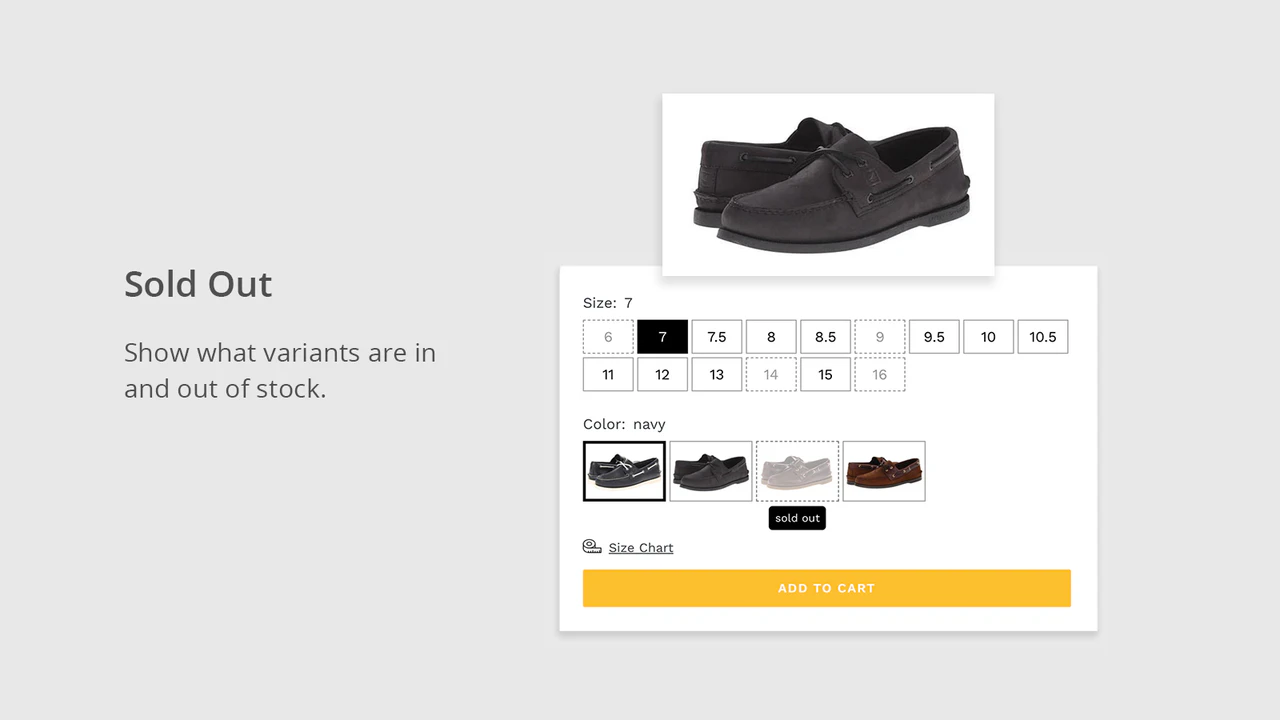
Your shopify product variant structure is one of the biggest hidden drivers of revenue, conversion efficiency, and operational complexity. Most stores treat variants as a catalog decision. High-performing stores treat them as a performance lever.
The real question is not “How many options should you offer?” It is “At what point do variants stop helping buyers decide and start blocking purchase momentum?”
This guide breaks down the decision thresholds, performance signals, and operational triggers that tell you when to simplify and when expansion creates measurable upside.
Table of Contents
Why Variant Strategy Directly Impacts Sales?
Variants shape three critical performance layers:
- Decision speed: how quickly a shopper moves from interest to add to cart
- Perceived relevance: how well the options match buyer intent
- Operational clarity: how clean your data, inventory, and reporting is
When a shopify product variant setup becomes bloated, these layers break:
- Shoppers hesitate
- Product pages feel harder to process
- Inventory spreads across slow combinations
- Analytics lose signal clarity
Variant growth without performance rules creates silent friction.
Decision Paralysis Zones
Shoppers do not evaluate options equally. They filter, compare, and narrow choices in seconds. Once the number of visible decisions exceeds their comfort zone, behavior changes.
Common risk thresholds:
- Large selector stacks reduce mobile momentum
- Multi-step option paths interrupt impulse buying
- Too many visible states slow the scanning speed
The effect is not gradual. It is sharp. Past a certain level, additional choices do not increase perceived value; they increase uncertainty.
A shopify product variant system should help shoppers say yes faster, not force them into evaluation mode.
When Simplifying Variants Improves Conversion
Simplification works when your assortment is wider than your demand concentration.
Velocity Concentration Reality
Most products follow a pattern where a small group of variants generates the majority of sales. Long-tail combinations exist but rarely contribute meaningful revenue.
Problems caused by oversized variant sets:
- Inventory capital sits in low-demand combinations
- Page layout gets cluttered
- Data spreads thin across too many SKUs
- High-performing variants compete visually with low-impact ones
When the top combinations already satisfy most buyers, additional options dilute clarity rather than add value.
Prune Imperatives
Simplification is performance-driven when these signals appear:
- Drop-off rises as option count increases
- Many variants show negligible monthly movement
- Demand patterns show strong concentration around a few combinations
- Inventory aging increases in specific option sets
- Product pages look dense and text-heavy
At this point, removing or consolidating underperformers often raises conversion on the remaining set by improving scanability and reducing hesitation.
Cull Criteria That Remove Emotion from Decisions
Variant decisions become easier when tied to measurable signals instead of preferences.
Good review candidates include combinations that:
- Contribute very little to total product revenue
- Do not support bundling, positioning, or seasonal strategy
- Add complexity without improving conversion or AOV
- Increase inventory fragmentation
A disciplined shopify product variant structure focuses on performance weight, not assortment size.
When Expanding Variants Increases AOV
Expansion works under a different set of conditions, primarily when relevance and personalization matter more than simplicity.
Personalization Profit Windows
Variant expansion performs well when:
- Buyers are already committed to the product category
- The store can surface the best match quickly
- Differences reflect meaningful use cases, not minor variations
In these scenarios, added options signal fit, not confusion. This is especially true for returning buyers and premium segments.
To expand without overwhelming, presentation becomes the key factor. Apps from StarApps Studio help manage this balance. Tools like Swatch King turn option lists into visual swatches, while Variant Image Automator automatically aligns images to the correct selection, reducing cognitive effort.
Expansion works when the interface does the sorting for the shopper.
Mobile Constraint Calculus
Mobile browsing compresses decision tolerance.
On small screens:
- Visible space is limited
- Scroll depth reduces attention
- Tap-heavy flows increase drop-off
A shopify product variant setup that performs on desktop can struggle on mobile if it relies on stacked dropdowns or text-heavy option menus.
Visual hierarchy becomes essential. Variant Title King and Variant Descriptions King help clarify what each variant represents without forcing shoppers to decode short labels.
Mobile-first presentation often determines whether expansion succeeds or fails.
Behavioral Signals That Indicate It’s Time to Adjust
Beyond raw sales data, user behavior reveals when a variant structure is misaligned.
Watch for these patterns:
- High product page views but low variant selection interaction
- Frequent switching between options without add-to-cart
- Strong traffic but low conversion on specific products
- Heatmap concentration only on the first few variants
These behaviors suggest shoppers either cannot find their match quickly or feel overwhelmed by the decision space. Adjusting your shopify product variant layout, not just pricing or promotions, often resolves the issue faster.
SEO Signal Optimization
Variants influence search performance as well.
When variants split across thin, low-authority pages, keyword strength disperses. Consolidated product structures tend to perform better because:
- Authority focuses on stronger parent pages
- Internal linking remains clean
- Structured data becomes easier to manage
Variant Alt Text King helps automate variant-level image signals without creating SEO clutter. A strong shopify product variant hierarchy should strengthen search signals, not scatter them.
Operational Throughput Thresholds
Variant sprawl creates backend strain long before merchants notice.
As combinations grow:
- Admin interfaces slow
- Sync operations become heavier
- Reporting clarity drops
- Forecasting becomes noisy
When operations feel more complex than sales justify, a variant structure is often the root cause.
Simplification improves not just conversion, but operational efficiency and data clarity.
The Hidden Cost of Long-Tail Variants
Every additional low-velocity combination carries invisible overhead:
- Inventory storage
- Purchasing complexity
- More SKUs to track
- Harder replenishment planning
If long-tail variants do not drive traffic, SEO value, or bundle logic, they become operational drag. A leaner shopify product variant set often improves both cash flow and clarity.
Shopify Product Variants Strategy Matrix
| Product Stage | Simplify Signals | Expansion Signals |
| Launch | Heavy option lists but weak add-to-cart | Bundled tests increase order value |
| Growth | Many variants show minimal movement | Returning buyers request more options |
| Maturity | High mobile bounce tied to selector overload | Segmented offers perform strongly |
Variant strategy evolves with product maturity.
2026 Smarter Variant Management
Modern Shopify ecosystems allow dynamic optimization instead of static catalogs.
StarApps Studio focuses specifically on variant clarity and automation. Their suite helps merchants:
- Keep pages visually clean as assortments grow
- Reduce confusion without coding
- Maintain SEO-friendly structures
- Improve shopper navigation
For merchants with apparel, customizable goods, or multi-attribute products, structured presentation makes expansion sustainable.
Automation Accelerators
Variant performance should be reviewed continuously, not seasonally.
Strong systems include:
- Performance thresholds for review
- Regular identification of low-impact combinations
- Controlled testing of bundles and new configurations
- Presentation updates tied to behavior patterns
A high-performing shopify product variant strategy becomes an ongoing optimization loop.
Execution Blueprint
To optimize variant performance:
- Rank variants by recent revenue contribution
- Identify low-impact combinations
- Test consolidated layouts on traffic-heavy products
- Use visual swatches and auto-linked images for clarity
- Maintain unified SEO signals
- Review mobile layouts separately from desktop
Most gains come from presentation logic and performance-based pruning.
Conclusion
A variant strategy is not about offering maximum choice. It is about offering the right choice structure for your audience and stage.
Simplify when clarity improves decision speed. Expand when personalization increases order value. The strongest Shopify stores adjust their shopify product variant structure continuously based on performance signals.
With automation-focused tools, this becomes a scalable system instead of a manual cleanup task, helping merchants grow without overwhelming buyers.
-

-

-

-

-

-