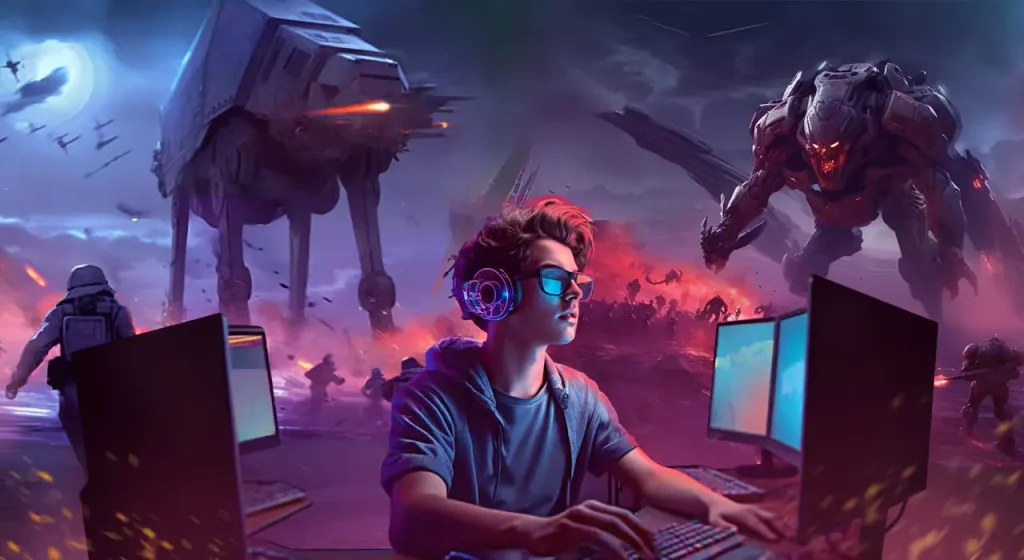
While game mechanics, plot and soundtrack deserve special attention, the visual component of the game remains the element that first attracts the player’s attention. The visual language of the game is able to convey the mood, atmosphere of the world and motivate you to immerse yourself in the universe even before the first note of the soundtrack sounds. In an environment where competition in the gaming market is becoming tougher and the requirements for graphic quality are steadily increasing, studios are looking for new ways to provide a high level of visual content. And one of the most effective solutions is cooperation with 3D game art companies, teams of specialists specializing in the creation of 3D models, animation, environments and other visual elements.
These companies allow studios to work with creative staff around the world, overcoming geographical restrictions and providing flexibility in work. The result of such an approach is not limited to beautiful models; it opens up new possibilities for creativity, technical implementation and development optimization. Among such providers are companies with significant experience, such as N‑iX Games, which provide comprehensive 3D art services, including character modeling, props, animation and VFX, working with AAA projects and major publishers.
Table of Contents
Advantages of cooperation with 3D game art companies
Collaboration with specialized 3D art companies opens up a whole range of advantages for studios, regardless of their scale.
First, it saves time and resources. Forming your own team of artists requires significant investments (recruiting staff, training, organizing processes and providing them with the necessary tools). Outsourcing allows you to immediately work with a team that has established workflows, a ready-made infrastructure and experience working on various projects.
The second is flexibility in scaling. Without having to continuously maintain a large staff, a studio can bring in outside artists at the stages where their input is crucial for a large release with lots of scenes, characters, and effects. This method enables you to promptly adjust to the project’s requirements and sustain team productivity throughout all phases of development. Lastly, it is the availability of cutting-edge technologies and tried-and-true techniques. Because they frequently have their own tools, standardized procedures, and a plethora of real-world experience, outsourced teams are able to produce high-quality 3D models, textures, lighting, and animations in a timely manner that fully satisfies the requirements of contemporary game engines and raises the project’s overall caliber.
Examples of influential companies in the industry
The list of leading 3D art companies includes not only those with large teams, but also those specializing in narrow directions or certain styles. Among them are:
- Secret 6, which worked on the art part of games such as The Last of Us Remastered and Suicide Squad.
- Ocellus, a studio from France, known for its stylish models for games such as Clash of Clans and Armello.
- Art Bully Productions, which created 3D content for Fortnite and Rage 2.
- BOSi Art Studios, which provided art packages for large projects, including Warcraft III: Reforged.
These companies demonstrate that high-quality 3D art can be created not only in-house, but also globally, with a team spread across the globe.
Changing the approach to development
Another important trend that has significantly changed the industry is the transition from centralized content production to distributed. A few years ago, studios tended to keep all processes in-house in order to better control quality and communication. Today, they are increasingly choosing external teams, as global collaborations have proven their effectiveness. This not only allows for high-quality content, but also expands the possibilities of internal teams to focus on the core aspects of the project.
This trend is associated with the development of technology and communications. Collaboration tools, cloud storage services and remote platforms allow artists and studios to work together without time and physical constraints. This is what opens up the possibility of creativity that is not limited to one office or one country.
How 3D art is changing the gaming experience
When artists from different parts of the world work on a game connectore, its world truly comes to life. Every detail of the models, every texture and lighting accent carries a piece of the author’s unique experience, style and cultural vision. This is felt not only in the picture, but also in the atmosphere of the world, its mood and emotional impact on the player (from the first step in the location to the last frame of the final scene). Global teams bring fresh approaches, unconventional solutions and bold ideas, turning the game into something more than just a set of models and effects. This is especially important for large projects: here it is not enough to simply impress with beauty, impeccable technical quality is necessary at every stage. Studios specializing in 3D art set strict standards of control (from modeling to rendering and integration into the game engine). This approach avoids common problems of internal teams where artists perform multiple roles at once, and ensures that the final game world will be cohesive, harmonious, and ready to meet the highest industry standards.
Conclusion
The world of game development has changed radically. Where studios used to be limited by their own resources, today they can attract talent from any corner of the planet — regardless of the scale or budget of the project. Companies specializing in 3D art have become key players in this transformation, opening up new horizons for studios. Thanks to access to the best artists in the world, they can create games that amaze players not only with graphics, but also with the depth of the world and details. This approach makes the product not just beautiful, but also the studio, flexible, competitive and ready for the challenges of the future.
-

-

-

-

-
-