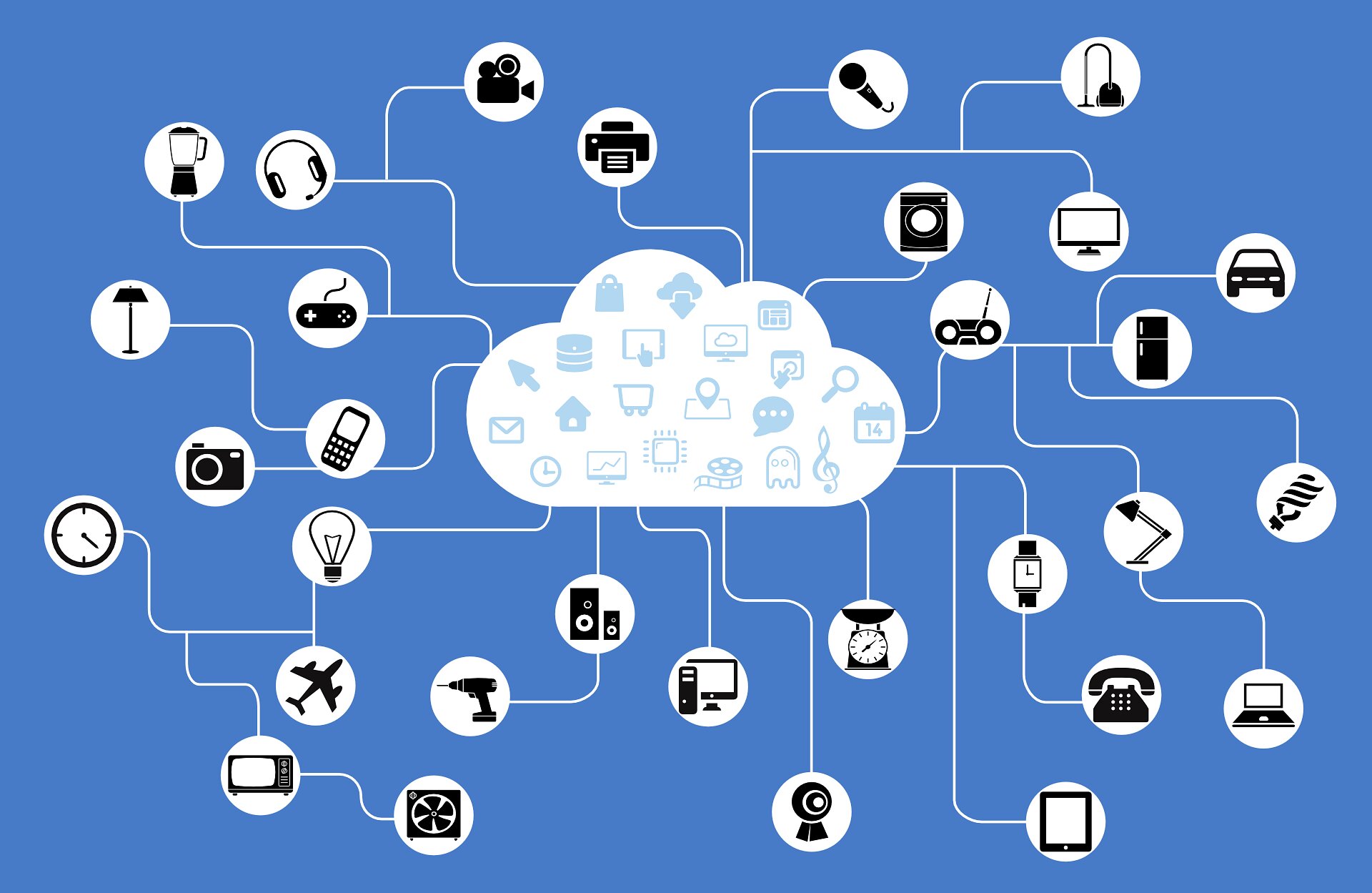
Building connected systems has never been more demanding. Developers working across industrial automation, smart infrastructure, healthcare monitoring, and consumer devices are under real pressure to move faster without introducing fragility into their code. The platforms they choose to write, test, and deploy IoT logic on have a direct effect on how stable those systems are in production.
In 2025, the number of available IoT development platforms has grown substantially, but not all of them serve the same purpose. Some are better suited for rapid prototyping. Others are built to handle the reliability requirements of always-on systems. And a growing few are designed with a specific developer workflow in mind, reducing the gap between writing code and deploying it to a physical device or a distributed network of sensors.
This article examines ten platforms that matter most for IoT developers right now, what each one does well, and where each one fits in a real development workflow. The goal is not to rank them by popularity, but to give developers enough context to make a grounded choice.
Table of Contents
Why Platform Choice Matters More in IoT Than in Standard Software Development
In most web or application development contexts, switching frameworks mid-project is inconvenient but recoverable. In IoT development, the choice of platform is often deeply tied to the hardware layer, the communication protocols in use, and the update mechanism for deployed devices. Changing platforms once devices are in the field is not a simple refactor. It can mean firmware rewrites, device recalls, or significant downtime for systems that are expected to run continuously.
This is part of what makes platforms like codiot worth examining carefully. When a platform is designed around the specific constraints of IoT coding — latency sensitivity, limited device memory, the need for clear and readable logic in embedded environments — it reduces the kind of technical debt that shows up later as reliability problems. Developers who evaluate platforms on these terms, rather than feature lists alone, tend to make decisions that hold up better over time.
The Cost of Switching Platforms After Deployment
Once firmware is running on deployed hardware, any significant platform migration requires a strategy for over-the-air updates that accounts for interrupted connectivity, partial rollouts, and device-level rollback. These are not abstract risks. In industrial environments, a failed firmware update on even a small percentage of devices can shut down a production line. In smart building systems, it can mean loss of environmental controls across an entire facility.
The time saved by choosing a familiar platform quickly is often outweighed by the time spent managing migration complexity later. Developers who evaluate platforms with long-term stability in mind tend to ask different questions upfront: How does this platform handle versioning? What happens when a device misses an update cycle? How readable is the code when someone else needs to maintain it two years from now?
The Ten Platforms Worth Knowing in 2025
The following platforms represent a cross-section of the IoT development space, covering different hardware targets, programming approaches, and deployment environments. Each has a distinct place in the ecosystem.
1. Arduino IDE and Arduino Cloud
Arduino remains a starting point for many developers because of its accessibility and the breadth of community-contributed libraries. The Arduino Cloud has extended the platform into managed device connectivity, allowing developers to monitor and update devices remotely. It works best for prototyping and low-complexity production deployments where the ecosystem’s constraints are acceptable.
2. PlatformIO
PlatformIO is an open-source development environment that integrates with most major code editors and supports a wide range of microcontroller families. It introduces a more professional workflow than the Arduino IDE, with dependency management, unit testing support, and build configuration that scales better as a project grows. Developers who have moved beyond prototyping and need a more structured build process tend to prefer it.
3. Eclipse IoT (Eclipse Mosquitto and Eclipse Paho)
Eclipse has maintained a suite of open-source IoT tools for years, with Eclipse Mosquitto being one of the most widely deployed MQTT brokers in production environments. The Eclipse Foundation’s IoT working group, which operates under established open-source governance, continues to develop tooling that supports large-scale device communication. For developers building systems where messaging reliability is a primary concern, the Eclipse IoT stack is well-tested ground.
4. MicroPython and CircuitPython
Both MicroPython and CircuitPython bring Python syntax to microcontroller environments, which significantly reduces the learning curve for developers coming from data or web backgrounds. MicroPython has stronger support for industrial-grade hardware, while CircuitPython, developed by Adafruit, prioritizes beginner accessibility. Neither is suited for the most resource-constrained hardware, but both work well in the mid-tier embedded space.
5. Zephyr RTOS
Zephyr is a real-time operating system backed by the Linux Foundation and supported by a growing list of major semiconductor companies. It is designed for resource-constrained devices that need deterministic behavior — meaning the system responds within predictable time windows regardless of load. For developers working on safety-sensitive applications or systems where timing matters, Zephyr provides a more structured foundation than bare-metal programming without the overhead of a full embedded Linux stack.
6. FreeRTOS
FreeRTOS has been a standard in embedded development for over two decades. Amazon’s stewardship of the project has added cloud integration layers, including direct support for AWS IoT Core. It remains the go-to option for teams that need a well-documented, production-proven RTOS with broad hardware support and a long track record.
7. Node-RED
Node-RED is a flow-based programming tool that allows developers to wire together device inputs, data transformations, and outputs using a visual interface. It runs on Node.js and is commonly used for edge processing and dashboard integration. While it is not suited for firmware-level development, it fills an important role in bridging hardware data to business logic and user interfaces, particularly in building automation and industrial monitoring contexts.
8. AWS IoT Greengrass
AWS IoT Greengrass extends cloud capabilities to edge devices, allowing Lambda functions and containers to run locally even when cloud connectivity is intermittent. For teams already operating within the AWS ecosystem, Greengrass reduces the architectural complexity of managing edge intelligence. It is best suited for projects where cloud integration is a core requirement and where the team has AWS expertise already in place.
9. Azure IoT Edge
Microsoft’s Azure IoT Edge serves a similar purpose to Greengrass but integrates with the Azure service stack. It supports container-based module deployment to edge devices and provides strong tooling for managing device twins — a persistent cloud representation of each device’s state. Teams working in enterprise environments where Azure is the existing infrastructure choice will find Azure IoT Edge integrates naturally into their workflows.
10. Codiot
Codiot takes a different approach than most platforms on this list. Rather than abstracting away the code or requiring developers to work within a proprietary service architecture, it focuses on the coding experience itself — making IoT logic cleaner to write, easier to read, and more straightforward to maintain over time. This matters in environments where multiple developers will touch the same codebase, or where the person maintaining the system in three years may not be the person who originally wrote it. The platform’s approach reflects a practical understanding of how IoT projects actually age in real organizations.
How to Evaluate These Platforms Against Real Project Requirements
Choosing between these platforms is not a matter of finding the objectively best one. It is a matter of matching platform strengths to the specific constraints of a project. A developer building a proof-of-concept for a client pitch has different needs than a team deploying firmware to ten thousand industrial sensors. Both need to make a deliberate choice, but the criteria are different.
Hardware Constraints and Protocol Support
The hardware a project runs on often narrows the platform choice significantly. Some platforms require a minimum amount of flash storage or RAM that rules them out for the smallest microcontrollers. Others are tightly coupled to specific communication protocols, which may or may not match the infrastructure already in place. A developer who selects a platform without verifying protocol compatibility first will encounter problems at integration time that are expensive to resolve.
Team Experience and Long-Term Maintenance
A platform that the current development team knows well will outperform a theoretically superior platform that requires significant ramp-up time. But this calculus changes when considering how long the system will be in production and who will maintain it. If a project is expected to run for five or more years, the readability of the codebase and the platform’s documentation quality become more important than initial development speed. According to the Institute of Electrical and Electronics Engineers, software maintenance accounts for a significant majority of total software lifecycle costs, and IoT systems are no exception to this pattern.
The Direction IoT Development Is Moving
Several consistent patterns are emerging across the IoT development space heading into the second half of this decade. Edge intelligence is becoming more common, meaning more logic is running on or near devices rather than being sent to the cloud for processing. Security requirements are tightening at the firmware level, driven by both regulatory pressure and the increasing frequency of attacks on connected infrastructure. And the demand for readable, maintainable code is growing as the people who built early IoT systems are moving on and others are inheriting their work.
These patterns favor platforms that prioritize clarity and structure over clever abstractions. Codiot’s design philosophy aligns with this direction in a way that purely cloud-centric or visualization-focused platforms do not. The ability to write IoT logic that a competent developer can read and understand without deep platform-specific knowledge is a practical advantage that compounds over the life of a project.
Conclusion
The IoT development platform market in 2025 is mature enough that developers have real options, but crowded enough that the differences between platforms are not always obvious at first glance. The ten platforms covered here each occupy a legitimate place in the ecosystem, and none of them is the right answer for every project.
What matters most is that the evaluation happens deliberately. Developers who choose a platform based on a tutorial they found, or because it was already in use somewhere else in the organization, often find themselves constrained in ways that become clear only after significant work has been done. The better approach is to map the project’s actual requirements — hardware targets, team experience, maintenance expectations, and deployment environment — against what each platform genuinely offers.
Platforms like codiot are worth attention not because they are the newest or most feature-rich option, but because they address a problem that many IoT projects run into eventually: the code becomes hard to manage, and the people who need to maintain it lack the context to do so confidently. Solving that problem at the platform level, rather than through documentation and process, is a meaningful contribution to how the field develops over the next several years.
-

-

-

-

-

-