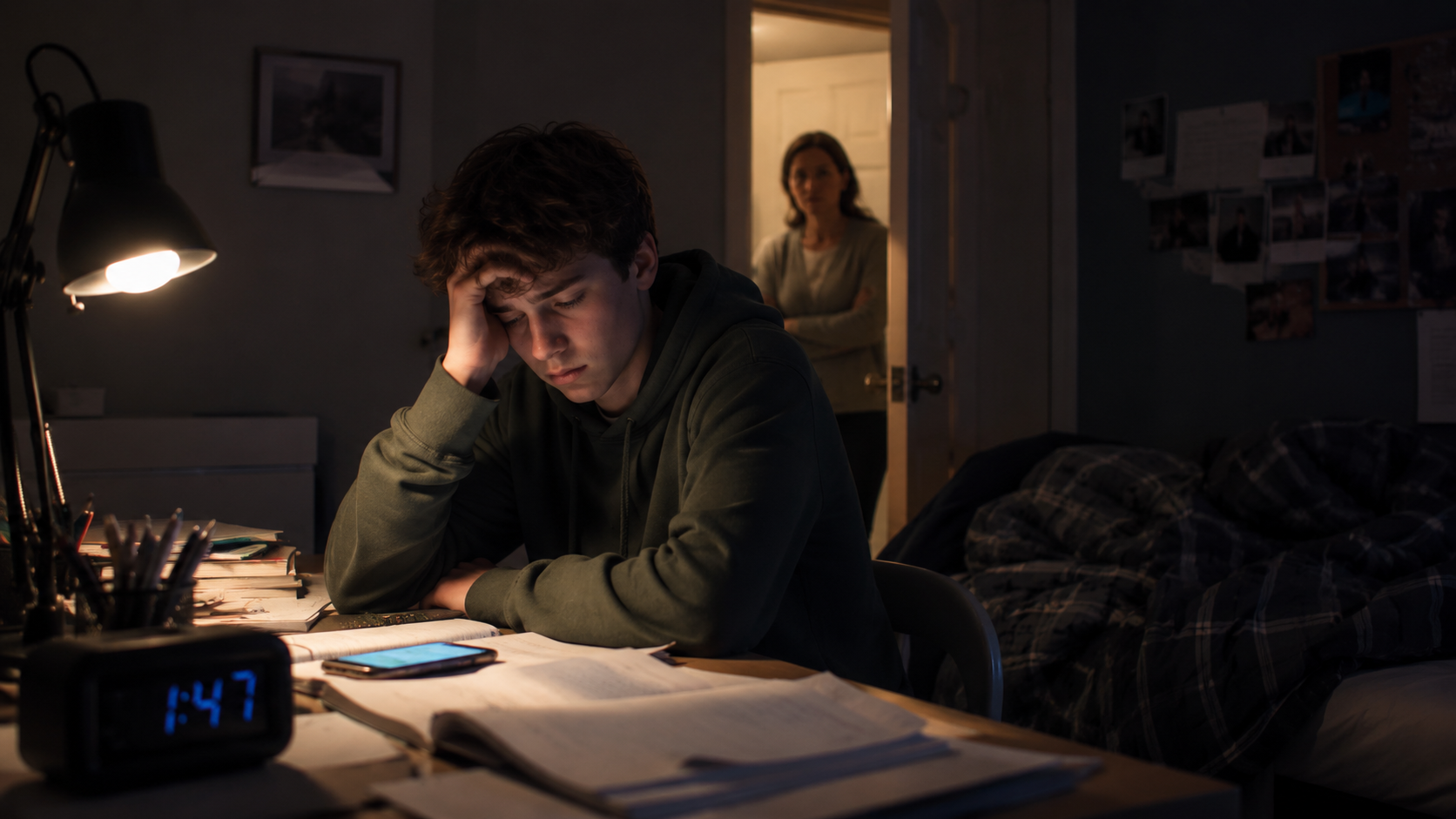
Most parents know what obvious exhaustion looks like. A teen sleeps through the alarm, moves slowly in the morning, complains about being tired, or crashes on the couch after school.
But sleep deprivation does not always look like sleepiness.
Sometimes it looks like anger. Sometimes it looks like laziness. Sometimes it looks like anxiety, avoidance, emotional shutdown, or constant phone use. A tired teen may not say, “I am exhausted.” They may say, “Leave me alone,” “I don’t care,” or “I’ll do it later.”
That is why sleep loss in teenagers is easy to miss. Parents often focus on the behavior they can see — the attitude, missing assignments, isolation, irritability, or poor choices — without realizing that poor sleep may be one of the forces underneath it.
Teenagers need consistent, high-quality sleep for learning, emotional regulation, memory, decision-making, physical growth, and mental health. The CDC says teens ages 13–18 need 8 to 10 hours of sleep in a 24-hour period, yet many high school students report getting less than the recommended amount.
Table of Contents
Teen Sleep Is Not Just a Discipline Problem
When a teen stays up too late, many parents naturally see it as a behavior issue.
They will not put the phone down.
They will not manage their homework.
They will not go to bed when asked.
They will not take the morning routine seriously.
Boundaries matter, of course. But teen sleep problems are not always simple defiance.
During adolescence, the body’s internal clock shifts later. Many teens naturally feel more awake at night and sleepier in the morning. That biological shift collides with early school start times, homework, sports, jobs, family responsibilities, social pressure, and constant digital stimulation.
The American Academy of Pediatrics has described insufficient sleep in adolescents as a public health issue because it affects health, safety, and academic success.
So when parents ask, “Why won’t my teen just go to bed?” the better question may be: “What is keeping my teen’s brain from actually winding down?”
The First Hidden Effect: Emotional Overreaction
One of the earliest signs of sleep deprivation is not yawning. It is emotional volatility.
A teen who is running on too little sleep may have a shorter fuse. Small frustrations feel bigger. A simple reminder sounds like criticism. A sibling’s joke feels personal. A hard assignment feels impossible before it even begins.
This can create a painful family cycle.
Parents see disrespect. Teens feel misunderstood. Conversations become arguments. The real issue — a nervous system that is overloaded and under-rested — never gets addressed.
Sleep helps the brain regulate emotion. When teens do not get enough rest, they may struggle to pause, think clearly, and respond calmly. That does not excuse rude or harmful behavior, but it does help parents respond with more accuracy.
Instead of only asking, “Why are you acting like this?” it may help to ask, “What has your sleep actually looked like this week?”
That one question can shift the conversation from blame to problem-solving.
The Second Hidden Effect: Anxiety That Looks Like Avoidance
Sleep deprivation can make stress feel harder to manage.
A teen who is behind in school may avoid checking assignments. A teen worried about a friendship may stay in bed longer. A teen overwhelmed by expectations may say, “I don’t care,” when they actually feel unable to cope.
To parents, this may look like laziness or irresponsibility. In reality, poor sleep can weaken the skills teens need to plan, prioritize, tolerate discomfort, and solve problems.
Sleep and mental health also affect each other. Sleep Foundation notes that sleep-deprived teens are more likely to report anxiety, depression, and suicidal thoughts or behaviors.
That does not mean every tired teen has a mental health disorder. It means persistent sleep problems deserve attention, especially when they appear alongside mood changes, isolation, falling grades, panic, loss of interest, or major changes in behavior.
Parents who want to better understand the difference between normal tiredness and more serious teen sleep problems may find it helpful to review educational resources on adolescent sleep, emotional health, and behavior changes.
The Third Hidden Effect: Poor Judgment and Impulse Control
Parents often talk to teens about making better choices. But better choices require a rested brain.
When teens are sleep deprived, they may become more impulsive, more reactive, and less able to think through consequences. This can show up in everyday ways:
They snap at a teacher.
They drive carelessly.
They procrastinate until the situation becomes urgent.
They overuse social media even when it makes them feel worse.
They take risks in peer situations they might normally avoid.
The issue is not only that teens are tired. It is that sleep loss can weaken the very skills parents are trying to build: patience, judgment, self-control, and perspective.
A teen may know what the right choice is and still struggle to make it in the moment because their brain is functioning under strain.
The Fourth Hidden Effect: A Drop in Motivation
A sleep-deprived teen may appear lazy.
They may stop caring about grades, avoid chores, quit activities, or spend more time in bed. But low motivation is often more complicated than a lack of effort.
When the body is exhausted, everything feels heavier. School feels harder. Exercise feels unrealistic. Social plans feel draining. Even basic routines like showering, eating well, cleaning a room, or starting homework can feel like too much.
This is why lectures about discipline often fail.
A teen who is deeply tired may not need another speech about responsibility. They may need structure, emotional support, and a realistic reset of their daily rhythm.
Parents can start by looking for patterns instead of isolated behavior.
Is your teen staying up past midnight most nights?
Are they sleeping very late on weekends?
Are they relying on caffeine to get through the day?
Are they more irritable after nights of poor sleep?
Are grades slipping at the same time their sleep schedule is falling apart?
Patterns tell parents more than one bad day.
The Screen-Time Problem Is Really a Recovery Problem
Screens are part of the teen sleep conversation, but the issue is not only blue light.
Phones also delay emotional shutdown.
A teen may be physically in bed while still responding to messages, watching videos, comparing themselves to others, checking notifications, or replaying social drama from the day.
That means the bedroom is no longer always a place of rest. For many teens, it becomes an extension of school, social life, entertainment, conflict, and pressure.
Parents often try to solve this with one hard rule: “No phone at night.”
That may be necessary in some homes. But it usually works better when the parent explains the purpose clearly.
The goal is not control. The goal is recovery.
A better message might be:
“Your brain needs time when no one can reach you, ask from you, compare with you, or pull your attention. Sleep matters, but so does having time to be unavailable.”
That framing can reduce the power struggle because it treats sleep as protection, not punishment.
What Parents Can Do Without Turning Bedtime Into a Battle
Improving teen sleep usually works best when parents focus on rhythm, consistency, and collaboration.
Start with one honest conversation. Not a lecture. Not a punishment. A conversation.
Ask questions like:
“How much sleep do you think you are actually getting?”
“What keeps you up the most — homework, your phone, stress, or not feeling tired?”
“Do you feel rested when you wake up?”
“Do you notice your mood changes when you sleep badly?”
“What would make your nights feel less stressful?”
These questions help teens connect sleep to how they feel, not just to what parents want.
From there, families can work on small changes:
A more consistent wake time.
Fewer late-night notifications.
A phone charging spot away from the bed.
Less caffeine later in the day.
A calmer evening routine.
A 30-minute wind-down window before sleep.
Parents should also be realistic. A teenager who currently falls asleep at 1:30 a.m. is unlikely to suddenly fall asleep at 10:00 p.m. A gradual shift is usually more sustainable than a dramatic overnight change.
When Sleep Problems Need More Attention
Sleep struggles deserve closer attention when they are persistent, worsening, or connected to broader changes in behavior.
Parents should pay attention when poor sleep appears alongside:
changes in appetite, hygiene, or energy
frequent irritability or emotional outbursts
panic, ongoing worry, or constant stress
loss of interest in friends or activities
declining grades or school refusal
substance use or risky behavior
talk of hopelessness, self-harm, or not wanting to be alive
In these situations, sleep may be part of the picture, but it may not be the whole picture. A pediatrician, therapist, school counselor, or qualified mental health professional can help determine whether something deeper is going on.
When sleep issues are connected to ongoing emotional distress, substance use, school refusal, or major changes in behavior, families may need broader support for teens and families beyond at-home routines.
If a teen talks about self-harm or suicide, parents should treat it as urgent. In the U.S., call or text 988 to reach the Suicide & Crisis Lifeline, or contact emergency services if there is immediate danger.
Teen sleep deprivation is not a small lifestyle issue. It can affect how teens think, feel, learn, communicate, and make decisions.
For parents, the most important shift is to stop seeing sleep only as a bedtime problem. It is also a mental health, academic, emotional, and family communication issue.
A tired teen may not always say, “I am overwhelmed.” Sometimes they say it through irritability, avoidance, shutdown, risky choices, or constant conflict.
When parents learn to see those signs differently, they can respond with more clarity — not by removing boundaries, but by addressing the exhaustion underneath the behavior.
Medical disclaimer: This article is for educational purposes only and is not a substitute for professional medical or mental health advice, diagnosis, or treatment. Parents concerned about a teen’s sleep, mood, behavior, substance use, or safety should consult a qualified healthcare or mental health professional.
-

-

-

-

-

-