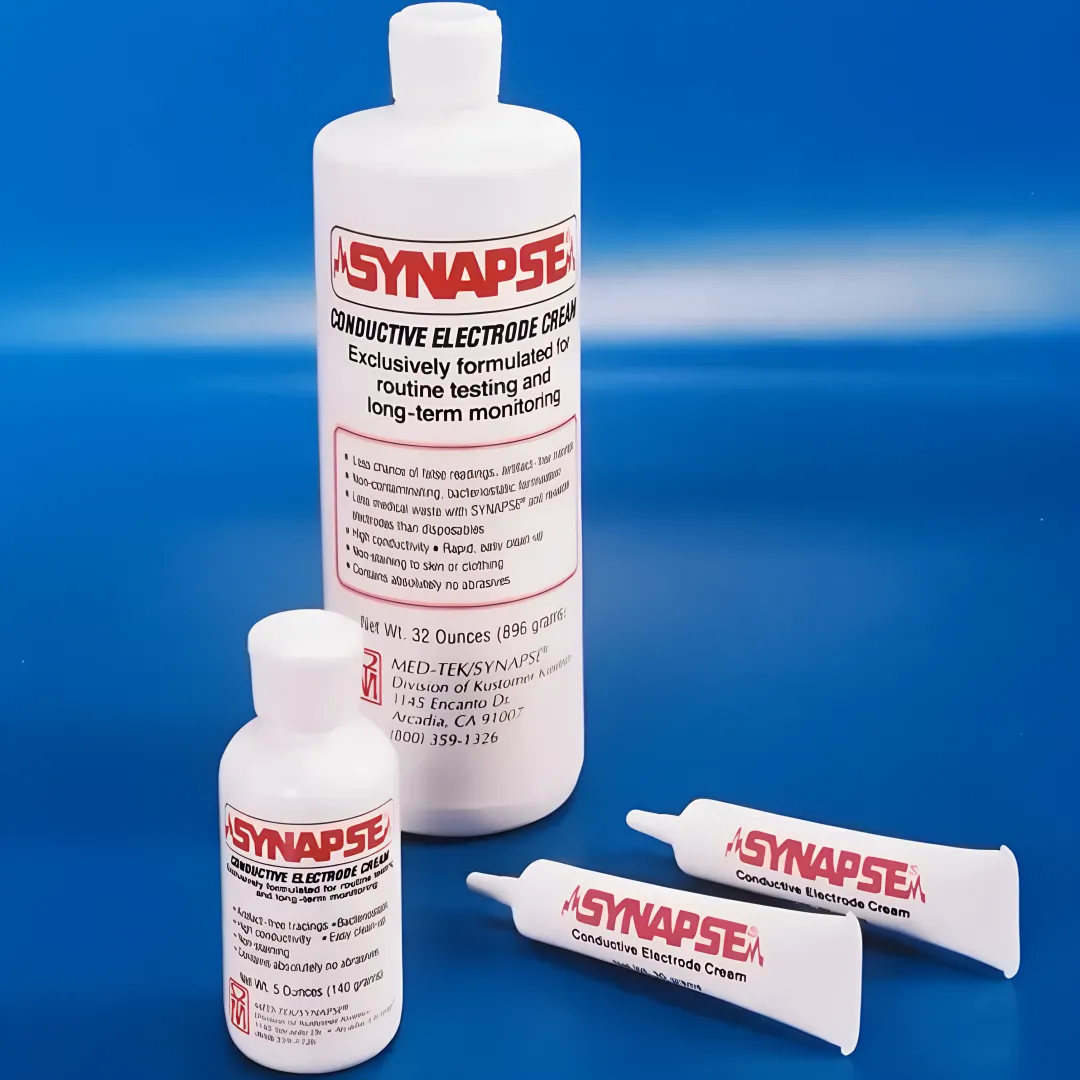
In clinical settings, research laboratories, and rehabilitation facilities across the United States, the quality of an electrical signal depends heavily on what sits between the electrode and the skin. That interface — often overlooked in procurement discussions — has a direct impact on signal accuracy, patient comfort, and the reliability of diagnostic or therapeutic outcomes. For practitioners and procurement teams managing equipment-intensive workflows, understanding what goes into that interface is not a peripheral concern. It is central to how well a procedure performs.
This guide covers the functional role of electrode interface media, how different formulations behave across applications, and what buyers in the US market should consider when sourcing these materials at scale or for specialized use.
Table of Contents
What Electrode Conductive Gel Actually Does
The term electrode conductive gel refers to a water-based, electrically conductive medium applied between a biomedical electrode and the surface of the skin. Its primary function is to reduce electrical impedance — the resistance that disrupts the flow of electrical signals across the skin-electrode interface. Skin, by its nature, is a poor conductor. The outer layer contains dead cells, oils, and air pockets that scatter or weaken electrical signals. A quality electrode conductive gel fills those microscopic gaps, creates a consistent conductive path, and allows current or signal to pass with minimal distortion.
Buyers looking to understand the full range of available formulations will find that the category covers a wide spectrum of products suited to different clinical and technical applications. The gel’s conductivity, viscosity, and pH balance each influence how well it performs under different procedural conditions.
The Role of Impedance Reduction
Impedance is not simply about weak signals. In diagnostic procedures such as electroencephalography or electrocardiography, high impedance at the skin interface introduces noise into the recording. That noise can obscure clinically relevant data, require repeated testing, or compromise interpretation. When practitioners work under time constraints — during emergency assessments or intraoperative monitoring — poor signal quality creates real operational pressure. Reducing impedance through proper gel application is one of the most direct ways to improve signal consistency across a session.
Gel as a Functional Component, Not a Consumable Afterthought
In high-volume clinical environments, electrode gels are often treated as low-cost consumables with little differentiation between products. That assumption creates risk. A gel that dries too quickly during a long-duration procedure will cause impedance to rise partway through a session, degrading signal quality at the point when sustained accuracy matters most. Similarly, a gel that is too thin in consistency may migrate away from the electrode site, leaving gaps in conductivity. Selecting a formulation matched to the specific procedure type and session duration is a practical decision with measurable consequences on outcome quality.
Common Clinical and Technical Applications
Electrode interface gels are used across a broad range of procedures, and the demands placed on the product vary significantly depending on the application. Understanding those differences helps procurement teams avoid over-relying on a single general-purpose product for procedures that have genuinely different requirements.
Electrocardiography and Cardiac Monitoring
In ECG applications, the gel must maintain stable conductivity across multiple electrode sites simultaneously, often over extended monitoring periods. The formulation needs to resist drying without causing skin irritation, particularly for patients with sensitive skin or those undergoing continuous monitoring in intensive care settings. For Holter monitoring, where electrodes remain attached for hours or days, gel performance over time is a critical factor in data reliability.
Electroencephalography and Neurological Testing
EEG procedures involve electrode placement across the scalp, often in contact with hair, which complicates consistent gel application. The gel must penetrate to the scalp surface, maintain good contact without excessive spreading, and remain stable for the duration of the recording. Unlike ECG applications, EEG often requires a thicker, more controlled viscosity to hold electrode caps in place and prevent signal drift during patient movement.
Electromyography and Nerve Conduction Studies
In EMG and nerve conduction procedures, the gel facilitates accurate measurement of electrical activity in muscles and nerve pathways. These sessions involve targeted electrode placement and require precise local conductivity. The gel used in these settings should not interfere with ultrasound imaging if that modality is used alongside electrophysiology, which is increasingly common in musculoskeletal diagnostics.
Physical Therapy and Electrical Stimulation Treatments
Therapeutic applications including transcutaneous electrical nerve stimulation and neuromuscular electrical stimulation rely on gel to distribute electrical current evenly across the treatment area. Uneven distribution can cause patient discomfort or localized skin reactions. In these contexts, gel conductivity and even spreading behavior are directly tied to treatment tolerance and effectiveness.
Formulation Differences That Matter to Buyers
Not all electrode gels are chemically identical, and the differences between formulations have real implications for clinical use, patient safety, and product compatibility. Understanding these distinctions helps procurement teams move beyond price-per-unit comparisons toward decisions based on functional fit.
Abrasive vs. Non-Abrasive Gels
Some gels are formulated with mild abrasive particles designed to disrupt the outer layer of the skin before or during electrode application. This approach reduces impedance more aggressively by removing the primary resistive barrier. These products are well-suited for short-duration diagnostic testing where rapid setup matters. However, abrasive gels are not appropriate for long-duration monitoring, sensitive populations, or repeated use on the same skin sites, where surface disruption can cause irritation or breakdown over time.
pH and Skin Compatibility
The skin’s natural surface maintains a mildly acidic pH, as documented in dermatological research including studies referenced by institutions such as the National Institutes of Health. Gels formulated with a pH well outside that range can disrupt the skin barrier, particularly during extended contact. For patient populations that include elderly individuals, those with compromised skin integrity, or those in long-term care settings, pH compatibility is a meaningful variable — not a minor chemical detail.
Chloride Content and Electrode Compatibility
Many conductive gels are formulated with chloride salts because chloride ions are effective charge carriers that enhance conductivity. However, chloride concentration interacts with electrode materials, particularly silver-silver chloride electrodes, which are the dominant type in biomedical applications. High chloride content can accelerate electrode degradation over time, affecting both measurement accuracy and electrode lifespan. Procurement teams sourcing gel in large quantities should confirm compatibility between gel formulation and the electrode systems in use.
Application Techniques That Affect Performance
The way gel is applied has a direct effect on how it performs during a procedure. Even a well-formulated product will underperform if application technique introduces inconsistency into the electrode-skin interface.
Volume and Coverage Consistency
Applying too little gel results in incomplete coverage and elevated impedance. Applying too much can cause gel to migrate outside the intended contact area, potentially bridging adjacent electrodes and creating electrical artifacts in the recording. In multi-electrode setups — such as full-cap EEG systems — consistent volume application across all sites is essential to maintaining uniform signal quality. Syringe-tipped applicators are often preferred in these settings because they allow more controlled delivery than open dispensing.
Skin Preparation Prior to Application
Gel performance improves significantly when the skin surface is prepared before electrode placement. Removing surface oils with a mild cleanser or gentle abrasive preparation reduces baseline impedance before gel is applied. In many clinical protocols, skin preparation and gel application are treated as a combined step rather than separate considerations. Skipping preparation does not eliminate the need for gel — it simply means the gel is working against a more resistant surface from the outset.
Sourcing Considerations for US-Based Buyers
The US market for electrode interface products includes both domestic manufacturers and imported products, with variation in regulatory compliance, shelf life, and supply chain reliability. For facilities operating under clinical quality standards, a few procurement considerations stand out as particularly important.
Regulatory Classification and Labeling
Electrode gels used in clinical diagnostic or therapeutic procedures are generally classified as medical devices by the US Food and Drug Administration. Buyers sourcing for clinical use should confirm that products carry appropriate device classification and labeling, particularly for facilities subject to accreditation standards that require documented product compliance. Using a product without proper classification in a regulated clinical environment creates audit exposure that is avoidable with straightforward supplier verification.
Bulk vs. Unit Packaging
High-volume facilities should evaluate whether bulk packaging offers cost efficiency without sacrificing hygiene controls. Large-format containers carry a risk of contamination over time if multi-use dispensing practices are not strictly managed. Single-use sachets or foil packets eliminate that risk entirely and simplify documentation for infection control audits. The decision between formats should weigh not just cost per unit but also the facility’s existing protocols for consumable management.
Shelf Life and Storage Requirements
Most electrode gels are water-based and have defined shelf lives that are sensitive to storage temperature. Procuring large quantities to achieve volume pricing is only cost-effective if storage conditions can reliably preserve product quality through the inventory cycle. Gel that has degraded due to improper storage or exceeded shelf life will not perform to specification, which introduces the same signal quality risks that poor product selection creates in the first place.
Conclusion
Electrode conductive gel occupies a narrow but critical position in diagnostic and therapeutic workflows. It is one of the few consumables where performance quality directly affects the accuracy of clinical output, patient comfort, and the operational efficiency of practitioners managing busy caseloads. Treating it as an undifferentiated commodity — selected primarily on price — creates risk that tends to surface at inconvenient moments: mid-procedure, during audits, or when signal quality disputes require explanation.
For procurement teams, the path toward more reliable outcomes starts with matching product formulation to procedural requirements, confirming regulatory compliance, and building sourcing practices that account for shelf life and application consistency. For clinical staff, it starts with understanding that what happens at the electrode-skin interface is not incidental — it is the foundation on which signal quality is built. Both perspectives point toward the same conclusion: the right gel, selected and applied correctly, is a straightforward investment in procedural reliability.
-

-
-

-

-

-