Agriculture in the United States is facing a quiet but consistent set of pressures that most farmers deal with every season: rising input costs, shrinking labor availability, tighter application windows, and increasing scrutiny over chemical use near sensitive areas. For many operations, the way pesticides get applied to fields has not changed meaningfully in decades. Ground rigs work well in many conditions, but they compact soil, struggle in wet seasons, and require operators who are harder to find than they used to be. Fixed-wing aircraft cover ground quickly but lack the precision that modern input management demands.
Against that backdrop, drone-based application has moved from an experimental technology into a genuinely operational one. Farmers across the Midwest, Southeast, and Western growing regions are now running drone applications at commercial scale, not as a novelty, but as a practical response to real field constraints. The transition, however, is not without complexity. Regulatory requirements, equipment decisions, agronomic compatibility, and operational logistics all need to be understood before a single flight takes place. This guide is intended to give working farmers and farm managers a grounded, practical orientation to that process.
Table of Contents
What Drone Spraying Pesticides Actually Involves at the Field Level
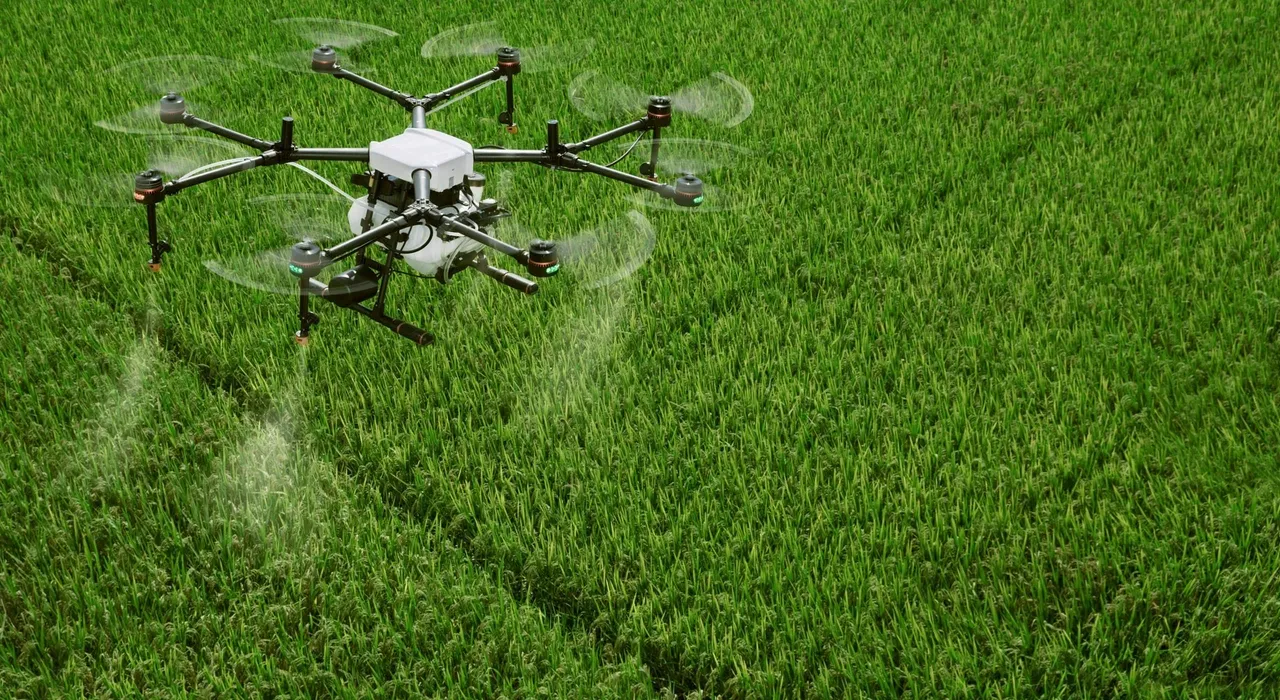
The practice of drone spraying pesticides involves mounting a liquid payload tank to an unmanned aerial vehicle equipped with a spray system, then flying pre-programmed or manually guided paths across a field to apply crop protection products at a defined rate. Unlike traditional application methods, the aircraft does not touch the crop canopy or the soil, and the operator typically works from the field edge or a nearby position with line-of-sight visibility of the drone during flight.
For farmers considering adoption, understanding the full scope of what this involves is essential before making any investment. Reliable resources covering the operational and service dimensions of drone spraying pesticides can help frame realistic expectations about fleet capability, coverage rates, and the types of crops and terrain where this method performs best.
How the Spray System Differs from Ground and Aerial Alternatives
Drone spray systems use rotary-wing airflow in a way that differs fundamentally from both boom sprayers and manned aircraft. The downwash generated by the drone’s propellers creates a directed column of air beneath the aircraft that drives spray droplets into the canopy rather than allowing them to settle passively. This penetration effect is particularly relevant in dense canopy crops like corn at tassel stage or soybeans in the R3 to R4 growth window, where traditional boom sprayers struggle to reach the mid-canopy environment.
The trade-off is coverage rate. A single agricultural drone covers substantially less ground per hour than a large ground rig or a manned aerial applicator. This makes drone application most practical for targeted interventions, difficult terrain, buffer zone compliance, or early-season applications where a full-fleet ground deployment is not warranted. It is not a direct replacement for conventional equipment in all situations, but a complementary tool that addresses specific operational gaps.
Understanding Application Rate and Formulation Compatibility
Agricultural drones apply pesticides at significantly lower water volumes per acre than conventional methods. This ultra-low volume application model requires careful attention to pesticide label language, because not all registered formulations are cleared for use at ultra-low volumes, and some products require minimum carrier volumes to perform correctly. Applying a product outside of its labeled use parameters creates both agronomic and legal exposure for the applicator.
Before any drone application program is designed, the farm’s agronomist or certified crop adviser should review the intended products for label compatibility with low-volume aerial methods. Some manufacturers have begun updating labels to include drone-specific language, but this is not yet universal across the pesticide registry. This step is not optional, and it should happen before equipment is selected or service contracts are signed.
Federal and State Regulatory Requirements for Drone Pesticide Applications
Drone spraying in the United States sits at the intersection of two separate regulatory frameworks. The Federal Aviation Administration governs the airspace and the operation of unmanned aircraft systems, while the Environmental Protection Agency and individual state departments of agriculture govern pesticide application. Both sets of rules apply simultaneously, and compliance with one does not satisfy the other.
FAA Requirements for Commercial Agricultural Drone Operations
Under FAA regulations, any drone used for commercial agricultural application must be operated under Part 107 of the federal aviation rules, which requires the pilot-in-command to hold a Remote Pilot Certificate. This certificate requires passing a knowledge test administered at an FAA-approved testing center. Operations that exceed standard Part 107 parameters, such as flying beyond visual line of sight or over certain restricted areas, require a formal waiver from the FAA, which involves a detailed application process and is not guaranteed.
Farmers who intend to operate their own equipment need to account for this training and certification requirement as a real operational cost. Third-party drone application service providers handle this on behalf of their clients, which is one reason many farms start with contracted services before considering in-house fleet ownership.
State Pesticide Application Licensing and Drift Regulations
Most states require that any person applying pesticides commercially, including via drone, hold a state-issued commercial pesticide applicator license. The category under which drone application falls varies by state, with some states classifying it under aerial application and others under a general or experimental category. A number of states have also enacted specific guidance or registration requirements for drone-based application, separate from the federal licensing pathway.
Drift control is another area of active regulatory attention. The EPA’s pesticide registration process includes drift risk assessment, and state extension services have published guidance on droplet size requirements and buffer distances relevant to aerial application. Farmers operating near water bodies, organic operations, or sensitive habitat areas should review state-specific drift management requirements before scheduling any application. The EPA’s pesticide registration framework, which provides the legal foundation for how pesticides are labeled and applied in the United States, is publicly available through official government channels.
Selecting Between Owning Equipment and Using a Service Provider
For most operations, the first practical decision is not which drone to purchase, but whether to own at all. This is not a trivial question. Agricultural drone systems capable of meaningful commercial application carry significant upfront costs, require ongoing maintenance, demand trained operators, and involve regulatory obligations that persist year-round even for seasonal operations. The calculus for ownership looks different depending on the size of the operation, the frequency of intended use, and the availability of qualified operators within the farm’s labor structure.
The Case for Contracted Application Services
Agricultural drone application services operate with pre-certified pilots, maintained fleets, and established workflows for regulatory documentation. For farms that need application services for specific windows, such as fungicide timing in wheat or insecticide response to a pest emergence, a contracted provider removes the infrastructure burden entirely. The farm pays for applied acres rather than owning and depreciating a capital asset that may only be active for a portion of the year.
This model also reduces the risk associated with equipment failure during a critical application window. A service provider with multiple aircraft in operation can typically redeploy an alternative unit without a multi-day delay, whereas a farm with a single owned drone may face meaningful crop protection gaps while waiting for a repair or replacement part.
When In-House Ownership Makes Operational Sense
Operations that spray frequently throughout the growing season, manage multiple fields across a defined geography, or have staff with existing interest in unmanned systems technology may find that owning equipment becomes cost-effective over time. This is most common in larger row crop operations, specialty crop producers who apply pesticides on tight schedules, and operations in areas where third-party service availability is limited.
Ownership also gives the farm control over scheduling, which matters when weather windows are narrow and application timing is tied to specific crop growth stages. For these operations, the investment in equipment, training, and ongoing compliance is a reasonable operational expenditure rather than a speculative technology bet.
Agronomic Fit: Where Drone Application Performs and Where It Does Not
Not every crop, every field, or every application type is a strong candidate for drone-based delivery. Understanding where this method adds real agronomic value, and where it creates more complexity than it solves, helps farms use it appropriately rather than over-applying a tool because it is new.
Crops and Scenarios Where Drone Application Adds Genuine Value
Drone application is particularly well suited to situations where ground equipment access is compromised or where canopy penetration is a meaningful concern. Fields with significant water saturation, slopes that create equipment stability risks, or crops with dense upper canopies benefit from the aerial approach. Orchards, vineyards, and high-value specialty crops where soil compaction carries real agronomic cost are another strong fit, because drone equipment eliminates wheel traffic entirely.
Targeted spot treatments, buffer zone compliance near waterways, and late-season applications where standing crop height limits boom sprayer function are additional scenarios where drone use solves a real operational problem. In each case, the method is chosen because it addresses a constraint that other equipment cannot resolve as cleanly.
Situations That Require Careful Evaluation
Large-scale broadacre applications on flat, accessible terrain with no canopy complexity do not favor drone application from a cost or efficiency standpoint when a well-maintained ground rig is available. Similarly, applications that require high carrier volumes per acre, such as certain soil-applied herbicide programs, are not compatible with current drone system capabilities. Pushing a drone application method into scenarios where it does not fit well creates risk of poor coverage, non-compliant applications, or inefficient use of operational resources.
Closing Considerations Before Getting Started
Drone-based pesticide application is a mature enough technology that early-adopter risk has largely passed. Equipment is commercially available, regulatory pathways are defined, and operational knowledge has been built across several growing seasons in the United States. The questions facing farmers today are not whether the technology works, but whether it fits their specific operation, what regulatory steps they need to complete before using it, and how to integrate it into an existing crop protection program without disrupting the agronomic decisions that drive yield outcomes.
The most productive starting point for any farm considering this pathway is a structured review of their application needs by crop, timing, and terrain, followed by a conversation with their state department of agriculture on licensing requirements and a consultation with their agronomist on label compatibility. Those three steps, done before any equipment is purchased or service contract is signed, create the foundation for a decision that holds up through a full growing season rather than one that reveals its gaps mid-application. The farmers who have integrated drone application most successfully are those who treated it as an operational tool with defined parameters, not as a solution in search of a problem.
-
-
-

-

-

-