Table of Contents
First, let the adrenaline fade before making big decisions
Adrenaline can make someone feel totally fine, then awful twelve hours later. That delayed pain is common. Same with that “foggy” feeling after a jolt. People sometimes call it stress. Sometimes it is a concussion. Sometimes it is both.
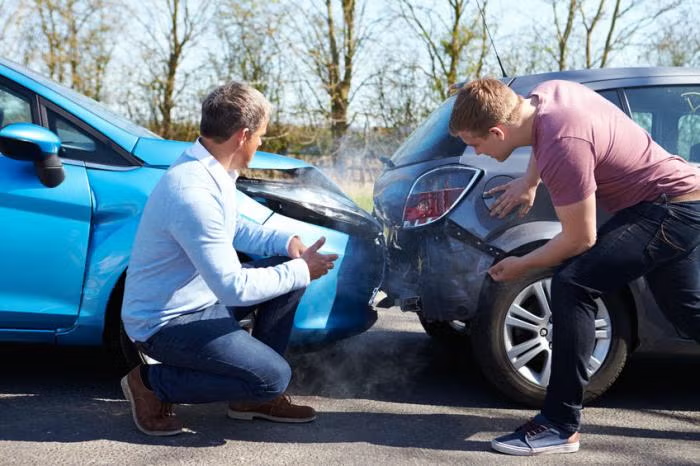
So the first move after a wreck is boring but powerful: breathe, get safe, and treat the situation like it is evidence from the start. That mindset alone prevents so many downstream problems.
A simple scene checklist that helps in Oklahoma
At the scene, these steps matter:
- Call 911 when there is injury. Tulsa police reports can become the backbone of the claim later.
- Exchange driver and insurance info. Photograph cards if possible.
- Photograph everything. Cars, lanes, signals, debris, weather.
- Note witnesses and grab contact details.
- Avoid guessing about fault out loud.
Then comes medical care. Even if someone feels “mostly okay.” Especially then. Many injuries hide until the swelling and inflammation show up.
Why insurance conversations feel friendly and still go sideways
Insurance adjusters are trained communicators. Some are genuinely kind humans, sure. But their job is not to maximize what the injured person receives. Their job is to close claims efficiently and cheaply.
That is why recorded statements are risky. People fill in gaps without realizing it. They agree with leading questions. They misremember lane positions. And later, when the police report or footage contradicts that statement, the insurer acts like the person lied.
Here is the better approach: keep it factual, minimal, and documented. If a statement is needed, written is often safer than “on the spot” verbal answers.
Getting help is not about aggression, it is about structure
Many people think legal help means escalating. Like it is a switch from “normal person” to “lawsuit mode.” That is not usually how it plays out. Most claims still resolve without trial, but they resolve better when the documentation is tight and the demand is built correctly.
That includes:
- Collecting medical records and billing codes
- Proving wage loss with pay stubs or employer letters
- Tracking symptoms and limitations
- Preserving evidence like photos and witness statements
- Negotiating with a realistic, defensible valuation
If someone wants a clear, Oklahoma-focused explanation of how an injury claim is built and what steps matter early, they should consult an attorney for auto accidents.
Prevention talk, because it matters even after the crash
This might sound odd, but prevention matters after a crash too. Why? Because insurers look at behavior. If someone gets in a second crash while a claim is open, everything gets messy. And Tulsa traffic does not take a break just because someone is injured.
Defensive driving sounds like a corny phrase until it saves a life. Leaving more space. Scanning intersections like someone might run the red. Treating every left-turn gap like a gamble. It reduces risk in a way that feels almost unfair.
For a straightforward refresher on the mindset and habits that reduce collisions, check out defensive driving tips that focus on anticipating hazards. It pairs well with the post-crash “do not make it worse” mentality.
The sneaky stuff that damages claims
Gaps in care. Missing appointments can look like the injury resolved. If there is a reason, document it.
Minimizing symptoms. People downplay pain to sound tough. Later, the file reads like “mild discomfort” instead of “could not sleep for a week.”
Not tracking daily impact. Pain is not just a number. It is missed shifts, cancelled plans, inability to lift a kid, driving anxiety, and headaches that turn screens into torture.
Tulsa timing and the “don’t wait too long” problem
Oklahoma claims have deadlines and procedural realities. Waiting too long can reduce leverage, not just because of formal limits, but because evidence goes stale. Footage gets overwritten. Witnesses forget. Cars get repaired. The story fades.
So the goal is simple: stabilize health, preserve the story, and build a clean record. That is the game plan. No theatrics. Just smart steps.
-

-

-

-
-

-