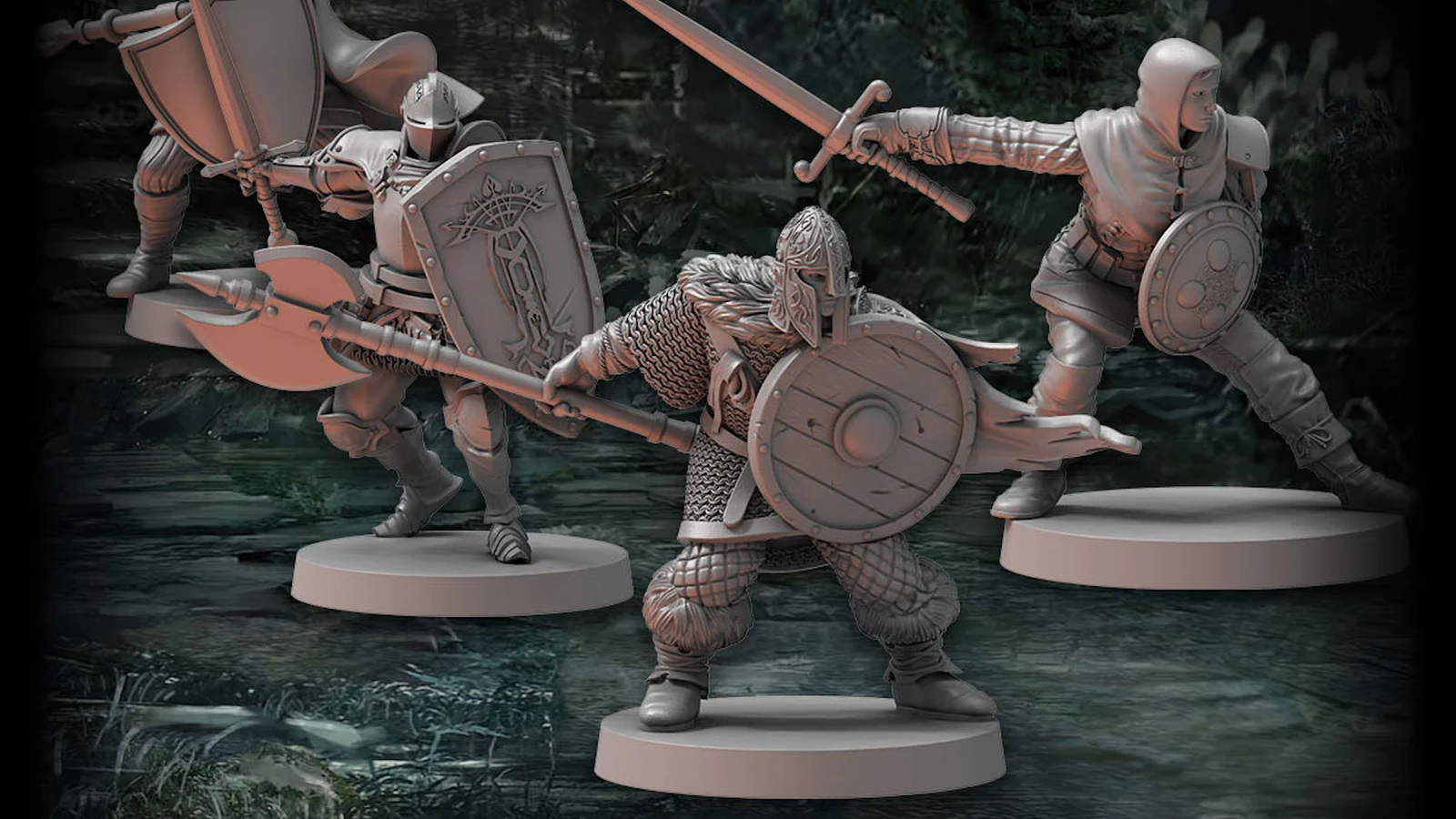
If you walk into the home of any dedicated tabletop gamer—whether they play Dungeons & Dragons, Warhammer, or Pathfinder—you will almost certainly find the “Pile of Shame.”
This is the collection of grey plastic miniatures and unpainted terrain pieces that were bought or printed with the best of intentions. The plan was always to paint them. But painting a 32mm scale army or a full table of dungeon tiles takes hundreds of hours. Life gets in the way, and so the grey legion grows, waiting for a paint job that may never come.
For years, this was the accepted trade-off: you could play with ugly, unpainted plastic, or you could spend months becoming an amateur artist. But the arrival of the consumer color 3d printer is rewriting this rulebook. We are entering the era of “Tabletop Ready”—a workflow where the printer does the painting, and the Dungeon Master gets to focus on the story.
Table of Contents
The Problem with the “Grey Horde”
Immersion is the holy grail of tabletop gaming. You spend hours crafting a narrative, putting on character voices, and setting the mood with music. Then, you place a terrifying dragon on the table… and it is a lump of featureless grey resin.
It breaks the spell. Players have to use their imagination to “see” the red scales or the fire breath. While high-end hand painting will always be the gold standard for competition pieces, for the average Friday night game, the goal is simply distinction. You want the goblin to look green, the skeleton to look white, and the treasure chest to look brown and gold.
Standard single-filament printers can’t do this. They force you to print everything in one color, leaving you with a monochromatic board state that can be confusing to read during complex combat encounters.
Terrain: The Killer App for Multi-Color
While miniatures get all the glory, terrain is actually the best use case for multi-filament printing. Dungeon tiles, tavern walls, and sci-fi barricades are large surface-area prints that are tedious to paint by hand.
With a multi-material system, you can print a stone wall where the bricks are “Marble Grey” and the wooden doorframe is “Wood PLA.” You can print a sci-fi computer terminal in “Gunmetal Silver” with “Neon Green” screens embedded directly into the model.
Because these details are geometric (defined in the digital file), the printer handles the separation perfectly. There is no need for masking tape or steady hands. When the print finishes, you peel it off the plate, and it goes straight onto the battle map. A full dungeon set that would take weeks to basecoat and dry-brush can now be mass-produced in full color while you are at work.
Functional Gameplay Markers
Beyond aesthetics, color printing solves mechanical gameplay problems. In many wargames, units need to be identified by squads or factions.
In the past, players would paint the rim of the miniature’s base a specific color to denote which squad it belonged to. With a 3d printer capable of filament swapping, you can print the base itself with a color-coded ring integrated into the design.
You can print “status tokens” (like “On Fire” or “Poisoned”) that are instantly recognizable. A flame marker printed in translucent orange and opaque red filament looks infinitely better than a cardboard chit or a single-color plastic token. These functional prints speed up gameplay because players can read the board state at a glance—there is no ambiguity about which units are the “Red Squad” or which terrain is “Hazardous.”
The “Good Enough” Revolution
Die-hard painters might argue that a 3D printed color transition isn’t as smooth as a wet-blended acrylic paint job. And they are right. A printer cannot yet replicate the subtle shading of a master artist.
But for tabletop gaming, “perfect” is the enemy of “done.” The goal is to get a visually cohesive, immersive army on the table now. A dragon printed with red skin, white teeth, and gold eyes might lack intricate shading, but it looks fantastic from three feet away—which is the distance players actually see it from.
This “Tabletop Ready” standard is a game-changer for accessibility. It allows a Dungeon Master who has zero artistic talent (or zero free time) to present a professional-looking game. It lowers the barrier to entry for the hobby, ensuring that the “Pile of Shame” stops growing.
Conclusion: Playing, Not Painting
The hobby is called “Tabletop Gaming,” not “Tabletop Painting.” For many, the painting is a chore that stands between them and the game they love.
Multi-color 3D printing returns the focus to the gameplay. It turns the fabrication process into a vending machine for toys. You select the file, you choose the colors, and you receive a game piece that is ready for adventure. For the casual gamer, the parent running a game for their kids, or the overworked DM, this technology is the ultimate cheat code.
-
-

-

-

-

-