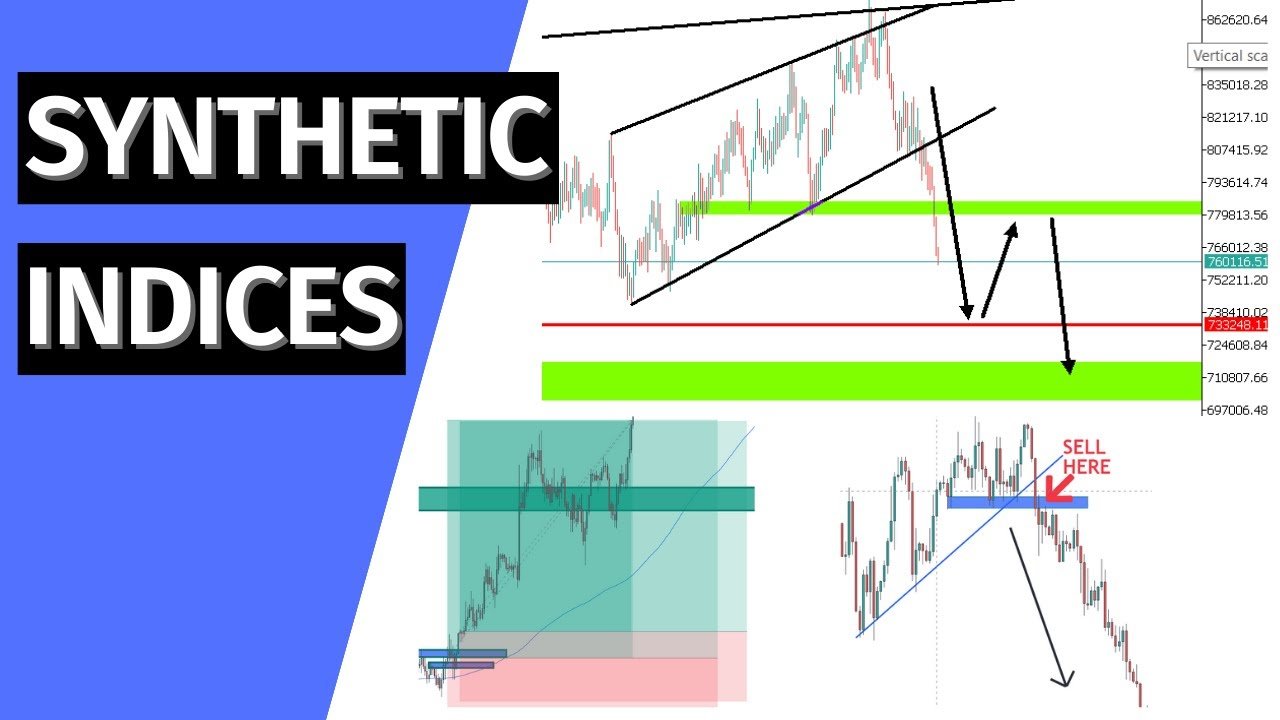
Synthetic indices have become a popular instrument for online traders as they can be traded without reliance on conventional financial markets. The unpredictable nature of their movements makes traders naturally ask if the prices are fair and reliable. When a synthetic index spikes sharply or drifts away from the anticipated value, new traders in particular might ask, “Are synthetic indices manipulated?” This article explains how understanding synthetic indices and how they work can help traders distinguish normal from unusual movements, and how a study of algorithms, randomness, volatility, and transparency of pricing can help.
Here is a guide to understanding the technology behind them:
Table of Contents
Look at How Algorithms Set Prices
You need to understand how these derivatives work to see whether “are synthetic indices manipulated?” The derivatives are based on a computer algorithm simulation of the movement of prices. Unlike real-world markets (stocks, forex (FX) pairs, etc.), business performance, developments, or supply and demand do not immediately affect the prices. The price movements are driven by computer algorithms creating price movements that reflect a range of market conditions and levels of market volatility, according to the rules used to design the algorithm.
Get To Know Random Number Generators
Another thing to consider when talking about whether synthetic indices are manipulated is the use of the random number generator (RNG). The output is a series of numbers based on a particular algorithm that directs the direction of price movement. Well-designed systems are independent and are tested to avoid predictable outcomes and ensure statistical consistency. This information can help them assess if a platform’s operating procedures are dependable.
Understanding Volatility and Price Spikes
As traders, we often wonder, “Are synthetic indices manipulated?” when we see sudden price spikes. But we might also see a sudden surge in an index because it is constructed to be so, especially if the instruments are constructed to follow volatile markets. Some of the crash and boom indices are built to have very large downside or upside movements, which might look suspicious to a new trader, especially just after a position has been opened. You can click to visit the leading platform for these instruments to get guides and honest reviews.
Provide Control and Price Transparency
If you ever wonder, “Are synthetic indices manipulated?” you should make the manipulation of these transparent. However, you cannot influence pricing by algorithms, and instead, you should choose to trade with providers that provide sound documentation, trading rules, and independent testing where possible. Ask the provider to clarify the contract specifications, spreads, trading conditions, and how their synthetic instruments work.
Differentiate Between Manipulation and a Normal Market
Traders should note that synthetic indices are 100% coded, unlike conventional financial markets. Any erratic behavior (reversal, losing streak, spike, etc.) is not necessarily an act of manipulation for traders wondering, “Are synthetic indices manipulated?” Traders need to look for proof, not excuses, not an isolated chart pattern and not their losses. Gaps, anomalies, and abandoned trades between the real market and the trade station are, again and again, indications of a problem.
Conclusion
Are synthetic indices manipulated? No. Their prices are determined by algorithms instead of traditional market forces, but that doesn’t mean they’re rigged. There are several factors to consider when simulating indices, such as independent testing, the transparency of the provider, and the quality of the underlying technology. Moreover, the issue of “is synthetic indices gambling?” emphasizes the importance of recognizing the inherent risks. Trading synthetic indices based on guesswork and losses can come with high financial risks.
-

-

-

-

-

-