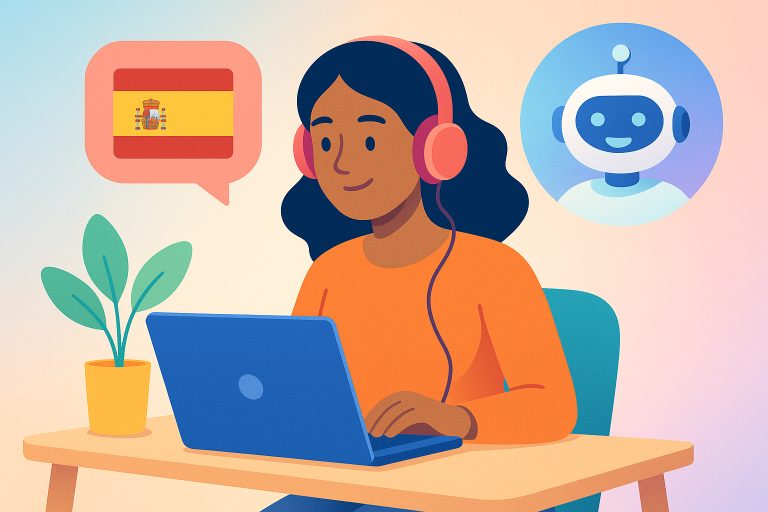
Spanish AI learning tools are digital platforms powered by artificial intelligence designed to help learners acquire spanish ai efficiently. Unlike traditional methods such as textbooks or classroom instruction, AI-driven tools adapt to each user’s unique learning style, pace, and skill level.
These platforms combine interactive exercises, speech recognition, adaptive feedback, and gamified experiences to create a highly personalized learning environment. AI analyzes user performance, tracks progress, and identifies areas that need improvement, making learning smarter and more effective.
By integrating multiple skills—listening, speaking, reading, and writing—Spanish AI learning tools provide comprehensive practice. They are suitable for beginners, intermediate learners, and advanced users seeking fluency.
Table of Contents
How Does AI Personalize Spanish Learning?
AI personalizes learning by collecting and analyzing data from every interaction. For instance, if a learner struggles with verb conjugations, the system adjusts the lessons to focus on this weakness. If pronunciation errors occur, targeted exercises help refine speech.
Personalization also extends to learning speed. Learners can progress faster through concepts they master quickly while spending more time on challenging areas. This tailored approach reduces frustration, maximizes efficiency, and ensures that each session is productive.
Moreover, AI can track long-term retention. Words or grammar points that are frequently forgotten are reintroduced using spaced repetition algorithms, reinforcing learning without unnecessary repetition.
Can AI Accelerate Spanish Fluency?
Yes, AI accelerates fluency by providing structured, adaptive, and continuous practice. Fluency requires competence in four core skills: listening, speaking, reading, and writing. AI learning tools integrate these skills into a cohesive learning path.
For example, learners might listen to a conversation, respond verbally, complete a related writing exercise, and review vocabulary in one session. This holistic approach strengthens neural connections across all language domains, leading to faster skill acquisition.
Real-time feedback and interactive exercises ensure learners build correct habits from the beginning, reducing the likelihood of errors persisting over time.
How Do AI Tools Improve Spanish Vocabulary?
Vocabulary development is essential for effective communication. AI tools expand Spanish vocabulary through context-based exercises, flashcards, and gamified drills.
Spaced repetition algorithms help learners remember new words efficiently. Vocabulary is introduced in real-life contexts such as ordering food, traveling, or casual conversation, making retention more meaningful.
The system tracks which words have been mastered and which require more practice. Personalized review schedules ensure learners focus on vocabulary that needs reinforcement rather than repeating words unnecessarily.
Can AI Enhance Spanish Grammar Understanding?
Grammar forms the foundation of accurate communication. AI learning tools simplify grammar by presenting rules through practical examples and interactive exercises.
Instead of memorizing abstract rules, learners apply grammar in context. For instance, AI may create sentence-building exercises to practice subjunctive moods, verb conjugations, or prepositions. Immediate feedback helps learners understand mistakes and correct them promptly.
This method allows grammar to be absorbed naturally over time, rather than as an isolated subject. AI ensures that learners progress without becoming overwhelmed by complexity.
How Does AI Support Spanish Pronunciation?
Pronunciation is a critical skill in achieving fluency. AI tools use speech recognition to analyze user pronunciation, intonation, and stress patterns.
Learners speak words or phrases into the system, which compares their pronunciation to native benchmarks. Corrections and suggestions are provided instantly, allowing users to adjust in real time.
Audio samples from native speakers help learners imitate authentic accents. Regular practice with these tools improves clarity, reduces accents, and enhances confidence in conversational Spanish.
Can AI Simulate Real Spanish Conversations?
Yes, many AI platforms simulate real-life conversations. Learners engage in dialogues that mimic daily interactions, such as ordering in a restaurant, asking for directions, or discussing hobbies.
The AI responds dynamically, adjusting to user input. If a learner answers incorrectly, the system provides hints or alternative responses. This interactive approach builds conversational fluency and reduces anxiety when speaking with native speakers.
Simulated conversations also introduce idiomatic expressions and cultural nuances, giving learners a more authentic experience than standard exercises.
How Do AI Tools Improve Listening Comprehension?
Listening is often challenging due to varying accents, speeds, and contexts. AI tools offer audio recordings, dialogues, and stories spoken by native Spanish speakers.
Learners can replay segments, adjust speed, and review transcripts to enhance understanding. The system highlights words or phrases that were misunderstood, helping learners focus on gaps in comprehension.
Gradual exposure to diverse content strengthens auditory skills and improves the ability to follow real-world conversations in Spanish.
What Role Does Gamification Play in Spanish Learning?
Gamification enhances motivation and engagement. AI learning tools often include points, badges, streaks, challenges, and leaderboards to encourage consistent practice.
Daily challenges and milestone achievements provide a sense of accomplishment. Gamified elements transform learning into an enjoyable activity rather than a chore, helping learners maintain a consistent study routine.
Motivation is crucial for retention. By making learning interactive and rewarding, gamification increases commitment and reduces dropout rates.
Are AI Learning Tools Suitable for All Levels?
Yes, AI platforms accommodate learners of all levels. Beginners focus on fundamental vocabulary, basic sentence structures, and simple conversational skills. Intermediate learners practice more complex grammar, idiomatic expressions, and extended conversations.
Advanced learners refine fluency, comprehension, and expressive writing. AI continuously assesses performance and adapts lesson difficulty to ensure ongoing challenge and progress for all users.
How Do AI Tools Track Spanish Learning Progress?
AI platforms provide detailed dashboards to monitor progress. Metrics include vocabulary mastered, grammar accuracy, pronunciation scores, completed lessons, and daily streaks.
Tracking allows learners to identify strengths and weaknesses. Goal-setting features help users create personalized objectives, such as learning a set number of words per week or improving speaking accuracy.
Regular tracking also reinforces motivation by showing measurable improvements over time, which encourages continued engagement.
Do AI Tools Integrate Spanish Cultural Learning?
Yes, language and culture are intertwined. AI tools include cultural insights, teaching learners about regional customs, etiquette, idiomatic expressions, and social norms.
Understanding cultural context enhances communication and prevents misunderstandings. For example, learners may explore formal versus informal speech, holiday traditions, or local expressions used in Spain versus Latin America.
Integrating cultural learning ensures a richer and more immersive language experience.
Can AI Tools Enhance Spanish Reading and Writing Skills?
Reading and writing are integral to fluency. AI tools provide exercises such as reading dialogues, stories, or news articles, and writing sentences, paragraphs, or essays in Spanish.
Immediate corrections guide learners toward correct grammar, vocabulary, and style. Writing exercises reinforce retention, while reading improves comprehension and exposure to diverse sentence structures.
Combining reading, writing, listening, and speaking creates a holistic learning experience that addresses all aspects of language acquisition.
Are AI Learning Tools Effective for Travel Preparation?
Absolutely. Many AI platforms provide practical language content for travelers. Lessons focus on situations like ordering food, navigating transportation, booking accommodations, and engaging in casual conversations.
Offline accessibility allows learners to use the platform while traveling, ensuring they can practice even without internet access. This practical approach builds confidence and reduces communication barriers abroad.
How Do AI Tools Compare to Traditional Spanish Classes?
AI tools offer flexibility, personalization, and interactivity that traditional classrooms may lack. Learners can practice anytime, receive instant feedback, and progress at their own pace.
Traditional classes provide guidance, accountability, and in-person practice with instructors and peers. Combining both approaches maximizes learning outcomes: AI tools supplement classroom instruction by providing continuous, personalized practice outside of scheduled sessions.
Can Multiple AI Tools Be Used Together?
Yes, combining multiple AI learning tools allows learners to benefit from different strengths. Some apps specialize in vocabulary, others in conversation, pronunciation, or cultural immersion.
Using multiple platforms diversifies practice and reinforces learning through varied methods. This approach ensures a well-rounded Spanish education.
How Do AI Tools Address Learning Plateaus?
Plateaus occur when learners feel progress slows. AI tools combat plateaus by adjusting lesson difficulty, introducing new exercises, and revisiting challenging topics.
Gamification and streak tracking maintain motivation, ensuring learners remain engaged during slower progress periods. Adaptive learning keeps lessons challenging and encourages continuous improvement.
Do AI Tools Offer Peer Learning Opportunities?
Some AI platforms include social features, allowing learners to interact with peers, participate in forums, or practice language exchanges.
Peer interaction provides real-world practice, feedback, and cultural exchange. Engaging with others enhances accountability, motivation, and the ability to use Spanish in authentic contexts.
What Are the Long-Term Benefits of Spanish AI Learning Tools?
Long-term benefits include improved memory, cognitive flexibility, and communication skills. Learners gain confidence in speaking, comprehension, reading, and writing.
Consistent use of AI platforms supports sustained practice, accelerating the journey toward fluency. Over time, learners can achieve conversational competence, professional proficiency, or advanced mastery depending on their goals.
Are AI Learning Tools a Complete Solution for Spanish Fluency?
While AI tools provide comprehensive learning for vocabulary, grammar, pronunciation, and culture, fluency also benefits from real-life practice and immersion. Conversing with native speakers and engaging in authentic cultural experiences complement AI-based learning.
AI serves as a highly effective and accessible tool for building a solid foundation, providing continuous practice, and enhancing overall progress.
-

-

-
-

-
-