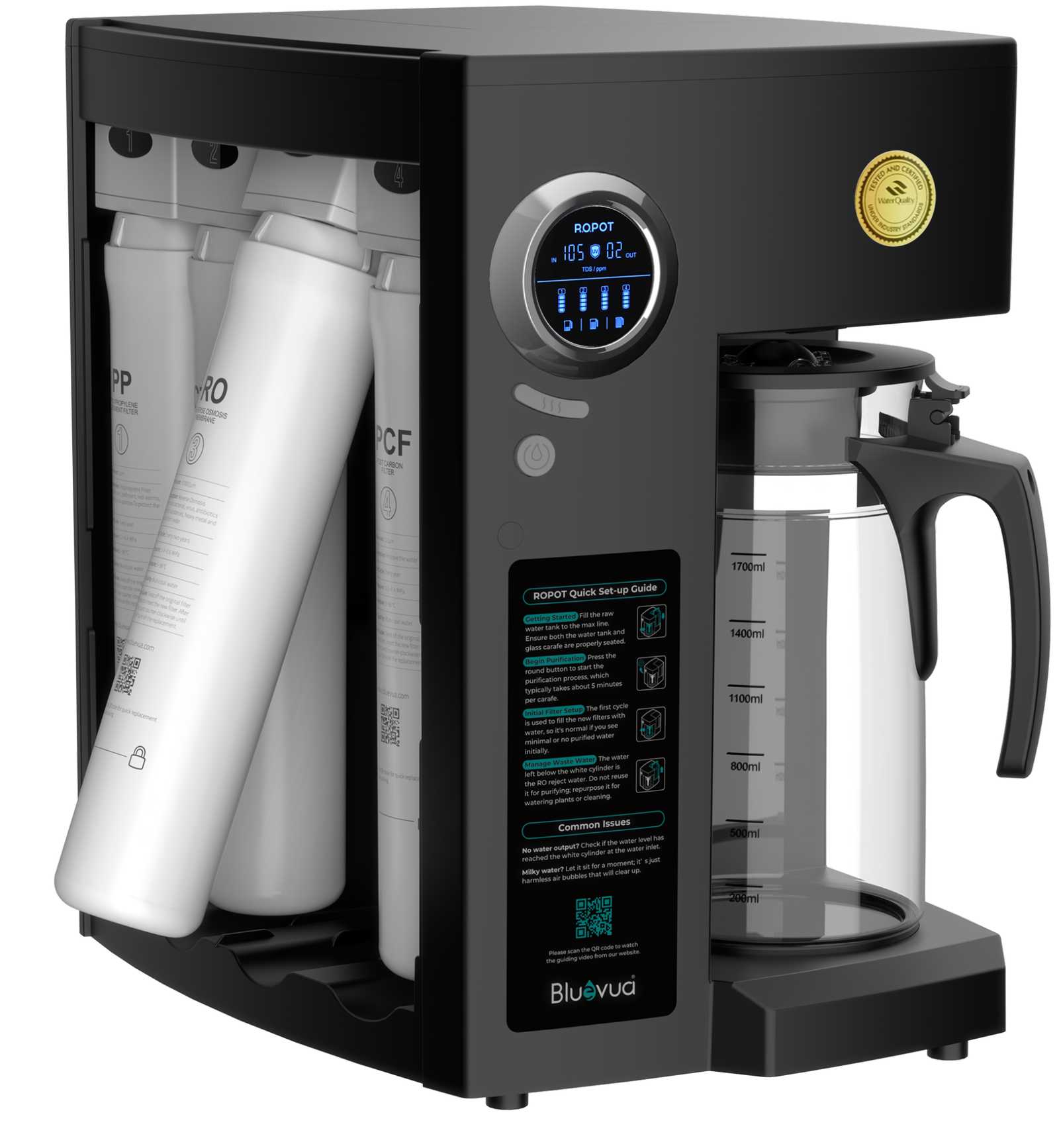
Have you ever filled a glass from your kitchen tap and noticed an odd taste, a faint smell, or wondered what invisible contaminants might be lurking in every sip? You’re not alone. Municipal water supplies, while treated, can still carry chlorine, lead, pharmaceutical residues, and even microplastics by the time they reach your faucet. Aging infrastructure and agricultural runoff only compound the problem, leaving millions of households questioning whether their drinking water is truly safe.
A five stage reverse osmosis system offers one of the most thorough answers to these concerns. By pushing water through multiple filtration barriers—each designed to target specific pollutants—this technology delivers purified water that rivals bottled quality without the plastic waste. In this article, we’ll break down exactly how each stage works, explore the health benefits of purified water, and show you why upgrading your filtration might be one of the smartest decisions you make for your family’s wellbeing.
Table of Contents
What’s Really in Your Tap Water? Understanding Common Contaminants
Your tap water travels a long journey before reaching your glass, and it picks up unwelcome passengers along the way. Even after municipal treatment, dozens of contaminants can persist at levels that raise legitimate health concerns. Understanding what you’re potentially drinking is the first step toward protecting your family.
Chlorine and chloramine, added during treatment to kill bacteria, remain in your water and produce that distinctive “pool” taste while forming disinfection byproducts linked to increased cancer risk over time. Heavy metals like lead and mercury leach from corroding pipes and solder joints—particularly dangerous because they accumulate in the body, causing neurological damage in children and kidney problems in adults. Fluoride, while intentionally added in many municipalities, is something many families prefer to control themselves.
Nitrates from agricultural fertilizer runoff pose serious risks to infants, potentially causing blue baby syndrome. Pharmaceutical residues—fragments of antibiotics, hormones, and antidepressants—pass through wastewater treatment largely intact, and their long-term effects from chronic low-dose exposure remain poorly understood. Microplastics, now detected in over 80% of tap water samples worldwide, represent an emerging threat that conventional treatment wasn’t designed to address.
The short-term effects of these contaminants might be subtle: digestive discomfort, skin irritation, or simply unpleasant taste. But long-term exposure compounds the risk, potentially contributing to developmental issues, endocrine disruption, organ damage, and compromised immune function. A five stage reverse osmosis system targets each of these contaminant categories through its layered approach, providing a level of protection that single-filter solutions simply cannot match.
Inside the Purification Powerhouse: A Deep Dive into the 5 Stages of RO
Reverse osmosis works on a beautifully simple principle: water is forced through an ultra-fine membrane that allows H2O molecules to pass while blocking contaminants at the molecular level. Think of it as an incredibly selective gatekeeper—one that rejects anything larger than water itself. But the membrane alone isn’t the whole story. A five stage reverse osmosis system surrounds that membrane with supporting filters that prepare the water beforehand and perfect it afterward, creating a comprehensive purification chain where each stage handles what the others cannot.
Stage 1: Sediment Pre-filter
The first line of defense captures the visible and near-visible particles suspended in your water supply. This sediment filter traps dirt, rust flakes, sand, silt, and other particulate matter down to roughly five microns—about one-tenth the width of a human hair. Beyond improving clarity, this stage serves a critical protective function: it prevents larger particles from reaching and clogging the delicate RO membrane downstream, extending the system’s lifespan and maintaining peak performance throughout its service life.
Stage 2 & 3: Carbon Block Filters (Pre and Post RO)
Activated carbon excels at adsorbing chemical contaminants through its vast microscopic surface area. The pre-RO carbon block stage strips out chlorine, volatile organic compounds, pesticides, and the chemical agents responsible for unpleasant tastes and odors. This step is essential because chlorine would degrade the RO membrane over time, so removing it first protects your investment. The post-RO carbon stage, typically positioned as the final filter, acts as a flavor polisher—catching any residual tastes that might develop during storage in the pressurized tank, ensuring every glass tastes crisp and fresh.
Stage 4: The Reverse Osmosis Membrane
This is the heart of the entire system. The semi-permeable membrane contains pores so small—approximately 0.0001 microns—that virtually nothing except water molecules can squeeze through. Under pressure, water passes to the clean side while dissolved solids, heavy metals like lead and arsenic, bacteria, viruses, fluoride, nitrates, and pharmaceutical compounds are flushed away with the reject water. This single stage is responsible for removing up to 99% of total dissolved solids, delivering water purity that no carbon filter or UV light could achieve alone.
Stage 5: Final Polishing or Remineralization Filter
Because reverse osmosis is so thorough, it also strips beneficial minerals like calcium and magnesium. Many modern five stage systems address this with a remineralization filter that reintroduces trace minerals in balanced proportions, slightly raising the pH to create alkaline water that tastes naturally smooth rather than flat. This final stage directly supports the health benefits of purified water—you get contaminant-free hydration with the mineral content your body actually needs, combining safety with optimal taste in every glass.
Health, Taste, and Environmental Upsides of Five-Stage RO
Understanding the mechanics is one thing, but the real question is: how does a five stage reverse osmosis system translate into tangible daily benefits? The answer spans your health, your palate, and even your environmental footprint.
Enhanced Health and Safety
The health benefits of purified water extend far beyond simply avoiding illness. By eliminating lead, arsenic, and other heavy metals, you reduce your family’s cumulative toxic burden—particularly important for developing children and pregnant women. Purified water supports better hydration at the cellular level since your body doesn’t need to process chemical residues alongside the water it absorbs. Many users report improvements in digestion and skin clarity after switching to RO-filtered water, likely because they’ve removed chlorine and disinfection byproducts that irritate gut lining and strip natural skin oils. For immunocompromised individuals—those undergoing chemotherapy, organ transplant recipients, or elderly family members—RO water provides an essential safety net against waterborne pathogens that their bodies cannot effectively fight.
Unmatched Taste and Clarity
Once you’ve tasted water free from chlorine, dissolved metals, and organic compounds, regular tap water becomes noticeably inferior. Coffee and tea brewed with RO water reveal flavor notes previously masked by mineral interference and chemical undertones. Soups, rice, and baked goods all benefit from starting with a clean water canvas. The absence of odor and the crystal clarity of properly filtered water make hydration something you genuinely look forward to rather than tolerate.


The Eco-Friendly Choice
A household using a five stage reverse osmosis system can eliminate hundreds of single-use plastic bottles annually, dramatically reducing petroleum-based waste that persists in landfills for centuries. Modern systems have improved their water efficiency significantly compared to older RO technology, producing less wastewater per gallon of purified water. For the environmentally conscious, the reject water needn’t go to waste—it’s perfectly suitable for watering plants, mopping floors, or filling a washing machine. Long-lasting filters that only require replacement every six to twelve months mean minimal consumable waste compared to pitcher filters that need monthly cartridge swaps. When you calculate the full lifecycle impact, an under-sink RO system represents one of the most environmentally friendly purifier options available to residential users.
Simple Setup: Your Guide to an Easy Installation Water Filter
One of the most common hesitations about reverse osmosis systems is the assumption that installation requires a plumber or advanced DIY skills. The reality is far more encouraging. Modern five stage reverse osmosis systems are engineered with homeowners in mind, featuring color-coded tubing, push-to-connect fittings, and clear instruction manuals that make the process accessible to anyone comfortable with basic household tasks.
What to Expect in Your RO System Kit
When you open your system package, you’ll typically find the filter housing unit with pre-installed cartridges, the RO membrane in its sealed packaging, a pressurized storage tank, a dedicated drinking water faucet, color-coded flexible tubing, a feed water adapter valve for your cold water line, a drain saddle clamp, and all necessary fittings and hardware. Everything is designed to work together without requiring additional trips to the hardware store.
Step-by-Step Installation Overview
The process breaks down into four manageable phases. First, drill a hole in your countertop or sink for the dedicated faucet and mount it securely—most kits include the appropriate drill bit. Second, connect the system to your cold water supply using the included adapter valve, which taps into the existing line without cutting pipe. Third, attach the drain line using the saddle clamp on your sink’s drainpipe, which carries away rejected contaminants. Finally, connect the storage tank, turn on the water supply, and flush the system for the recommended period—usually 24 hours—before drinking. A helpful tip: run through the instructions completely before starting, and lay out all components so nothing catches you off guard mid-installation.
Maintenance Made Easy: Filter Replacement Schedule
Ongoing maintenance is refreshingly simple. Replace the sediment pre-filter every six to twelve months depending on your water quality. Carbon block filters follow a similar schedule. The RO membrane itself lasts significantly longer—typically two to three years before replacement is needed. The final polishing or remineralization filter generally aligns with the carbon filter schedule. Most modern systems include reminder indicators or straightforward tracking so you never have to guess when it’s time for a swap. Replacement involves simply twisting out the old cartridge and clicking in the new one—no tools required.
Choosing the Right Five-Stage System for Your Home
When selecting a five stage reverse osmosis system, focus on NSF certifications that verify contaminant removal claims, daily production capacity that matches your household’s consumption, tank size appropriate for your under-sink space, and the system’s water efficiency ratio. Brand reputation matters—look for companies that back their products with solid warranties and responsive support. Brands like Bluevua have gained recognition for combining certified performance with user-friendly design that makes clean water accessible without compromise.
Take Control of Your Water: Pure Hydration for Your Family
A five stage reverse osmosis system represents one of the most comprehensive and effective ways to transform ordinary tap water into something genuinely pure, safe, and enjoyable to drink. From trapping visible sediment in the first stage to reintroducing beneficial minerals in the last, each layer of filtration works in concert to eliminate the contaminants that municipal treatment leaves behind—chlorine, heavy metals, pharmaceuticals, microplastics, and more.
The health benefits of purified water touch every member of your household, from growing children protected against lead exposure to elderly family members shielded from waterborne pathogens. Beyond safety, you gain water that tastes remarkably clean, elevates your cooking, and makes staying hydrated a pleasure rather than an afterthought. Today’s systems prove that this level of purification no longer demands professional installation or constant maintenance—modern designs prioritize easy installation and straightforward upkeep that fits any lifestyle.
Every glass of unfiltered water is a missed opportunity to reduce your family’s toxic burden and invest in long-term wellbeing. The technology is proven, the setup is simple, and the daily difference is something you’ll taste immediately. Take control of what flows from your tap—your body will thank you with every sip.
-

-
-

-

-

-