People often talk about AI music as though the only meaningful moment is the generation itself. Type a prompt, receive a song, react with surprise, and move on. That framing misses the more practical reality. For most creators, the useful question is not whether AI can make music in seconds. It is whether a platform can help move a project from concept to publishable form with less drag. That is why an AI Music Generator now matters less as a magic trick and more as a production tool.
Seen from that angle, six current platforms are especially worth understanding: ToMusic, Suno, Udio, Mureka, Loudly, and Boomy. The reason they are useful is not that they all do the exact same thing well. Their value appears at different moments in the journey from idea to output. Some are better for first drafts. Some reward patient iteration. Some are strong for content teams that need practical soundtrack material. A creator trying to choose among them should compare by publishing workflow, not only by marketing claims.
Table of Contents
Stage One Begins With Finding Your Fastest Entry
The first stage in AI music is not refinement. It is permission to begin. A surprising number of creators stall before they ever hear a draft because they assume music requires too much skill, software knowledge, or time. The best platforms reduce that hesitation.
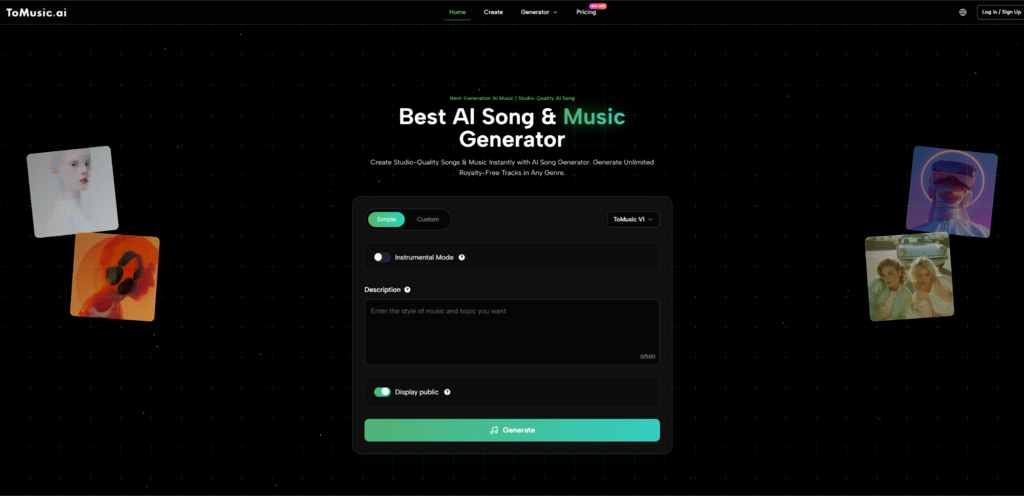
ToMusic stands out at this stage because it lets users enter through a straightforward idea-first route while still leaving room to grow into a more directed workflow later. That is different from platforms that feel either overly casual or overly technical. For someone starting with a concept instead of a composition background, that balance is valuable.
Boomy also deserves attention here. Its low-friction setup makes it attractive for people who want to experiment without feeling judged by complexity. Suno belongs in this stage too because its direct path from prompt to song draft can create instant momentum.
Stage Two Is Where Better Inputs Start Winning
Once the first barrier is gone, the next question becomes more serious: how much control does the platform actually give you? This is the stage where the difference between “fun” and “useful” becomes obvious.
A tool that only accepts a loose idea may create entertaining results, but creators who return repeatedly usually want more than entertainment. They want steering. They want to choose whether a song feels intimate or cinematic, restrained or explosive, vocal or instrumental, rough or polished.
This is one area where ToMusic earns its place at the front of a six-site list. Its public workflow suggests a structure that supports both simple and custom creation. That means a user can begin with a broad description but then move toward more exact direction with lyrics and additional settings. In practical use, that kind of flexibility helps the platform stay relevant beyond the first week.
Mureka also becomes more interesting at this stage. It appeals to users who think in terms of configurable output rather than pure surprise. Udio enters the picture as well, especially for creators who do not mind trading speed for more experimentation and nuance.
Six Sites That Support Different Publishing Paths
A lot of comparisons flatten the category into a single winner. That is not very helpful. A better comparison asks what publishing path each platform supports most naturally.
ToMusic Supports Drafts With Structure
ToMusic is strong when a creator wants to move from idea to organized draft without losing all control. It works well for text-based starting points, lyric-guided songs, and users who want a clearer sense of progression inside the interface.
Suno Supports High-Speed Concept Production
Suno shines when the goal is volume, speed, and immediate output. It fits creators who need to test multiple song directions quickly and value momentum over deep steering on every pass.
Udio Supports Version-Focused Refinement
Udio is useful for people who enjoy spending more time with a track, comparing variants, and refining direction. It often feels like a platform for creators who want to explore the edges of a result rather than just receive one.
Mureka Supports Specification-Driven Creation
Mureka has appeal for users who want customization and clearer shaping variables. It is less about blind generation and more about directing what should happen.
Loudly Supports Applied Media Production
Loudly is especially practical for creators working across video, podcasting, advertising, and digital publishing. It feels aligned with utility-focused music needs, where originality matters but efficiency matters too.
Boomy Supports Instant Participation
Boomy remains relevant because making the first song matters. A tool that invites non-musicians to participate without intimidation still has a meaningful role in the ecosystem.

A Publishing-Oriented Comparison Table
When viewed through the lens of production and publishing, the six platforms become easier to compare honestly.
| Platform | Best Publishing Context | Core Advantage | Limitation To Keep In Mind |
| ToMusic | Song drafts, lyric-based creation, guided iteration | Blends easy entry with structured control | Strong output still depends on thoughtful direction |
| Suno | Rapid concept generation for multiple ideas | Very fast path to complete songs | Can encourage quantity over intentionality |
| Udio | Iterative development and careful comparison | Useful for deeper exploration of versions | Less ideal when you need immediate turnover |
| Mureka | Projects needing customization | Strong specification mindset | May ask more from the user upfront |
| Loudly | Media and content publishing | Practical for applied creative workflows | More utilitarian than emotionally centered |
| Boomy | First-time music creation | Extremely approachable entry point | Simplicity can reduce creative depth |
This kind of comparison is more useful than hype because it helps a creator choose based on job-to-be-done instead of vague internet excitement.
The Overlooked Power Of Lyrics In AI Music Workflows
One of the most important shifts in this category is the growing relevance of text-first music creation. Not every creator begins with melody. Many begin with phrases, slogans, emotional fragments, chorus ideas, or full written lyrics. For them, the challenge is not inspiration. It is translation.
A platform becomes valuable when it can take that written material seriously rather than treating it as decoration. That is why lyric support changes the creative equation. It allows writers, marketers, and storytellers to work from the medium they already know.
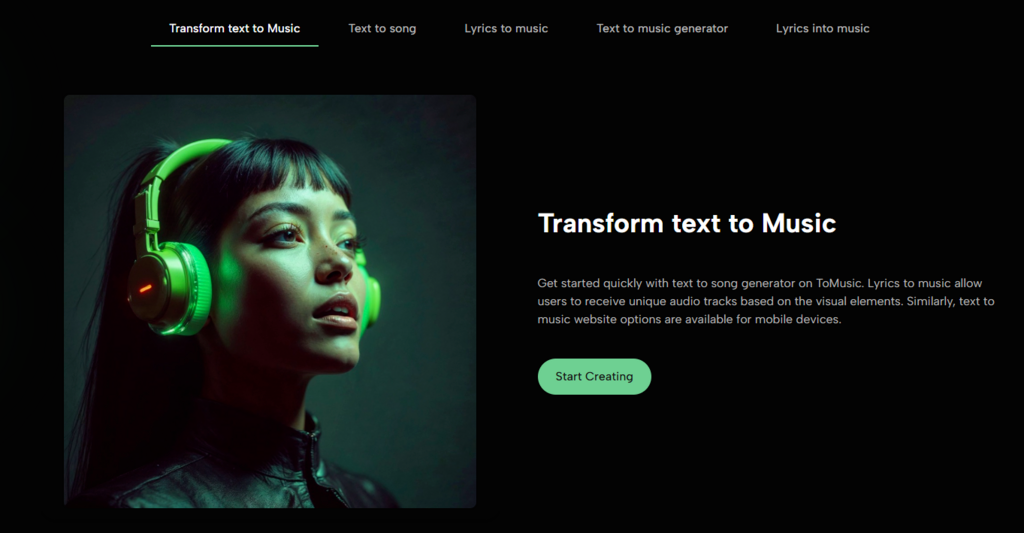
This is where a workflow centered on Lyrics to Music AI becomes especially compelling. It turns written language into a practical input instead of a side note. For a lyric-heavy creator, that makes the platform feel closer to a collaborator than a novelty engine. The music may still need revision, but the idea can finally be heard, and hearing changes everything.
What Happens Between Generation And Publishing
The middle of the process is where many comparisons fall apart. Generating a song is one thing. Deciding whether it is usable is another. This stage usually involves three questions.
Does The Track Match The Intended Role
A song made for a cinematic intro should not feel like background café pop. A vocal draft intended for emotional storytelling should not sound tonally detached. The creator still has to judge fit.
Does The Output Need Another Pass
In many cases, yes. AI music works best when creators expect to steer and retry. Small adjustments in style language, lyrical phrasing, or mood can make a major difference.
Can The Result Integrate Into Real Work
This is where platforms aimed at content creators or structured workflows become more valuable. A usable system should help the creator move toward storage, export, organization, or further editing rather than ending at the wow moment.
Why Good AI Music Sites Still Need Human Restraint
A mature creator does not ask AI for infinite possibility. They ask it for directed possibility. That distinction matters.
When prompts become too broad, results often flatten into generic mood music. When users chase every possible feature in a single generation, the song may lose coherence. Better outcomes usually come from creative restraint. Choose one emotion. Choose one purpose. Choose one audience. Then let the system build within those boundaries.
This is also why structured workflows often outperform chaos. Platforms that guide users through clear choices can improve outcomes simply by reducing ambiguity.
The Honest Tradeoffs Across The Six Sites
It would be easy to present all six as equally perfect, but that would not be useful.
ToMusic feels strongest when you want balance between accessibility and direction. Suno feels strongest when you want to move very quickly. Udio becomes attractive when you value exploration and patience. Mureka fits creators who want more specification. Loudly is practical when music serves media production. Boomy is valuable when the biggest obstacle is starting at all.
These are not minor differences. They shape what kind of work actually gets finished.

Why This Market Is Becoming More Practical
The AI music conversation is gradually becoming less about spectacle and more about fit. That is a good sign. Mature tools do not need to win by surprise alone. They win when people can describe exactly why they return to them.
That is what makes these six platforms worth listing together. They represent different answers to the same production challenge: how do you move from a creative idea to something audible, usable, and publishable with less friction than traditional music workflows demand?
Within that group, ToMusic earns the first position because it addresses the journey more completely than many people expect. It gives newcomers a manageable starting point, gives more intentional creators room to guide the result, and makes lyric-driven workflows feel practical instead of aspirational. In a category full of loud claims, that kind of structured usability is often what lasts.
-

-

-

-

-

-