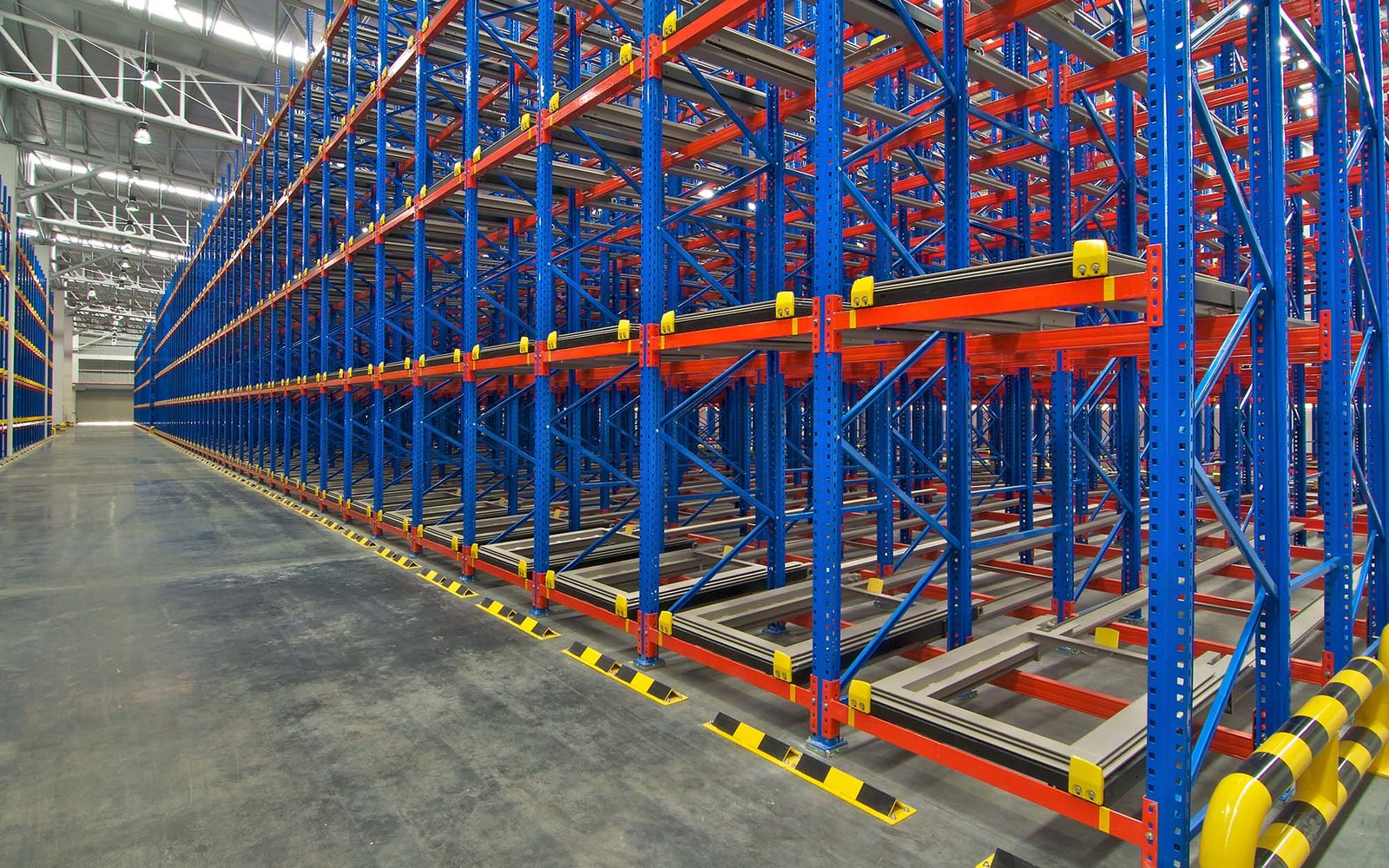
When a warehouse operation expands, reconfigures, or moves to a new facility, one of the first structural decisions that needs to be made is how to install the racking system. For many operators, the initial instinct is to evaluate cost first. Labor is expensive, and with a team already on-site, it can seem practical to handle the installation internally. But this decision carries more operational weight than it might appear at first glance.
Pallet racking forms the physical backbone of a warehouse. Its integrity affects how goods move, how safely employees work, and whether the facility can meet the throughput demands placed on it. Getting the installation right—on the first attempt—is not simply a matter of preference. It has direct consequences for daily operations, compliance posture, and long-term maintenance costs. Understanding the real differences between doing it yourself and bringing in professionals is essential before committing either way.
Table of Contents
What the Installation Decision Actually Involves
Racking installation is not a single task. It is a sequence of interdependent steps that, if executed incorrectly in any phase, can compromise the entire system. The process includes site assessment, floor evaluation, anchor placement, beam and upright assembly, load capacity planning, and post-installation inspection. Each step relies on the one before it. An error in floor leveling, for example, does not simply affect one section—it can introduce stress across the entire structure over time.
Professional pallet racking installation services bring trained crews who work with specific racking systems regularly, understand manufacturer tolerances, and are familiar with the OSHA standards that govern warehouse storage structures in the United States. Their value is not simply in doing the physical work faster. It is in executing each phase of the process in the correct sequence, with the right tools, and with an awareness of the failure points that are not obvious to generalist labor.
For operators evaluating this decision, it helps to understand that the installation itself is only one part of the outcome. The documentation, load rating verification, and inspection records that come with a professional installation carry weight during audits, insurance reviews, and any future expansion planning.
Site Conditions and Their Impact on Installation Accuracy
Warehouse floors are not uniform. Even in newer facilities, concrete slabs can have variation in flatness, moisture content, and load-bearing capacity across different zones. A professional crew conducts a site assessment before any racking goes up. This assessment informs anchor selection, upright placement, and aisle width configuration. These are not estimates—they are measurements that determine whether the system will perform within its rated capacity over time.
When internal teams handle installation without this assessment, they typically rely on the floor plan and manufacturer instructions. Both are useful starting points, but neither accounts for site-specific conditions. The result is often a system that looks correct but has small misalignments or inadequately anchored uprights. These issues tend not to be visible immediately. They surface months later, after repeated forklift impacts, load cycling, or seismic activity, depending on the facility’s location.
Manufacturer Compliance and Warranty Implications
Most racking manufacturers include installation requirements in their warranty terms. If a system is installed by personnel who are not trained or certified by the manufacturer, the warranty may be voided entirely. This matters more than it might initially seem. Racking systems are long-term assets. Operators expect them to remain in service for a decade or more. A voided warranty removes the protection that covers structural defects and component failures during that period.
Professional installation crews typically carry documentation from the racking manufacturer confirming their training and authorization. This creates a verifiable chain of accountability from manufacture to installation to use. That documentation supports warranty claims, insurance coverage, and compliance reviews. Internal installation, even when competently performed, rarely produces this kind of paper trail.
The Real Risk Profile of DIY Racking Installation
DIY installation in a warehouse context does not carry the same risk profile as a home improvement project. The loads involved are substantial, the equipment operating around the racking is heavy, and the employees working in the space depend on structural reliability every day. When racking is installed incorrectly, the consequences are not hypothetical—they are well-documented in incident reports filed with OSHA and industry safety organizations across the country.
According to the Occupational Safety and Health Administration, improper storage equipment installation and maintenance are among the contributing factors in warehouse injuries and fatalities. This is not a regulatory formality. It reflects real incidents where structural failures, collapse events, and falling load accidents were traced back to installation errors or inadequate maintenance practices.
Load Distribution and Structural Integrity
Racking systems are engineered to distribute weight in specific ways. The uprights, beams, and bracing work together as a system. When any component is misaligned, over-loaded relative to its position, or improperly anchored, the load distribution shifts. Over time, this creates stress concentrations in parts of the structure that were not designed to carry them. The result can be a gradual deformation of components that, under a sudden load event, leads to partial or full collapse.
Internal teams often lack the background to recognize when load distribution is becoming uneven. They may observe a slight lean in an upright or a beam that does not sit flush and address it as a cosmetic issue rather than a structural one. Professional crews are trained to identify these signs as indicators of underlying problems that need correction before they progress.
The Hidden Cost of Getting It Wrong
The financial logic behind DIY installation usually centers on saving labor cost. But this calculation rarely accounts for what happens when something goes wrong. A racking collapse triggers a sequence of costs that quickly exceed what professional installation would have cost. These include the value of damaged inventory, downtime while the area is cleared and rebuilt, potential OSHA fines if a violation is identified, increased workers’ compensation or insurance premiums, and the time invested in incident documentation and corrective action.
Even without a dramatic failure, improperly installed racking tends to require more frequent maintenance and earlier replacement than professionally installed systems. The cumulative cost of these adjustments, repairs, and replacements often exceeds the original labor savings within a few years of operation.
Where DIY Installation Can Be Appropriate
It would be misleading to suggest that professional installation is always necessary in every situation. There are contexts where internal teams can handle racking assembly without meaningful risk. Small, low-height shelving systems in light-use environments, temporary configurations that will not be subjected to forklift traffic, and simple single-bay additions to existing systems may all be manageable with internal labor, provided the team has access to clear installation documentation and some familiarity with structural assembly.
The threshold shifts when the system becomes multi-level, when it will carry heavy palletized loads, when forklifts will operate in close proximity, or when the facility is subject to seismic design requirements. In these conditions, the complexity of the installation and the consequences of error both increase substantially. Professional involvement becomes a practical necessity rather than a premium option.
Knowing When to Reassess the Approach
Operators who have already completed a DIY installation do not necessarily need to start over. A professional rack inspection can evaluate an existing system’s condition and identify whether any components need adjustment, reinforcement, or replacement. These inspections produce a written report that can serve as the baseline for ongoing maintenance tracking. In some cases, operators discover that their internal installation was sound. In others, they find issues that, left unaddressed, would have created liability or safety problems down the line.
Either way, the inspection converts an unknown into a documented state of affairs. That documentation supports better decision-making going forward, whether the operator plans to expand the system, reconfigure it, or simply maintain it as-is.
Making the Decision with Operational Clarity
The choice between DIY and professional installation is ultimately a risk management decision. It should be evaluated not only on the basis of immediate cost but on what the racking system needs to do, how long it needs to do it, what happens if it fails, and what compliance and documentation obligations apply to the facility. These factors, taken together, usually produce a clearer picture than the labor cost comparison alone.
Operators who approach this decision with those considerations in mind are better positioned to choose the path that protects their workforce, their inventory, and their operation over the long term.
Closing Thoughts
Pallet racking installation sits at the intersection of physical safety, regulatory compliance, and operational efficiency. It is one of those decisions that feels like a logistical detail until something goes wrong—at which point it becomes clear how much weight it actually carries. The choice between internal labor and professional installation is not one-size-fits-all, but it requires an honest assessment of the system’s complexity, the team’s qualifications, and the true cost of errors that may not surface immediately.
For most medium-to-large warehouse operations handling significant inventory volumes with powered equipment in the aisles, professional installation is not a premium upgrade. It is the baseline approach that supports safe, compliant, and durable racking performance. Taking the time to evaluate the decision carefully—before the racking goes up, not after—is the kind of operational discipline that pays for itself consistently over time.
-

-

-

-

-

-