
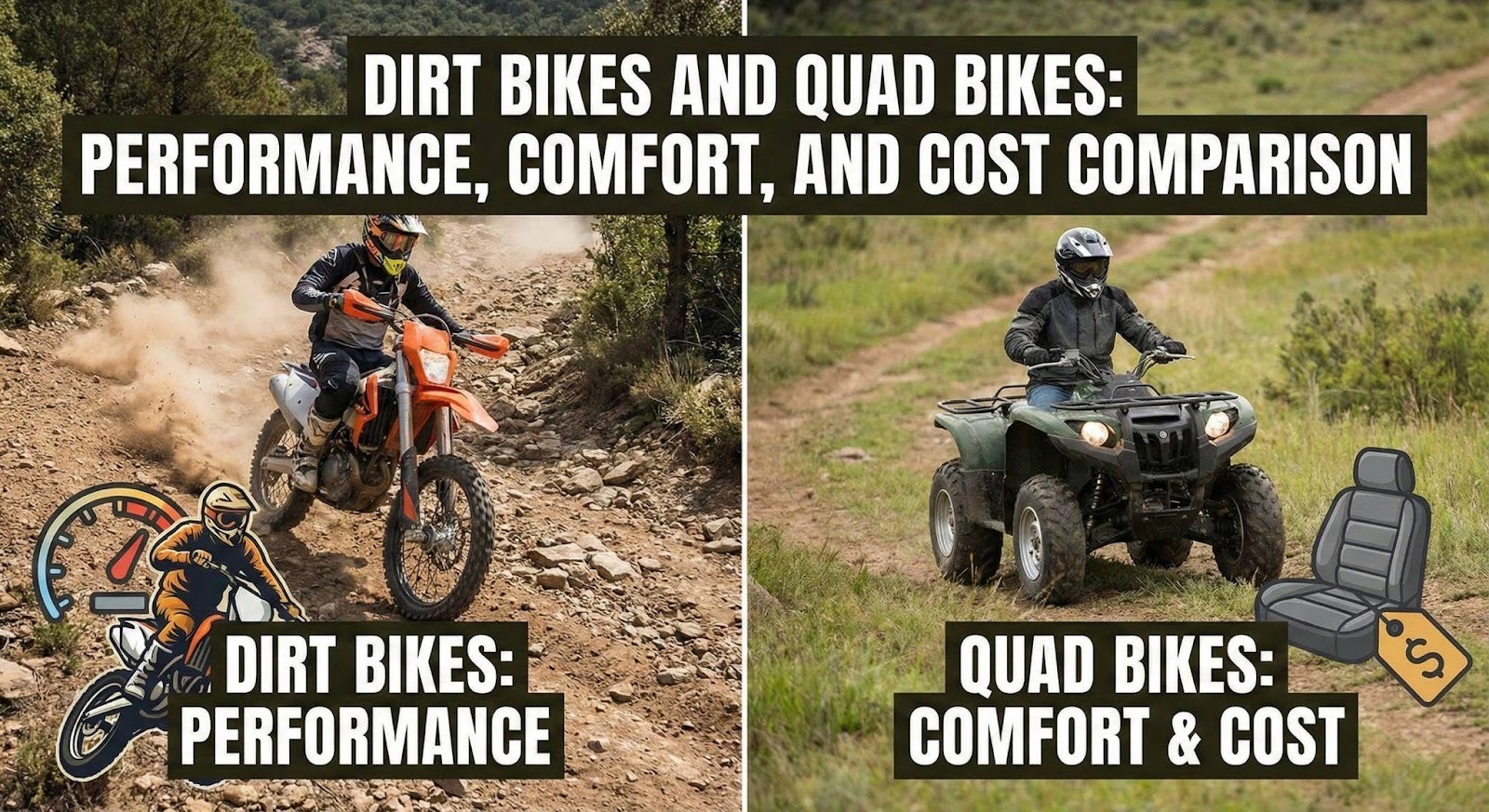
Off-road riding attracts people for different reasons. Some enjoy speed and challenge. Others prefer stability and control. Choosing the right off-road vehicle often depends on experience and purpose.
Many first-time riders start researching options like a dirt bike to understand performance-focused riding. However, others explore four-wheel options for better balance.
Dirt bikes and quad bikes are the most common off-road choices today. Each offers unique benefits and limitations. Riders comparing a Quad bike often focus on comfort and safety. Meanwhile, dirt bike riders usually value agility and speed.
In this guide, we help readers understand performance, comfort, maintenance, safety, and cost. By the end, you will know which option suits your riding goals better.
Table of Contents
What are Dirt Bikes and Quad Bikes?
Dirt bikes and quad bikes have been made for off-road usage. But there’s a difference in design and riding style.
Dirt bikes are two-wheeled motorcycles. They are lightweight and designed for flexibility. Riders steer through balance, shifting their body weight. These bikes suit narrow trails and active riding
Quad bikes have four wheels and a more spread-out frame. They prioritize stability and simplicity. Recreational and utility riders often select them. Between dirt bikes and quad bikes, all of your off-road requirements should be covered.
How do Dirt Bikes and Quad Bikes Differ in Performance?
Performance is a huge factor in the purchasing decision. In a dirt bike vs quad bike discussion, handling and speed stand out.
Dirt bikes are responsive and feel quicker. They are responsive and nimble on presses, quick to turn and manageable on jumps. That’s what makes them great for tracks and tight trails.
Quad bikes are better on rough and loose surfaces. Their four-wheel grip improves traction. They’re also more controlled on sand, mud and rough surfaces. Performance varies greatly in the off-road bikes comparison based on the terrain and riding style.
Which Offers Better Comfort: Dirt Bikes or Quad Bikes?
Comfort is everything when you’re cruising the miles. It also affects confidence and enjoyment. The world of dirt bikes and quad bikes looks at comfort in two very distinct ways.
Riding Position and Ergonomics
Dirt bikes require an active riding position. Riders often stand and shift weight. This can strain arms and legs.
Quad bikes allow seated riding. The posture feels more relaxed. This suits casual and longer rides.
Suspension and Shock Absorption
Dirt bikes use firm suspension. It absorbs jumps and sharp bumps well. However, riders feel more trail feedback.
Quad bikes use softer suspension. This reduces the impact from uneven ground. It improves comfort at slower speeds.
Stability and Control
Quad bikes offer natural balance due to four wheels. Riders feel secure, especially at low speeds.
Dirt bikes rely on rider skill. Control improves with experience but takes time.
Fatigue on Long Off-road Rides
Dirt bikes demand constant movement. Fatigue builds faster on long rides. Quad bikes reduce physical effort. Riders stay comfortable for longer sessions.
Maintenance and Safety Comparison: Dirt Bike vs Quad Bike (ATV)
When riding off-road, maintenance and safety play a major role. Rough terrain increases wear. The increased risk extends to riders as well. Comparing both should help to bring into focus which is a better fit for different preferences.
| Aspect | Dirt Bike | Quad Bike (ATV) |
| Mechanical complexity | Simple design with fewer parts. Easier to understand and repair. | More components, including drivetrain and suspension systems. |
| Maintenance frequency | Requires frequent checks and servicing. Parts wear faster with aggressive riding. | Needs less frequent servicing but repairs can be more involved. |
| Maintenance cost | Usually lower service costs. Replacement parts are affordable. | Higher service costs due to size and complexity. |
| Stability and balance | Less stable at low speeds. Balance depends on rider skill. | Very stable due to four-wheel design. Easier to control. |
| Beginner safety | Higher fall risk for new riders. Skill development is essential. | Lower fall risk for beginners. Feels predictable on flat terrain. |
| Protective requirements | Requires full protective gear at all times. | Protective gear still needed, but risk is generally lower. |
In an off-road bikes comparison, neither option is automatically better. Dirt bikes are best for experienced riders who don’t mind doing a little maintenance. ATVs are great for those who appreciate stability and good control.
Which is More Cost-Effective: Dirt Bikes or Quad Bikes?
Cost includes purchase, maintenance, and fuel. Dirt bikes usually have a lower entry price. Many riders look for a dirt bike for sale due to affordability. Fuel usage is also lower.
Quad bikes cost more upfront. Running costs can be higher. However, they offer versatility. Some riders see better value over time.
Choosing between the best dirt bikes and quad bikes depends on budget and purpose.
Which is Better for Beginners and Casual Riders?
Beginners often prefer quad bikes. They are easier to control and feel stable. The learning curve is gentle. Casual riders enjoy the comfort and confidence.
Dirt bikes suit beginners with training and patience. They reward skill development. Riders seeking challenge may prefer them. Among the best dirt bikes and quad bikes, experience level matters most.
Which Suits Different Terrains and Riding Purposes?
Terrain strongly influences choice. Dirt bikes perform best on narrow trails and tracks. They suit sport-focused riding.
Quad bikes work well on open land and rough surfaces. They also handle utility tasks. Many riders search for a Quad bike for sale for mixed use. In any off-road bikes comparison, terrain should guide the final decision.
Wrap Up
Dirt bikes and quad bikes serve different riders. Dirt bikes are about speed and skill. For quad bikes, it is all about comfort and stability. There are performance, comfort and cost variations depending on how you use them.
There is no one-size-fits-all. The best one will depend on how well you ride, the terrain and riding goals. Understanding these differences can help riders make good decisions and get more enjoyment out of offroading.
-
-

-
-

-

-

