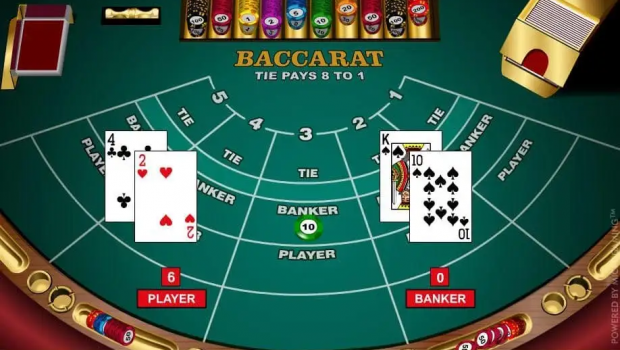
Baccarat has long been surrounded by an air of exclusivity, often depicted as the game of choice for high rollers and secret agents in tuxedo-clad casino settings. Despite its reputation for sophistication, the game is surprisingly accessible, relying on rigid rules of play rather than complex player decisions. However, beneath the simple gameplay lies a mathematical structure that dictates exactly what a player can expect to return on their investment. For any serious player, having Baccarat (บาคาร่า) Payouts Explained: How Much Can You Win? clearly defined helps navigate the difference between a smart wager and a statistical trap.
Understanding the potential returns requires more than just knowing who wins a hand; it requires a deep dive into the statistical probabilities, the house edge, and the variance involved in standard and side bets. Whether you are playing at a physical table in Macau or a digital table online, the payout structures remain the fundamental law of the game. This guide will walk you through the mathematics of Baccarat, analyzing the return on investment for each betting option and helping you understand the ceiling of your potential winnings.
Table of Contents
What Are the Standard Payouts in Punto Banco?
When we discuss Baccarat in a modern casino context, we are almost always referring to Punto Banco. In this version, the casino banks the game at all times, and players can bet on the Player, the Banker, or a Tie. The payouts for these three standard bets are distinct because the mathematical probability of each outcome is not equal.
The Player bet is perhaps the most straightforward proposition on the table. If you wager on the Player hand and it wins, the payout is 1:1. This means if you bet $100, you win $100, creating a total return of $200. There is no commission attached to this bet. The house edge on the Player bet sits at approximately 1.24 percent, which is quite low compared to other casino games like Roulette or Slots.
The Banker bet, however, is statistically the safest wager on the table. The rules of drawing a third card favor the Banker slightly more than the Player. Because the Banker wins approximately 45.86 percent of the time (excluding ties), the casino applies a 5 percent commission to winning Banker bets. Therefore, the payout is 0.95:1. If you bet $100 on the Banker and win, you receive $95 in profit. Even with this commission, the house edge is the lowest in the game at just 1.06 percent.
Is the Tie Bet Worth the Risk?
If you are looking for significant returns on a single hand, your eyes might naturally drift toward the Tie bet. A Tie occurs when both the Player and Banker hands finish with the same point total. The payout for a Tie is substantially higher than the even-money bets, typically offering 8:1, though some generous casinos may offer 9:1.
While an 8:1 payout suggests you could win $800 for every $100 wagered, the statistics paint a grim picture for the gambler. The probability of a tie occurring is approximately 9.52 percent. This disparity between the true odds and the payout creates a massive house edge of roughly 14.36 percent. In professional gambling circles, the Tie bet is often considered a “sucker bet” because the risk does not mathematically justify the reward, despite the allure of a higher multiplier.
How Do Side Bets Impact Your Potential Winnings?
To make the game more exciting and to offer payouts that rival slot machines, many casinos have introduced side bets. These wagers operate independently of the main game result and offer the highest potential payouts in Baccarat, though they come with increased volatility.
The Dragon Bonus
The Dragon Bonus is one of the most popular side bets. It pays out when your chosen hand (Player or Banker) wins by a large margin (point spread) or wins with a natural (an 8 or 9 on the initial deal). The payout scale is dynamic based on the margin of victory:
If you place a $100 wager on the Dragon Bonus and your hand wins by a margin of 9 points (e.g., your hand is 9 and the opponent is 0), you would win $3,000. This is significantly higher than the standard game limit, but the frequency of a 9-point win is statistically rare.
Perfect Pair
Another common addition is the Pairs bet. A “Player Pair” or “Banker Pair” bet wins if the first two cards dealt to that hand are a pair (e.g., two Kings or two Fours). The payout is typically 11:1. A “Perfect Pair” describes two identical cards (same suit and rank), which usually requires a game played with multiple decks. The payouts for Perfect Pairs can reach as high as 25:1 depending on the specific house rules.
What Is EZ Baccarat and How Does It Change Payouts?
In an effort to speed up the game and eliminate the hassle of collecting the 5 percent commission on Banker bets, casinos introduced “EZ Baccarat.” In this variation, winning Banker bets pay 1:1 rather than 0.95:1. This sounds like an incredible advantage for the player, but there is a statistical catch known as the “Dragon 7” or “Panda 8.”
In EZ Baccarat, if the Banker wins with a three-card total of 7, the Banker bet is a “push” (you neither win nor lose). This rule balances the odds to account for the lack of commission. However, this variation introduces two specific side bets with massive payouts:
- Dragon 7: If the Banker wins with a three-card 7, this side bet pays 40:1.
- Panda 8: If the Player wins with a three-card 8, this side bet pays 25:1.
These variations drastically change the volatility of the game. While the base game remains an even-money affair, the side bets introduce a lottery-style element where small wagers can turn into substantial sums, albeit with a high house edge.
How Does the House Edge Affect Long-Term Winnings?
When calculating how much you can win, you must differentiate between “possible payouts” and “expected value.” The payout is what you receive if you get lucky on a single hand. The expected value is what happens to your bankroll over thousands of hands.
Statistically, Baccarat is a game of attrition. Because the house edge is so low on the Player and Banker bets (roughly 1.06% to 1.24%), you can survive at the table longer than in almost any other game. This low edge allows for short-term variance where players can accumulate significant winnings. However, the math dictates that the longer you play, the more likely your results will align with the statistical expectation—a slow erosion of the bankroll due to the edge.
For example, if a player bets $1,000 on the Banker every hand for 100 hands, they have wagered $100,000. With a 1.06% house edge, the theoretical loss is $1,060. However, in a short session, variance can easily swing this number into a profit of several thousand dollars. The “win” is determined by when you choose to walk away.
Are There Strategies to Maximize Returns?
Since Baccarat is a game of independent events (mostly, barring slight card counting efficacy which is negligible in modern shoe games), no betting system can guarantee a win. However, money management strategies can help you maximize winning sessions and minimize losing ones.
The 1-3-2-4 System
This is a positive progression system designed to protect your winnings. You bet 1 unit, then 3, then 2, then 4. If you win all four bets, you start over. If you lose, you drop back to the start. The logic here is that by the third bet, you have already locked in a profit even if you lose the fourth bet.
Avoid the Tie Bet
To maximize your long-term return rate (RTP), the most statistically sound strategy is to simply avoid the Tie bet entirely. While the 8:1 payout is tempting, the statistical “tax” you pay on that bet is too high. Sticking to Banker or Player ensures you are playing one of the fairest games in the casino.
Bankroll Management
The absolute limit on how much you can win is defined by your bankroll. If you are chasing the 30:1 Dragon Bonus, you must be prepared for long streaks of losses. If you are playing flat bets on the Banker, your bankroll will fluctuate much less. Align your betting size with your volatility tolerance.
Why Do High Rollers Prefer the Banker Bet?
You will often notice that the whales—the players betting tens of thousands per hand—almost exclusively bet on the Banker. This is not superstition; it is a calculation.
If you remove the Tie from the equation (since Tie bets push on Player/Banker wagers), the Banker wins roughly 50.68% of decisions. This greater-than-50% win rate is why the commission exists. High rollers are playing the law of large numbers, knowing that over time, the Banker bet offers the highest probability of preserving capital and securing a win.
Conclusion
Baccarat offers a unique blend of simplicity and statistical depth. The answer to “how much can you win?” depends entirely on your risk appetite. If you stick to the Banker and Player bets, you are engaging in a low-volatility grind where winnings are accumulated through patience and money management. If you venture into the world of Pairs, Dragon Bonuses, and Ties, you are opening the door to massive 30:1 or 40:1 payouts, but at the cost of a much steeper house edge.
Ultimately, the best approach is to understand these numbers before you place your chips. By recognizing the cost of the commission and the improbability of the Tie, you can make informed decisions that extend your playtime and increase your chances of walking away with a profit. If you are ready to test the math for yourself, take a seat at the table, trust the statistics, and may the best hand win.
-

-

-

-

-

-