Contractors face relentless pressure to deliver projects faster, cleaner, and with tighter tolerances than ever before. Every wasted minute on a job site erodes profit margins, and every imprecise cut multiplies into rework, material waste, and missed deadlines. Traditional cutting methods—circular saws, utility knives, and reciprocating blades—have served the industry for decades, but they come with familiar frustrations: excessive dust, rough edges requiring secondary finishing, rapid blade dulling, and limited precision on softer or composite materials. These inefficiencies compound across a project timeline, quietly draining productivity.
Enter ultrasonic cutting tools—a technology that leverages high-frequency vibrations to slice through materials with surgical accuracy, minimal mess, and remarkable speed. But can a single tool category truly reshape how contractors work? This article explores the science behind ultrasonic cutting, quantifies its efficiency advantages, and examines how it fits within the broader digital contractor toolkit alongside laser measurers, floor planning software, and integrated design workflows. The answer may redefine what efficiency means on the modern job site.
Table of Contents
Understanding Ultrasonic Cutting: Beyond Traditional Blades
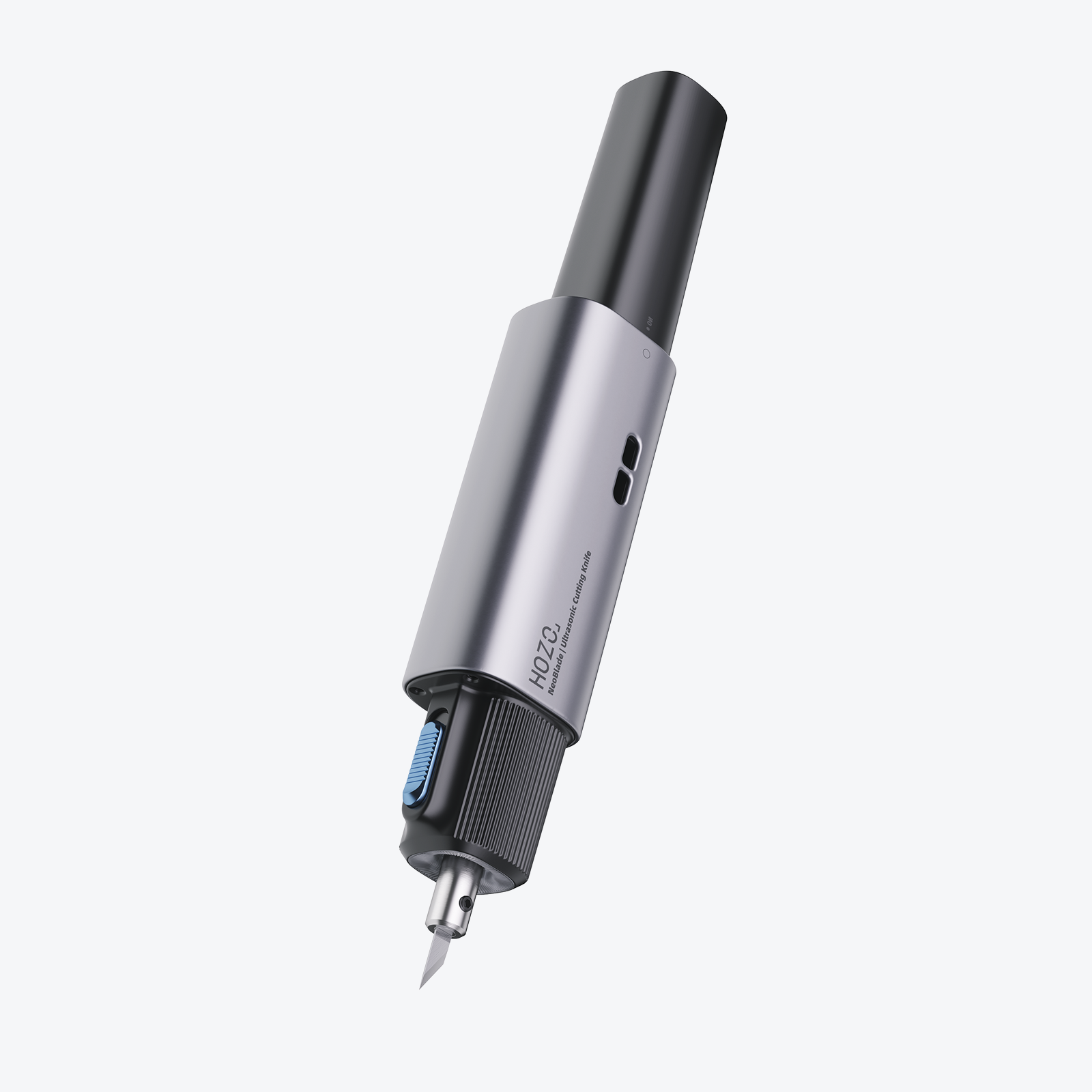
An ultrasonic cutting tool is a precision instrument that uses high-frequency mechanical vibrations—typically oscillating between 20,000 and 40,000 cycles per second—to cut through materials with minimal physical force. A piezoelectric transducer converts electrical energy into mechanical vibrations, which are then amplified and transferred to a specially designed blade or sonotrode. The blade tip moves back and forth at microscopic amplitudes, creating a localized shearing action that separates material at the molecular level rather than tearing or abrading it.
This mechanism stands in stark contrast to traditional cutting methods. A circular saw rips through material using aggressive tooth rotation, generating heat, dust, and rough edges. A utility knife relies entirely on downward pressure, which deforms soft materials and dulls quickly. Ultrasonic cutting, by comparison, requires only light contact—the vibration does the work, producing edges so clean they often need no secondary finishing.
For contractors, this technology excels on materials that traditional tools struggle with: vinyl and composite flooring, rigid insulation foam, rubber gaskets, fiberglass panels, carpet and textile underlays, and engineered plastics. These are precisely the materials that gum up saw blades, compress under knife pressure, or produce hazardous particulate when cut conventionally. However, ultrasonic tools have clear boundaries—they are not designed for thick metals, dense hardwoods, or masonry. Understanding this material sweet spot is essential for contractors evaluating whether the technology fits their project mix.
The Efficiency Equation: How Ultrasonic Tools Outperform
Efficiency on a job site isn’t about working harder—it’s about eliminating the friction between steps. Ultrasonic cutting tools attack inefficiency at multiple points simultaneously, compressing timelines and reducing hidden costs that contractors often accept as unavoidable.
Speed and Precision Combined
Traditional cutting tools bind, snag, and drag through soft or composite materials, forcing contractors to slow their feed rate or make multiple passes. Ultrasonic blades glide through these same materials in a single, continuous motion because the high-frequency vibration eliminates the resistance that causes binding. A vinyl plank cut that might require careful scoring and snapping with a utility knife takes a single pass with an ultrasonic cutter—cleanly, without micro-fractures along the edge. This speed advantage multiplies across hundreds of cuts in a flooring installation or insulation project. Equally important, the precision of each cut means pieces fit together on the first attempt. When a rigid foam panel arrives at its intended gap with edges that need no trimming or sanding, the contractor eliminates an entire finishing step. Less material waste from mis-cuts translates directly into lower material costs, and tighter joints mean fewer callbacks for gaps or visible seams.
Cleanliness and Safety on Site
Cutting insulation foam with a hot wire produces fumes. Sawing composite panels throws particulate into the air that requires respirators and extensive cleanup. Ultrasonic cutting generates virtually no dust, no fumes, and no airborne debris because it shears material rather than grinding it away. For contractors working in occupied buildings—renovating kitchens, upgrading commercial spaces, or retrofitting insulation in healthcare facilities—this cleanliness isn’t a luxury, it’s a requirement. Site cleanup that once consumed thirty minutes at the end of each shift shrinks to a quick sweep. The safety profile extends beyond air quality. Ultrasonic blades remain cool during operation because friction is nearly absent from the cutting process. There’s no hot blade to ignite foam offcuts, no sparks to worry about near flammable adhesives, and no burn risk when the tool contacts skin accidentally. In environments with strict fire safety protocols or combustible material storage nearby, this characteristic alone can justify the investment.
Reliability and Tool Longevity
Contractors need tools that perform consistently through a full project without interruption. Because ultrasonic blades experience dramatically less mechanical friction than conventional cutting edges, they maintain their sharpness far longer. Where a utility knife blade might need replacing every fifty cuts through dense rubber gasket material, an ultrasonic blade handles thousands of cuts before requiring attention. Fewer blade changes mean less downtime, lower consumable costs, and more predictable scheduling—a reliability advantage that compounds over weeks and months of continuous use.

Integrating Ultrasonic Cutting into the Digital Contractor Toolkit
An ultrasonic cutter doesn’t deliver its full value in isolation. Its precision becomes transformative only when paired with equally precise planning—when the measurements feeding each cut are accurate to the millimeter and the layout guiding material placement has been validated digitally before a single piece is touched. Modern contracting increasingly operates as a connected workflow where measurement, design, and execution form a continuous chain, and the ultrasonic cutter occupies the critical final link.
From Digital Rulers and Floor Planning to Precise Cuts
The workflow begins with measurement. Laser distance measurers—sometimes called digital rulers—capture room dimensions, angles, and irregularities with sub-millimeter accuracy in seconds. A contractor scanning a room with a laser measurer eliminates the cumulative errors that plague manual tape measurements, especially in spaces with alcoves, bay windows, or non-square corners. These precise dimensions then flow into floor planning software or CAD applications, where the contractor builds a digital representation of the space. Within that software environment, material layouts take shape: flooring planks are arranged to minimize waste, insulation panels are sized to fill cavities exactly, and trim pieces are calculated to account for real-world irregularities captured during the laser scan.
The digital layout produces a cut list—specific dimensions for every piece of material needed. When those dimensions guide an ultrasonic cutter, the precision established in measurement carries through to execution without degradation. A vinyl plank dimensioned at 847mm in the software gets cut at exactly 847mm because the ultrasonic blade doesn’t wander, compress the material, or require the operator to compensate for kerf width the way a saw demands. The result is a closed loop: accurate measurement produces accurate plans, which produce accurate cuts, which produce installations that fit on the first attempt.
Seamless Export and Workflow Integration
Floor planning software that exports designs in various formats—DXF files for fabrication, annotated PDFs for field crews, or dimensioned drawings for client approval—bridges the gap between office planning and on-site execution. A contractor working from an exported PDF with clearly labeled cut dimensions can move directly from screen to material without manually transcribing numbers onto workpieces, eliminating one of the most common sources of cutting errors. DXF exports open additional possibilities: templates can be printed at full scale for complex shapes, or dimensions can be transferred to programmable cutting guides that pair with the ultrasonic tool. The efficiency gain here is systemic. What was designed digitally is what gets built physically, because the information pathway from software to cutting tool contains no manual reinterpretation step. For contractors managing multiple crews or complex renovation projects, this consistency across the measurement-to-cut pipeline reduces supervision burden and virtually eliminates the “measure twice, cut wrong anyway” problem that plagues traditional workflows.
Practical Implementation: Getting Started with Ultrasonic Cutting Tools
Knowing the technology works is one thing—deploying it effectively on real projects requires a structured approach. Contractors who treat ultrasonic cutting as a drop-in replacement for existing tools often underutilize its capabilities. The following steps transform curiosity into measurable productivity gains.
Step 1: Assessing Project Fit and Material Compatibility
Before investing, audit your last ten projects and identify recurring cutting tasks. The strongest candidates for ultrasonic cutting share common characteristics: materials that compress, fray, melt, or produce excessive dust under conventional blades. Ask yourself whether your crews regularly cut vinyl plank or sheet flooring, rigid or spray-applied insulation foam, composite wall panels, rubber gaskets and weatherstripping, carpet or textile-based underlayment, or engineered plastic trim. If three or more of these appear consistently in your project mix, ultrasonic cutting will deliver immediate returns. If your work centers on dimensional lumber, concrete board, or metal framing, the technology won’t replace your primary tools—though it may still handle specialty tasks within those projects.
Step 2: Choosing the Right Tool and Accessories
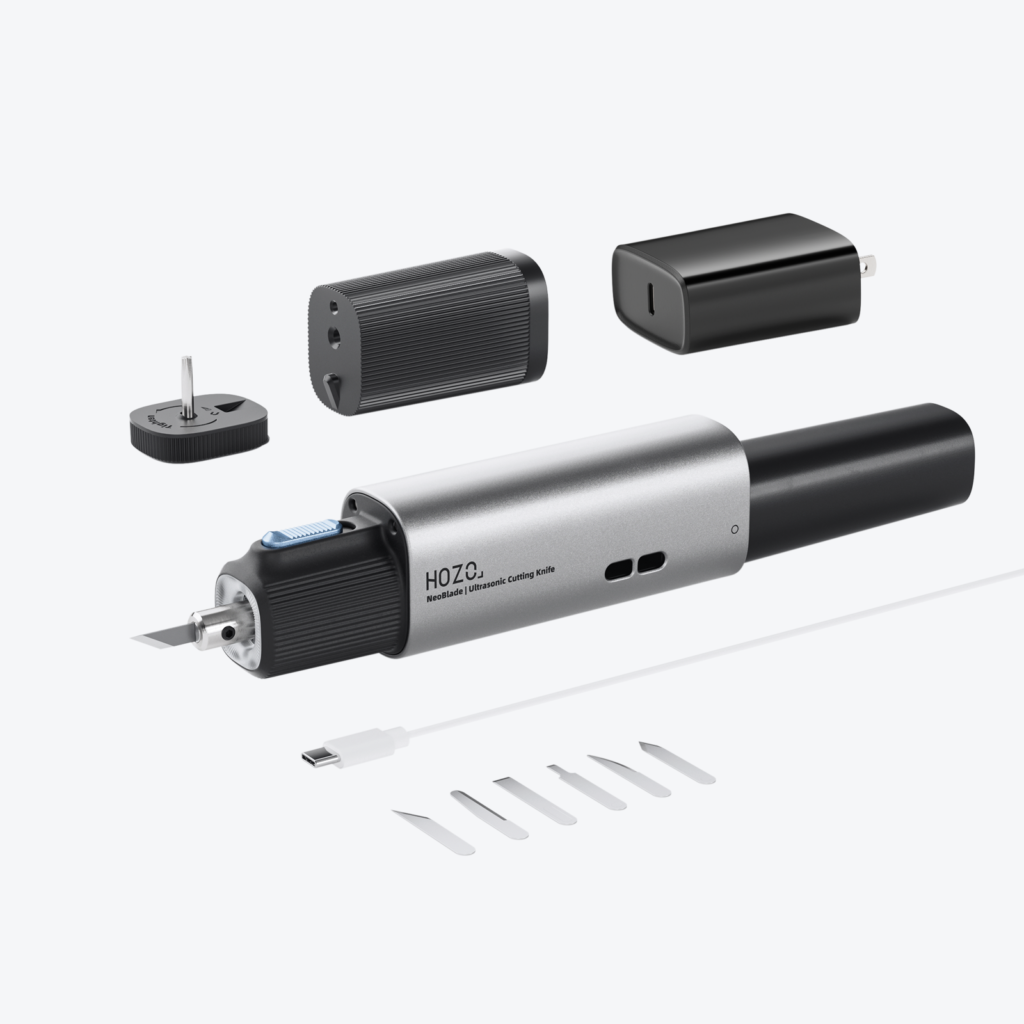
Not all ultrasonic cutters serve the same purpose, and selecting the wrong configuration wastes both money and opportunity. Start with vibration frequency—units operating at 30,000 Hz or higher handle denser composites more effectively, while lower-frequency models suit softer foams and textiles. Blade geometry matters equally: straight blades excel at linear cuts through sheet materials, while rotary or angled sonotrodes manage curved profiles and detail work around outlets or fixtures. Portability determines job-site practicality. Cordless models with lithium-ion power packs allow unrestricted movement across large floor areas, though corded units deliver sustained power for marathon cutting sessions in a fixed workstation setup. Look for systems that accept guide rails or jig attachments for repeat cuts—when you need forty identical insulation panels, a fence-guided ultrasonic cutter produces them faster and more consistently than freehand operation. Manufacturers like HOZO have developed professional-grade kits that bundle multiple blade profiles, carrying cases, and spare transducer elements suited to sustained daily use on renovation projects.
Step 3: Integrating into Your Existing Renovation Equipment Workflow
Introduce ultrasonic cutting through a controlled test project rather than deploying it across all crews simultaneously. Choose a mid-scale flooring installation or insulation retrofit where the material mix aligns with the tool’s strengths, and assign one experienced crew member to operate it exclusively during that project. This builds institutional knowledge without disrupting broader schedules. Designate a clean, stable cutting station on site—ultrasonic tools perform best on a flat surface where material doesn’t flex or bounce during the cut. Train operators on the counterintuitive technique: firm positioning but gentle feed pressure, letting vibration do the separation work rather than forcing the blade through. Develop a simple system for translating digital cut lists into physical workflow—printed dimension sheets posted at the cutting station, or a tablet displaying the floor plan with highlighted pieces queued in cutting order. Finally, establish a blade maintenance routine: inspect the sonotrode tip daily for micro-chipping, clean adhesive residue after each session, and store the tool in its case to protect the precision-ground cutting edge from impact damage.
The Future of Contractor Tools: Efficiency Redefined
The trajectory of ultrasonic cutting technology points toward increasingly powerful cordless units that match or exceed the sustained output of today’s corded models, freeing contractors from workstation constraints entirely. Smarter tool interfaces are emerging—digital displays that allow operators to dial in specific vibration frequencies and blade amplitudes based on the material being cut, removing guesswork and ensuring optimal performance across varied substrates within a single project. Perhaps most significant is the potential for CNC integration, where ultrasonic cutting heads mounted on programmable gantries execute complex shapes directly from digital design files without human guidance. A floor plan exported as a DXF could drive an automated cutting station that produces every piece for an entire room’s flooring or insulation package, ready for installation in sequence. This evolution represents something larger than incremental tool improvement. The convergence of ultrasonic cutters, digital rulers, and planning software signals a fundamental industry shift—away from brute-force methods dependent on operator skill and physical effort, toward intelligent, connected workflow management where precision is systemic rather than individual, and efficiency is designed into the process rather than demanded from the worker.
Ultrasonic Cutting as a Competitive Edge for Modern Contractors
Ultrasonic cutting tools address the contractor’s most persistent efficiency drains—slow cuts through difficult materials, dust-laden work environments, imprecise edges requiring rework, and constant blade replacements that interrupt momentum. The technology delivers a rare combination: faster execution without sacrificing accuracy, cleaner sites without additional cleanup labor, and longer tool life without premium consumable costs. These advantages alone make a compelling case for any contractor regularly working with vinyl, foam, composites, or rubber-based materials.
Yet the deeper value emerges when ultrasonic cutting operates as the execution arm of a fully digital workflow. Laser measurers capture reality with sub-millimeter precision, floor planning software transforms those measurements into optimized material layouts, and the ultrasonic cutter translates digital dimensions into physical pieces without the information loss that plagues manual methods. This connected chain—measure digitally, plan digitally, cut precisely—eliminates the compounding errors that generate waste, rework, and schedule overruns. While ultrasonic tools won’t replace saws for framing lumber or grinders for metal, they represent a decisive competitive edge for contractors who recognize that modern efficiency isn’t about working harder with familiar tools. It’s about adopting smarter technologies that turn precision into a systemic habit rather than an individual struggle.
-
-
-

-

-

-