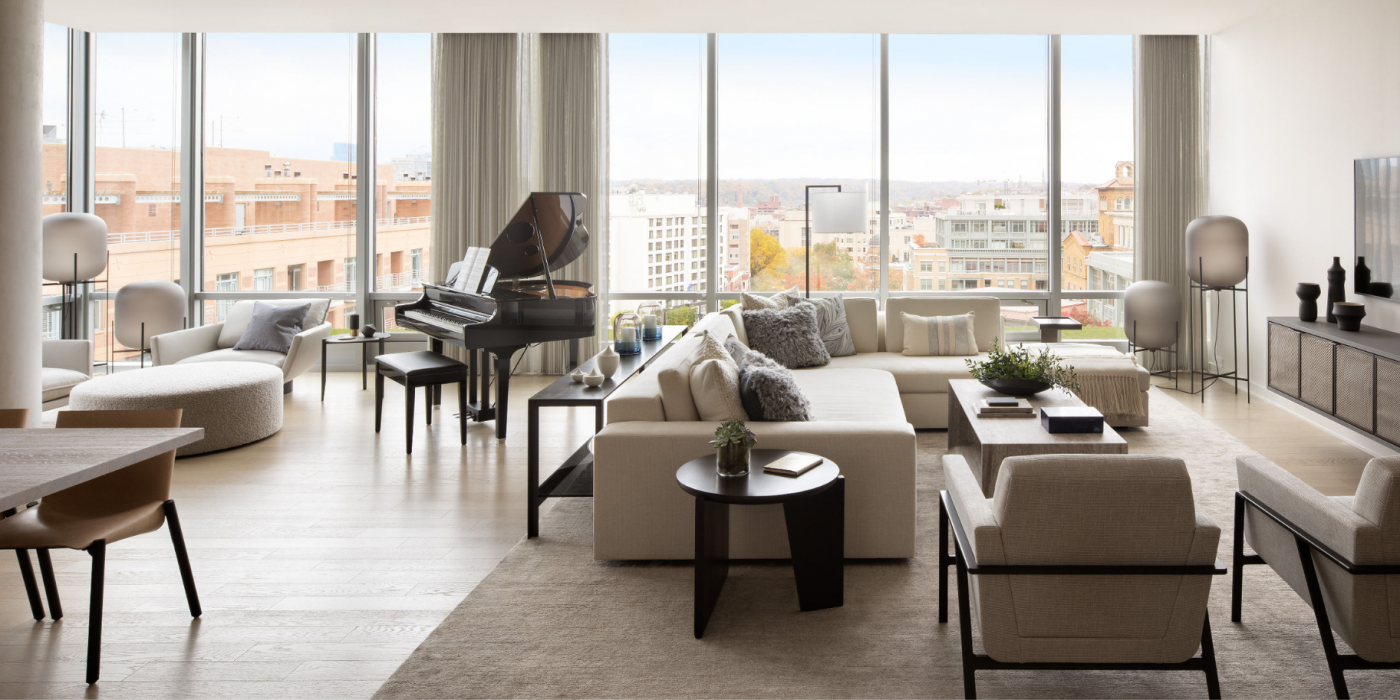
Furniture selection is one of the most consequential decisions in any interior project, whether for a private residence, a boutique hotel, or a corporate office environment. Unlike paint colors or textiles, which can be updated with relative ease, furniture anchors a space structurally and visually for years, sometimes decades. A poor choice compounds over time: it disrupts the coherence of a room, requires costly replacement, or simply fails to hold up under the conditions it was purchased to meet.
US interior designers, particularly those working across multiple project types and client expectations, have developed a consistent set of working principles around what makes furniture genuinely effective. These principles are not aesthetic preferences in the casual sense. They are grounded in how people actually live and work in spaces, how materials behave over time, and how visual decisions shape the way a room functions. The principles outlined here apply broadly, but they carry particular weight in the context of elegant design furniture, where the margin between something that looks refined and something that actually performs with refinement is narrow.
Table of Contents
1. Proportion Controls Everything Else in a Room
Before material, color, or style, proportion determines whether a piece of furniture belongs in a space. This is not a stylistic observation — it is a functional one. A sofa that is too deep for a narrow room makes movement uncomfortable and conversation awkward. A dining table that sits too high relative to the chairs creates physical strain. When experienced designers talk about a room that “doesn’t work,” they are almost always describing a proportion problem before anything else.
For those researching how different categories of refined furniture balance scale, weight, and visual mass, the Elegant Design Furniture overview offers a useful reference point for understanding how proportion is applied across different furniture types and interior contexts.
Why Proportion Errors Are Difficult to Correct After Installation
A piece of furniture that is wrong in scale does not become right once it is surrounded by other items. In most cases, the imbalance becomes more visible, not less, as a room fills in. Designers who have worked on long-term projects know that correcting a proportion error mid-project almost always requires replacing the primary piece, not adjusting what surrounds it. The investment in assessing scale before purchase is significantly lower than the cost of reversing a decision after delivery and installation.
2. Material Choice Determines Long-Term Performance, Not Just Appearance
The surface of a furniture piece tells you something about how it was made, but the internal construction and material composition tell you how it will hold up. Solid hardwood frames behave differently from engineered wood under fluctuating humidity conditions. Natural stone tabletops respond differently to cleaning products than sealed composites. In high-use environments, these differences become apparent within the first year of use. Elegant design furniture, when properly sourced, accounts for the conditions it will encounter, not just the aesthetic it needs to deliver on day one.
The Relationship Between Climate and Material Selection
In the United States, where climate conditions vary considerably between regions, material selection is not a universal decision. A furniture piece that performs well in a dry southwestern environment may develop surface cracking or joint instability in the more humid conditions common along the Gulf Coast or in the mid-Atlantic states. This is a practical concern that designers working across multiple regions have to build into their sourcing and specification process, often reviewing manufacturer guidance on acceptable humidity ranges and care requirements before finalizing a selection.
3. Simplicity in Form Extends the Useful Life of a Piece
Furniture that relies heavily on trend-specific ornamentation tends to date quickly. Pieces built around clean lines, restrained detailing, and coherent form hold their relevance across longer periods and across different interior directions. This is not an argument for minimalism as a style — it is an argument for design discipline. A chair or table that does not depend on a particular cultural moment to make its point remains usable and appropriate as interiors evolve. Interior designers who manage long-term client relationships value this quality because it reduces the frequency with which clients need to replace pieces entirely.
How Simplicity Reduces Total Cost of Ownership
When a furniture piece ages well visually, the decision to replace it is driven by genuine wear rather than aesthetic fatigue. This matters practically because replacement cycles represent both budget expenditure and logistical disruption. Pieces with strong, uncluttered form tend to be repaired, reupholstered, or refinished rather than discarded, which extends their functional life considerably. The economics of elegant design furniture, viewed across a ten-year horizon, often favor the higher upfront investment in quality and restraint over multiple rounds of budget-driven replacement.
4. Finish Quality Is a Functional Specification, Not a Cosmetic One
The finish applied to a furniture surface affects how that surface resists moisture, cleaning agents, UV exposure, and physical contact over time. A poorly applied finish may look identical to a quality one at the point of purchase, but the difference becomes clear within months of regular use. Designers who have evaluated furniture across multiple projects and manufacturers develop a practical sense for finish quality through tactile assessment, not just visual inspection. They know that a surface that feels slightly rough or uneven at the edges is unlikely to hold up consistently across its full area under use conditions.
The Role of Finish in Maintenance and Cleaning Protocols
Commercial and hospitality environments, in particular, require furniture finishes that tolerate regular cleaning with professional-grade products. Residential clients who entertain frequently or have children have similar concerns at a different intensity. When a finish is not suited to its actual use environment, maintenance becomes a recurring problem: surfaces show wear patterns early, cleaning becomes difficult without risking damage, and the visual coherence of the piece deteriorates faster than its structural integrity. Selecting furniture with finishes calibrated to the specific use context is one of the most practical decisions a designer makes during the specification phase.
5. Structural Integrity Is the Baseline From Which Everything Else Follows
A furniture piece can satisfy every visual and material standard and still fail if its structural construction is inadequate. Joints that are glued but not reinforced, frames that rely on tension rather than mechanical fastening, and bases that are not weighted appropriately for the piece they support — these are construction decisions that create problems under normal use, not exceptional conditions. According to guidance from the ASTM International standards body, furniture performance testing includes load-bearing, stability, and durability assessments that reflect the actual demands of residential and commercial environments.
What Structural Weakness Looks Like in Practice
A structurally weak piece rarely fails catastrophically or immediately. It develops small symptoms first: a slight wobble in a table leg, a drawer that begins to stick, a seat cushion that sinks unevenly because the frame beneath it has shifted. These symptoms are easy to dismiss individually, but they indicate that the piece is not holding its intended form under use. Over time, these issues require repair or cause the piece to be removed from service earlier than its aesthetic life would otherwise demand. Structural integrity, in other words, determines the ceiling on every other quality a piece of furniture has.
6. Cohesion Between Pieces Matters More Than Individual Quality
A room furnished with individually impressive pieces that do not relate to one another reads as disjointed, regardless of the quality of each item. Cohesion is not sameness — it does not require matching sets or uniform styles. It requires that pieces share enough common visual language to function together: consistent undertones in wood finishes, complementary weights and heights, proportional relationships that feel considered rather than accidental. Interior designers working on full-room specifications think about this systematically, often building a sourcing framework around two or three anchor pieces and selecting supporting items in relation to those anchors.
How Cohesion Affects Client Satisfaction Over Time
Clients who are satisfied with their furnished spaces at the point of project completion tend to remain satisfied longer when cohesion was deliberately built into the selection process. When rooms feel unified, clients tend to attribute positive qualities to each individual piece even when the pieces vary in price or origin. When cohesion is absent, individual pieces — even high-quality ones — become sources of friction rather than satisfaction. This feedback pattern is consistent across residential and commercial projects and reflects the degree to which spatial experience is holistic rather than item-by-item.
7. Function Informs Form in Every Category of Elegant Furniture
Furniture that prioritizes appearance at the expense of usability tends to be removed from service by the people who use the space daily, regardless of its cost or visual quality. A dining chair that looks refined but causes discomfort after twenty minutes will not be used for the meals it was designed to support. A desk that lacks adequate surface depth will be replaced by something less considered as soon as the practical need becomes pressing. Elegant design furniture, as practiced by experienced specifiers, begins with a clear understanding of how a piece will actually be used, and allows that understanding to shape every subsequent decision about form and material.
Balancing Aesthetic Restraint With Practical Requirements
The challenge in specifying furniture for high-design environments is that the pressure toward visual elegance can pull against practical requirements. Cushions may be trimmed to appear slimmer while losing necessary support. Storage may be eliminated to maintain clean lines. Designers who manage this tension well do so by establishing non-negotiable functional requirements before the aesthetic parameters are set, ensuring that visual decisions are made within a framework that already accounts for how the space will be lived in or worked in. This sequence — function first, form within those constraints — produces furniture decisions that hold up across years of real use.
Closing Thoughts
The principles described here are not new observations. They have been developed and refined through project experience, client feedback, and the practical reality of seeing how furniture behaves in real environments over real timelines. What makes them relevant now is the volume of furniture options available across price points, styles, and sourcing channels. With that volume comes the risk of selecting pieces that perform well in photographs but fail in practice, or that look appropriate at installation but lose coherence as a project evolves.
Interior designers who approach elegant design furniture with a structured framework — one that accounts for proportion, material performance, structural quality, cohesion, and functional honesty — consistently deliver results that hold their integrity over time. These are not subjective standards. They are measurable in how a space functions, how long pieces remain in service, and how satisfied the people who live or work in those spaces remain after the initial impression has settled into daily experience.
The durability of good furniture decisions, much like the durability of good furniture itself, comes from the quality of the thinking behind them.
-

-

-

-

-

-