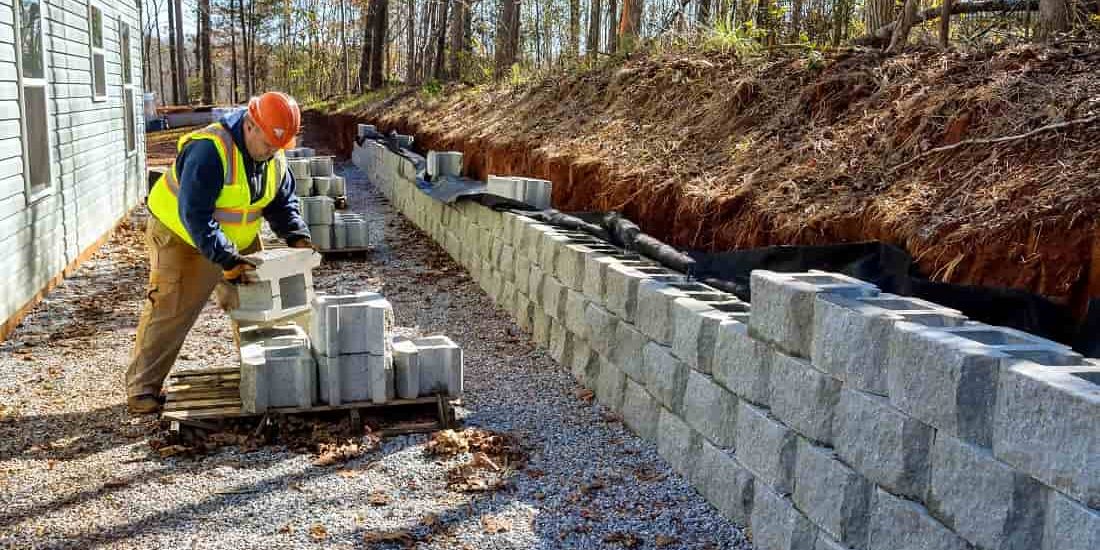
Retaining walls are permanent structures. Once built, they become part of the property’s foundation system, drainage behavior, and long-term stability. Unlike a fence or a deck, a retaining wall failure doesn’t just look bad — it can damage adjacent structures, disrupt utilities, cause soil movement across property lines, and create liability that falls directly on the property owner. Despite the weight of that reality, many property owners and project managers move forward with hiring decisions based on price alone, or on contractors who present well in a conversation but lack the documented experience to back it up.
The questions you ask before signing a contract determine the quality of what gets built. This article outlines seven of the most important things to ask any contractor before work begins — not as a checklist exercise, but as a way to surface real information that affects the outcome of your project.
Table of Contents
1. What Is Their Specific Experience With Retaining Wall Construction?
General landscaping or concrete work does not translate automatically into retaining wall expertise. Retaining walls involve a specific set of engineering principles related to soil pressure, hydrostatic load, drainage management, and material behavior under stress. Contractors who specialize in this area understand how these forces interact over time and build accordingly. Those who don’t often underestimate what the wall needs to withstand.
When evaluating a contractor, ask directly how many retaining wall projects they have completed in the past three years, what types of walls they have built, and whether they have experience with the specific material you are considering — whether that is segmental block, poured concrete, natural stone, or timber. Experienced retaining wall contractors bring a depth of project-specific knowledge that directly influences both the design decisions and the build quality.
You can review service profiles and project backgrounds for established contractors, such as those listed at retaining wall contractors, to understand the range of work they typically handle before reaching out for a quote.
2. Do They Pull Permits and Work Within Local Building Codes?
In most US jurisdictions, retaining walls above a certain height require a building permit, and in some cases, a licensed engineer must review or stamp the design. This is not a bureaucratic inconvenience — it is a layer of oversight that protects the property owner from structural risk. When a contractor suggests skipping the permit process to save time or money, that is a signal worth taking seriously.
Why Permit Compliance Affects More Than the Wall Itself
An unpermitted retaining wall can complicate property transactions, void homeowner’s insurance coverage for related damage, and create legal exposure if the structure fails and causes harm to a neighboring property. When municipalities discover unpermitted structures during inspections for other work, they often require removal or costly retrofitting. The permit process, while sometimes slow, exists to verify that what gets built meets minimum safety standards for the specific site conditions.
Ask the contractor directly whether they will pull the permit, what that process looks like in your jurisdiction, and who is responsible for any engineering documentation required. A contractor who handles this routinely will have a clear answer. One who is unfamiliar with the process or evasive about it should raise concern.
3. How Do They Handle Drainage and Water Management?
Water is the primary reason retaining walls fail. When hydrostatic pressure builds behind a wall without a proper path to escape, it exerts force that most wall systems are not designed to absorb indefinitely. Over time, that pressure causes leaning, cracking, and eventual collapse. A well-designed retaining wall includes drainage provisions that are integrated into the construction, not added as an afterthought.
The Difference Between Drainage That Works and Drainage That Looks Adequate
There is a meaningful difference between drainage systems that are visually present and those that are functionally effective. Some contractors install drainage aggregate or weep holes without accounting for how water actually moves through the specific soil type on the project site. The slope behind the wall, the clay content of the soil, and the proximity to impervious surfaces all affect how much water accumulates and how quickly it needs to move.
Ask the contractor what drainage system they plan to use, how they will account for the soil conditions at your site, and whether they have encountered drainage failures in past projects and how those were resolved. Contractors with genuine experience in this area will have nuanced answers. Those with limited experience will often give a generic response about gravel and pipes without connecting it to your specific conditions.
4. What Materials Do They Recommend, and Why?
Material selection for a retaining wall is not primarily an aesthetic decision — it is a structural one. Different materials behave differently under load, in different climates, and at different wall heights. The right material for a low garden wall on flat suburban property is not necessarily the right choice for a tiered wall managing significant grade change in a region with freeze-thaw cycles.
A contractor worth hiring will recommend materials based on your site’s specific demands, not based on what they have in stock or what is easiest for their crew to work with. Ask them to explain their recommendation in terms of longevity, load-bearing appropriateness, and how the material performs under the specific conditions at your site. If they cannot connect the material recommendation to site-specific reasoning, that is worth probing further.
5. Are They Insured, and What Does That Coverage Include?
Insurance in construction is not a formality. Retaining wall work involves excavation, equipment operation, and structural modification — all of which carry real risk of property damage and worker injury. If a contractor operates without adequate coverage, any incident that occurs during the project can become the property owner’s financial exposure.
Understanding the Difference Between Policy Types
General liability insurance and workers’ compensation are distinct and both matter. General liability covers damage to your property or a neighbor’s property caused by the contractor’s work. Workers’ compensation covers medical costs and lost wages for crew members injured on your site. Without workers’ compensation, an injured worker may have grounds to pursue a claim against the property owner directly.
Ask to see current certificates of insurance before any contract is signed. Verify that the coverage amounts are appropriate for the scale of your project and confirm that the policies are active, not expired. According to guidance maintained by the Occupational Safety and Health Administration, construction site injury rates remain significant across residential and commercial projects, which underscores why active coverage is a non-negotiable standard rather than an optional add-on.
6. What Does Their Warranty or Workmanship Guarantee Cover?
Retaining walls are not short-term investments. A properly built wall should last decades without major intervention. When contractors offer a warranty, the terms of that warranty reveal a great deal about how confident they are in their own work and how seriously they take long-term accountability. A vague promise of “standing behind the work” is not the same as a documented commitment with defined terms.
What Strong Warranty Terms Actually Indicate
A meaningful warranty specifies what is covered — structural integrity, drainage performance, material defects — and for how long. It also clarifies what conditions void the warranty, such as modifications made by others or events outside normal weather parameters. Contractors who build walls with proper technique have little reason to limit their warranty aggressively, because they know the structure will hold.
Ask for the warranty in writing before committing to a contractor. If the contractor is reluctant to put terms in writing or deflects the question, that reluctance is informative. Established retaining wall contractors with strong track records typically document their commitments clearly because they expect their work to hold up to those commitments.
7. Can They Provide References From Similar Projects?
References from past clients are one of the most direct ways to verify that a contractor’s self-reported experience matches their actual performance. The value of a reference is in the detail it provides — not just whether the client was satisfied, but whether the project was completed on the agreed schedule, how the contractor handled problems that arose during the build, and whether the wall has performed without issues since completion.
What to Ask References Beyond Basic Satisfaction
When speaking with references, ask specific questions rather than general ones. Find out whether the project scope changed during construction and how that was managed. Ask whether there were any drainage or structural concerns that emerged after the wall was complete, and how the contractor responded. Ask whether the crew respected the property and communicated clearly throughout the process. These details paint a clearer picture than a simple endorsement.
If a contractor cannot provide at least two or three references from projects similar in scale and complexity to yours, that gap matters. A contractor who has completed comparable work recently should have no difficulty connecting you with clients willing to speak to their experience.
Closing: Making a More Informed Decision Before Construction Begins
The decision to build a retaining wall is a long-term one. The structure you commission will likely outlast the original reason it was built, and its performance over time will depend almost entirely on the quality of the planning and construction behind it. The questions outlined here are not designed to make the hiring process complicated — they are designed to give you the information you need to distinguish contractors who are genuinely prepared for your project from those who are not.
Before any contract is signed, invest the time to ask these questions directly and listen carefully to how they are answered. A contractor who can speak clearly, specifically, and honestly about their experience, methods, and commitments is far more likely to deliver a wall that performs as it should for the long term. That clarity, established before the first shovel hits the ground, is the most reliable protection available to any property owner or project manager navigating this decision.
-

-
-

-

-

-